

Table of Contents
- How UPF 50 Clothing Works and Why It Can Wear Down
- Does Wet UPF Clothing Lose Protection?
- How to Wash UPF Clothing Without Damaging Sun Protection
- How Long Does UPF Clothing Last?
- The Impact of Stretching and Fit on UPF Protection
- UPF Clothing vs. Sunscreen: A Practical Comparison
- Conclusion
- Frequently Asked Questions
Last Updated: September 30, 2026
How UPF 50 Clothing Works and Why It Can Wear Down
Does UPF 50 clothing lose effectiveness? Yes, but far more slowly than most people assume. UPF 50 clothing blocks at least 98% of ultraviolet radiation, and that protection fades gradually through fiber degradation, stretching, and abrasion rather than disappearing after a few wash cycles. At Silverback Hawaii, we build sun-protective clothing for paddlers and aquatic athletes, so we track how UV rays, saltwater, and laundering affect longevity.

The rating comes from UV transmittance testing: a UPF 50 fabric allows no more than 1/50th of UV radiation through.
Chemical vs. Physical UPF Treatments
UPF protection arrives two ways, and the difference decides how long it lasts. Physical protection is built into the fiber and weave, so it does not wash out. Chemical protection comes from a topical finish that degrades with washing, chlorine, and time, the biggest reason two garments with identical hangtags behave differently after a season.
How Fabric Weave and Fiber Type Affect UV Transmittance
Fiber choice sets the ceiling on UV transmittance. Polyester, nylon, and elastane blends absorb and scatter UV efficiently, which is why performance sun-protective clothing leans on them. Cotton and rayon transmit more UV and lose protection faster when wet. Color plays a supporting role: darker dyes absorb more UV than pale ones at the same fabric weight. Stretching a knit opens the spaces between yarns, so a garment that fits loose protects better than one pulled tight across the shoulders.
Does Wet UPF Clothing Lose Protection?
Wet UPF clothing can lose protection, and the effect varies by fiber. In cotton and rayon, water swelling reduces UV transmission, so those fabrics sometimes protect better wet. Synthetic knits behave the opposite way: moisture and stretch open the weave, and UV transmittance rises. A soaked polyester blend may drop from UPF 50 to a lower effective rating until it dries, usually modest, but real during long water sessions.
Saltwater, Chlorine, and Fiber Degradation
Chlorine is harsher. Pool chemicals attack elastane and break down the finish on treated fabrics, which is why swim-specific sun protection fades faster than gear used in open water. Saltwater is gentler on the fiber but leaves crystalline residue that abrades yarns if you never rinse it out. Rinsing in cool fresh water after every session removes both and is the easiest habit for extending longevity.
How to Wash UPF Clothing Without Damaging Sun Protection
Washing UPF clothing safely comes down to three rules: cold water, mild detergent, and no heat.
- Machine wash cold on a gentle cycle, or hand wash. Warm and hot water accelerate both finish breakdown and elastane degradation.
- Use a mild liquid detergent with no bleach, fabric softener, or optical brighteners. Powder detergents can leave abrasive residue in the weave.
- Skip the dryer entirely; hang or lay flat to dry in shade. Dryer heat is the single most damaging step in most laundry routines.
- Wash separately from Velcro, zippers, and rough denim that abrade the surface.
- Turn garments inside out to protect the outer face from pilling.
- Avoid overloading the machine; crowding increases friction between garments.
What Actually Happens to the Fabric in the Wash
Three processes run at once in every cycle, and each matters differently depending on how your garment is built.
A Maintenance Protocol That Extends the Rating
To keep the rating on the tag accurate in year three, treat laundry as maintenance rather than cleaning. A few habits compound.
- Rinse in cool fresh water immediately after saltwater or pool sessions, before the garment ever hits the hamper. This removes chlorine and salt before they can work into the fiber.
- Wash after every one to three wears for active use, not after every single wear. Over-washing wears a garment out faster than under-washing it.
- Air dry in shade, not direct sun. Sun-drying a wet garment exposes it to the exact UV you are trying to block, and wet fabric transmits more UV than dry.
- Store folded, not on a hanger, for stretch garments. Hanging stretches shoulders and distorts fit over time.
How Long Does UPF Clothing Last?
How long UPF clothing lasts depends almost entirely on how the protection was engineered into the fabric, not the number on the hangtag. Two garments can both say UPF 50 and have wildly different lifespans.
The Role of UV Degradation in Synthetic Fibers
Here is the part most guides skip: the sun itself slowly breaks down the fabric doing the protecting. UV radiation carries enough energy to cleave polymer chains in synthetic fibers, and while a UPF 50 fabric blocks 98% of that radiation, the 2% that gets through, plus UV hitting the outside face, does cumulative damage over years.
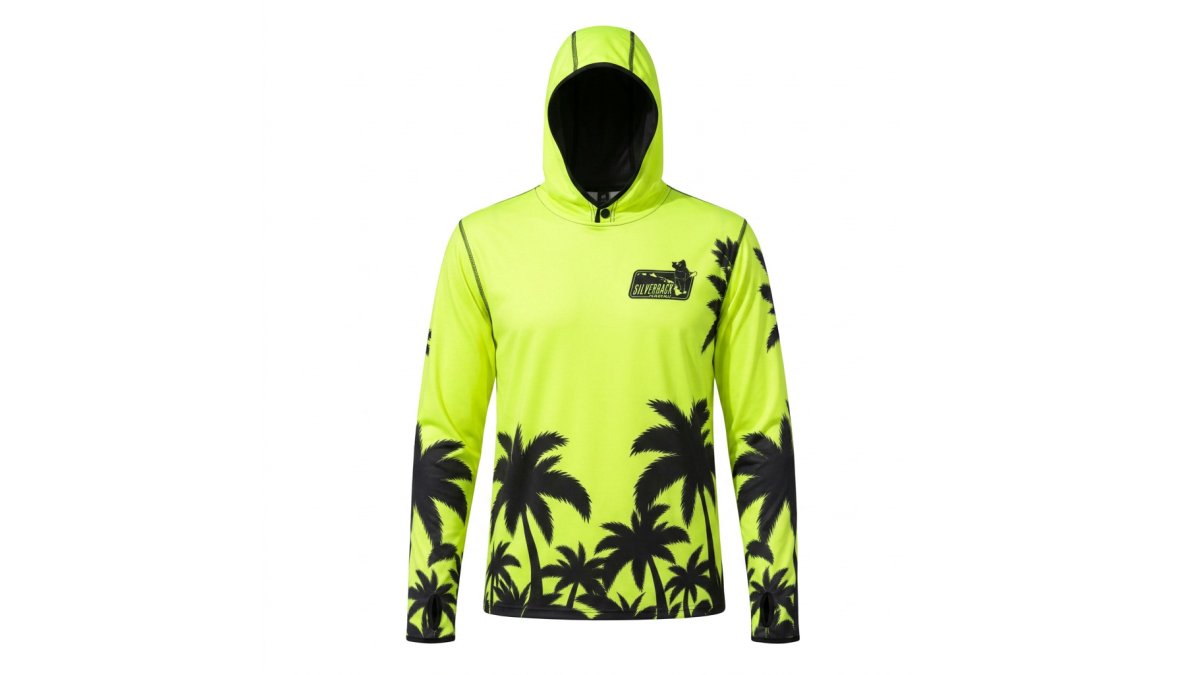
Men's Hawaiian Hydro Hoodie - Big →
Visual Signs of Degradation to Watch For
Visual signs tell you more than the calendar. Fabric degradation shows up before the protection number drops far enough to matter.
| Warning Sign | What It Means | What to Do |
|---|---|---|
| Thinning or see-through spots | Weave has abraded, UV transmittance rising | Retire or reserve for low-sun use |
| Pilling and fuzzy surface | Fiber ends breaking down | Replace if widespread |
| Loss of stretch or sagging | Elastane degraded, fit loosening | Replace, fit affects coverage |
| Fading or color change | Dyes and any finish breaking down | Test with the light method below |
| Stiff, crunchy hand feel | Finish or fiber damage | Replace |
| Chalky or brittle feel | UV-driven polymer breakdown | Replace |
How to Test Remaining Protection at Home
You cannot measure UPF at home without a lab, but you can spot the difference between a garment still doing its job and one that has quietly stopped.
The Impact of Stretching and Fit on UPF Protection
Stretching and fit affect UPF protection more than most people realize. A fabric rated UPF 50 in its relaxed state drops when pulled tight, because stretching opens the spaces between yarns and lets more UV through. That is why the same hoodie protects differently loose versus stretched across the shoulders during a paddle stroke.
UPF Clothing vs. Sunscreen: A Practical Comparison
UPF clothing and sunscreen solve the same problem differently, and they work best together. Clothing protection does not need reapplying, does not sweat off, and covers consistently. Sunscreen fills the gaps clothing cannot: face, neck, hands, and any exposed skin. For long water sessions, clothing carries most of the load.
| Factor | UPF Clothing | Sunscreen |
|---|---|---|
| Reapplication | Not needed | Every two hours, more when wet |
| Coverage consistency | Even, no missed spots | Depends on application |
| Performance when wet | Varies by fiber | Washes or sweats off |
| Best for | Torso, arms, shoulders, legs | Face, neck, hands, exposed skin |
| Longevity | Seasons, with care | Hours per application |
Conclusion
The real challenge is not finding UPF 50 clothing, it is keeping that protection intact through saltwater, chlorine, and hundreds of wash cycles. Silverback Hawaii builds gear for that reality, with permanent SPF 50 protection woven into recycled fabric, flatlock seams that prevent chafing, and thumb holes and hoods that extend coverage where sunscreen cannot reach. Get started with Silverback Hawaii and gear that protects your skin and the ocean you paddle in.
Skin Cancer Foundation guidance on sun-protective clothing
Frequently Asked Questions
How long does UPF 50+ clothing last?
Most UPF 50 clothing holds its rating for 1 to 2 years of regular use, or roughly 30 to 50 wash cycles, depending on fabric quality and care. Garments with physical UV blockers built into the fiber last longer than those with chemical treatments. Stretching, abrasion, and harsh detergents speed up degradation. Inspect your gear each season for thinning, fading, or loss of stretch to decide when replacement makes sense.
Does wet UPF clothing lose its effectiveness?
Wet fabric can temporarily reduce UPF protection because water fills the spaces between fibers and changes how UV rays pass through. The drop is usually modest, and protection returns once the garment dries. Saltwater and chlorine are bigger concerns over time because they degrade synthetic fibers and any topical treatments. Rinsing gear in fresh water after every session helps preserve its rating.
Is UPF 50 clothing more effective than standard cotton shirts?
Yes. A white cotton t-shirt typically offers only UPF 5 to 10, letting most UV rays through, especially when wet or stretched. UPF 50 fabric blocks 98% of UV radiation by design, using tighter weaves, darker dyes, or built-in UV blockers. For long sun exposure, sun-protective clothing outperforms ordinary cotton by a wide margin and does not need reapplying like sunscreen.
How can you tell if your sun-protective clothing needs to be replaced?
Look for visible thinning when you hold the fabric up to light, faded color, loss of stretch, pilling, or small holes along seams. These signs mean the fabric weave has opened up and UV rays are getting through. If a garment has seen two full seasons of regular paddling or beach use and shows any of these signs, replace it. UPF protection cannot be restored once the fibers degrade.