

Last Updated: October 26, 2026
Quick Summary
High-quality paddling jerseys combine UPF 50+ sun protection with moisture-wicking fabrics, flatlock seams to prevent chafing, and durable construction that withstands saltwater exposure and repeated washing. They're engineered for water performance, not casual wear, protecting paddlers during long sessions on the water.
- UPF 50+ fabric blocks about 98% of UVA and UVB rays, but protection degrades when wet, stretched, or after dozens of wash cycles unless built with fiber-integrated UV blockers.
- Flatlock seams lie completely flat against skin instead of creating raised ridges, eliminating friction points under PFD straps during paddling.
- Recycled polyester blended with 15-20% spandex offers stretch, durability, and excellent moisture transport while maintaining quick-dry performance.
- Proper care, cold water washing, avoiding fabric softeners, rinsing after saltwater sessions, and hang drying, preserves moisture-wicking and UPF protection for years.
Table of Contents
- What Defines a High-Quality Paddling Jersey
- Best Sun Protective Shirts for Paddleboarding
- Moisture-Wicking Fabrics for Water Sports
- Fit and Seam Construction for Chafe-Free Paddling
- Sustainable Paddling Gear That Lasts
- Durability and Care for Extended Performance
- Choosing Your Paddling Jersey for Your Water
- Getting Started With Your Paddling Jersey
- Frequently Asked Questions
What Defines a High-Quality Paddling Jersey
A high-quality paddling jersey is built for performance in water, not styled for the beach. The difference comes down to fabric engineering, construction details, and how thoughtfully the garment handles sun exposure, water contact, repetitive shoulder movement, and PFD friction.
A premium jersey combines UPF protection with moisture management, flatlock seams to prevent chafing, and lightweight, quick-drying fabrics. Casual activewear works for the gym but fails under paddling's specific stresses.
Real paddling jerseys handle saltwater, chlorine, and repeated compression from PFD straps, drying fast and maintaining protective properties through dozens of washes. A jersey that loses its UPF rating after three saltwater sessions isn't built for paddlers.
Best Sun Protective Shirts for Paddleboarding
Sun protection on the water is non-negotiable. Learn how a Hawaiian sun shirt protects you from UV rays on the water to understand this key quality feature. The sun reflects off water, amplifying UV exposure, and paddlers spend hours with skin exposed. For a paddling jersey, sun protection is a core performance requirement, and the difference between good and great comes down to how that protection is engineered and how well it holds up.
What UPF Actually Measures
UPF, or Ultraviolet Protection Factor, is the fabric equivalent of SPF. A UPF 50+ rating means the fabric has been tested to allow only 1/50th of the sun's UV radiation to pass through, blocking about 98% of UVA and UVB rays (Sun Protective Clothing). That is a measurable, testable standard, not a marketing claim. The Skin Cancer Foundation's UV protection guidance notes that water-based athletes face compounded UV risk because water reflects and intensifies exposure while sessions run long.
The catch most buyers miss: UPF ratings are established on dry, unstretched fabric in a lab, but real paddling involves wet, stretched, salt-loaded fabric under a PFD. A jersey that tests at UPF 50+ dry can drop meaningfully when soaked or stretched. High-quality jerseys use dense knits and fiber-integrated UV blockers rather than surface coatings, so protection survives real conditions.
How Protection Degrades (and What Preserves It)
Three factors erode UPF faster than anything else:
- Wetness. Water fills the spaces between fibers and can reduce the effective UPF of some fabrics. Denser knits and tighter constructions resist this better than loose, open weaves.
- Stretch. Fabric stretched across shoulders and the upper back thins out, letting more UV through. Jerseys cut with adequate ease and four-way stretch maintain coverage instead of thinning under tension.
- Wear and washing. Coatings wash away; fiber-integrated protection does not. After dozens of saltwater rinses and wash cycles, a coated jersey may lose protection while a well-built one holds its rating.
Jersey-Specific Construction That Protects
Beyond the fabric rating, look for design details that extend coverage where paddlers actually burn:
- Extended shoulder and upper-back coverage, the zones most exposed to direct sun during a forward stroke.
- Thumb holes and longer sleeves to cover the backs of hands and wrists without gloves.
- A higher collar or hood for neck protection on long open-water sessions.
- High-visibility colors, which improve visibility to other paddlers and watercraft, a genuine safety feature on busy water.
Moisture-Wicking Fabrics for Water Sports
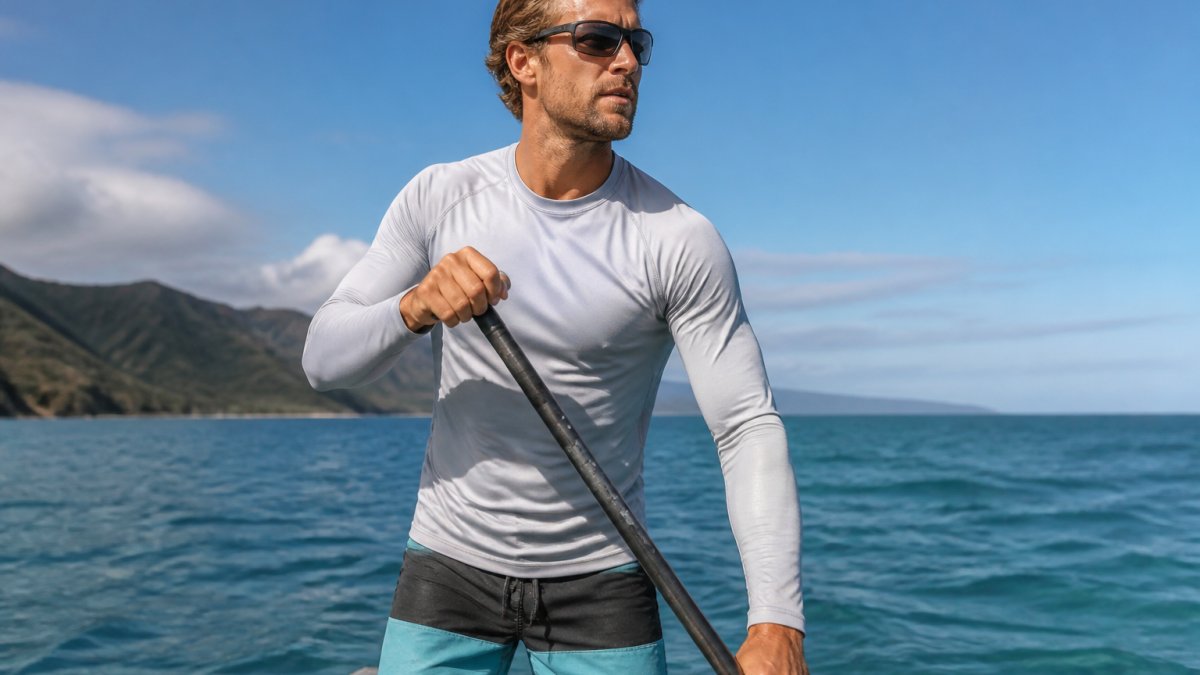
Moisture-wicking fabrics for water sports pull sweat and water away from your skin, keeping you dry during intense paddling sessions.
Recycled polyester blended with spandex has become the standard for high-performance paddling gear, offering stretch, durability, and excellent moisture transport.
Breathability matters equally. A fabric that wicks moisture but traps heat leaves you uncomfortable on hot days.
Wash and care matter here. Synthetic fabrics maintain their moisture-wicking properties better than natural fibers when properly maintained. Avoid fabric softeners, which coat the fibers and reduce wicking performance, and use cold water and gentle cycles.
Our moisture-wicking fabrics for water sports article covers the technical details of how these materials perform under different conditions.
Fit and Seam Construction for Chafe-Free Paddling
Chafing happens where fabric moves repeatedly against skin, particularly under PFD straps and at shoulder seams.
Flatlock seams are the difference between a paddling jersey and regular activewear. Traditional overlocked seams create a raised line that rubs and irritates skin during long sessions.
Fit directly impacts comfort. A jersey that's too loose shifts during paddling; too tight, and you lose shoulder and arm mobility.
Seam placement matters as much as seam type.
Sustainable Paddling Gear That Lasts
Sustainable paddling gear starts with material choice.
Durability is the foundation of sustainability. A jersey that lasts five years has far less environmental impact than one that degrades after a season.
The production process matters too. The EPA's guidance on sustainable textiles highlights that manufacturing impact, water use, chemical processing, and energy consumption, often exceeds the product's use phase.
Men's Hawaiian Hydro Hoodie-Ekolu Pua Print, Lotus Rec Fabric →
Caring for your gear extends its life. Rinse with fresh water after saltwater sessions to remove salt crystals that degrade fabric, and avoid high heat when drying.
Silverback Hawaii creates sustainable paddling gear that lasts using recycled materials and construction methods designed for durability.
Durability and Care for Extended Performance
A premium paddling jersey requires minimal care to maintain performance. Proper washing and storage preserve its moisture-wicking properties, UPF protection, and structural integrity for years.
Wash in cold water with mild detergent; hot water breaks down synthetics faster and reduces UPF coating effectiveness.
Rinse immediately after saltwater sessions. Salt crystals left on fabric accelerate degradation and create uncomfortable texture.
Store in a cool, dry place away from direct sunlight.
Watch out: Never use bleach or harsh chemicals.
The Men's Hawaiian Hydro Hoodie is engineered to handle the demands of competitive paddling and casual recreation alike.

Choosing Your Paddling Jersey for Your Water
Selecting the right paddling jersey depends on your conditions: water temperature, paddling intensity, sun exposure, and paddling type. Match fabric, fit, and coverage to the disciplines you actually face.
Start With Fabric Performance Trade-Offs
Every jersey fabric is a set of trade-offs. Understanding them is the fastest way to pick the right one:
- Quick-drying synthetics (polyester, nylon). Light, durable, and fast to dry. Best for warm water and high-output paddling. Trade-off: less insulation when wet and cold.
- Sun-protective knits (dense polyester/spandex blends). High UPF with good stretch. Best for open-water and tropical sessions. Trade-off: denser knits can feel warmer in still air.
- Stretch blends (spandex/elastane content). Improve shoulder mobility and reduce seam stress. Best for racing and repetitive stroke work. Trade-off: too much stretch can thin fabric under tension, so pair with adequate cut ease.
- Insulating layers (fleece-backed or heavier knits). Add warmth for cold water and wind. Best for cool-weather touring. Trade-off: slower to dry and bulkier under a PFD.
Experienced paddlers choose the lightest fabric that meets the day's protection and warmth needs, then layer for conditions rather than buying one jersey for everything.
Match the Jersey to Your Discipline
Different paddling disciplines stress a jersey in different ways:
- Touring and long-distance kayaking. Prioritize UPF coverage, durability, and comfort over hours under a PFD. Extended shoulders, a higher collar, and flatlock seams matter most.
- Recreational kayaking and SUP. Balance comfort, visibility, and breathability. High-visibility colors and a relaxed-but-not-loose fit work well for mixed sessions.
- Racing and downwind paddling. Favor ultra-lightweight, quick-drying fabrics with maximum shoulder mobility and minimal drag. Flatlock seams are non-negotiable at high stroke rates.
- Cold-water paddling. Choose a heavier or fleece-backed jersey with full arm coverage, and plan to layer under a dry top or splash jacket rather than relying on the jersey alone.
- Warm-water and tropical sessions. Go light, maximize UPF, and prioritize quick-dry performance and breathability.
Fit Checks Before You Buy
Fit is where most jersey purchases go wrong. Run these checks:
- Shoulder mobility. Raise both arms overhead and simulate a paddle stroke. Fabric should not pull tight across the back or bind at the shoulder.
- PFD compatibility. Try the jersey on with your PFD if possible. Seams should not create ridges under straps, and the hem should not ride up.
- Hem length. The hem should stay put when you reach forward, not expose your lower back.
- Seam placement. Shoulder seams should sit slightly back from the joint, not on top of it, and side seams should avoid pressure points under the PFD.
| Feature | Competitive Paddlers | Recreational Paddlers | Cold-Water Paddlers |
|---|---|---|---|
| UPF Protection | UPF 50+ essential | UPF 50+ recommended | UPF 50+ with full coverage |
| Fabric Weight | Ultra-lightweight | Lightweight to medium | Medium to heavy or fleece-backed |
| Seam Type | Flatlock required | Flatlock preferred | Flatlock required |
| Coverage | Shoulders, upper back | Shoulders, upper back | Extended, arms covered |
| Visibility | High-visibility colors | Helpful but optional | High-visibility preferred |
| Layering Role | Standalone | Standalone | Base or mid layer under dry top |
Getting Started With Your Paddling Jersey
The right paddling jersey transforms your time on the water, protecting your skin, keeping you comfortable during long sessions, and lasting for years when properly maintained.
Start by assessing your needs: primary paddling condition, typical session length, and whether you paddle in saltwater or freshwater. These answers guide your choice toward a jersey built for your situation.
Our apparel combines UPF 50+ sun protection, moisture-wicking performance, and sustainable materials engineered for durability.
High-quality paddling jerseys aren't luxury, they're essential equipment for anyone spending significant time on the water. The right jersey protects your skin, prevents chafing, and performs consistently through saltwater exposure and repeated washing.
Frequently Asked Questions
What material is best for paddling jerseys?
Recycled polyester blended with spandex is ideal for paddling jerseys. This combination delivers UPF 50 sun protection, fast-wicking performance, and four-way stretch for unrestricted paddle strokes. Recycled materials also keep ocean plastic out of waterways while maintaining durability through saltwater exposure and repeated washing. Look for jerseys with 84-85% recycled polyester and 15-16% spandex for the best balance of protection, breathability, and comfort.
Why do paddling jerseys need UPF protection?
Paddlers spend extended hours on open water with intense sun reflection off the water surface, doubling UV exposure compared to land activities. UPF 50 protection blocks 98% of ultraviolet rays, preventing sunburn and long-term skin damage. High-quality paddling jerseys maintain their UPF rating through multiple saltwater sessions and washings, unlike standard athletic wear that loses effectiveness quickly. This is especially critical for competitive racers and sun-sensitive individuals on longer paddling runs.
Should paddling jerseys be loose or tight-fitting?
Paddling jerseys should fit snugly without restricting movement. A fitted cut prevents excess fabric from bunching under your personal flotation device, reduces chafing during long sessions, and improves comfort under wetsuits or layered gear. Flatlock seams, not traditional stitching, eliminate irritation where the jersey contacts your skin. Four-way stretch fabric accommodates your full range of paddle motion while staying in place, so you can focus on your stroke rather than adjusting your gear.
How do I know if a paddling jersey will hold up in saltwater?
High-quality paddling jerseys use corrosion-resistant materials and construction designed specifically for saltwater exposure. Recycled polyester with proper UV stabilization resists degradation from salt and sun. Check for reinforced seams, durable closures (like button hoods rather than simple drawstrings), and thumb holes that stay intact through repeated use. Brands that test gear on the water and offer products used by competitive paddlers and official team providers have proven durability records in real saltwater conditions.
