

Last Updated: November 14, 2026
Quick Summary
Choose durable recycled fabric leggings by checking the fiber label first: look for recycled polyester or recycled nylon listed first with a meaningful spandex percentage for stretch recovery. Then confirm flatlock seams, dense knit opacity, and a GRS or RCS certificate number before buying.
- The women's Laki Leggings use 75% recycled polyester and 25% spandex with four-way stretch.
- GRS verifies recycled content plus social, environmental, and chemical criteria; RCS verifies recycled content alone.
- Flatlock seams lie flat against the skin and reduce chafing under a life vest.
- Return any pair that fails two or more at-home durability tests such as pilling or sagging.
- Wash cold inside out, skip fabric softener, and line dry in shade to protect elastane.
Table of Contents
- Start With the Fabric Label: What Durable Recycled Fabric Leggings Are Made Of
- The Benefits of Recycled Ocean Plastic in Performance Activewear
- How to Verify Recycled-Fiber Claims Before You Buy
- Spotting Quality Stitching, Seams and Fabric Weight
- Opacity, Squat-Proof Coverage and Moisture-Wicking Performance
- At-Home Durability Tests You Can Run Before Race Day
- How to Care for Recycled Polyester Leggings So They Last
- Choosing Your Pair of Durable Recycled Fabric Leggings
- Frequently Asked Questions
Start With the Fabric Label: What Durable Recycled Fabric Leggings Are Made Of
Durable recycled fabric leggings are built from a fiber blend, not a single material, and the label tells you almost everything before you spend a dollar. Reading the tag in that order matters more than the marketing copy on the hangtag.
Most performance leggings pair recycled polyester or recycled nylon with elastane, also called spandex. The synthetic base gives strength and quick drying. The stretch fiber gives movement. Get the ratio wrong and the legging either bags out or fights your body.
Reading Fiber Content and Blend Ratios
A blend ratio tells you how the fabric will behave after repeated wear. High recycled polyester content means better abrasion resistance and shape retention. A cotton blend feels soft but holds moisture, which is a poor match for sweaty sessions and saltwater.
Look for these signals on the label:
- Recycled polyester or recycled nylon listed first
- Elastane or spandex at a meaningful percentage
- No vague "performance blend" language without numbers
- A fiber content line that matches the care tag
Why Spandex Percentage Decides Stretch Recovery
Stretch recovery is the fabric's ability to snap back to its original shape. Too little spandex and the knees and seat sag by mid-season.
The women's Laki Leggings use a 75% recycled polyester, 25% spandex blend, with four-way stretch that moves with you on long paddles.
The Benefits of Recycled Ocean Plastic in Performance Activewear
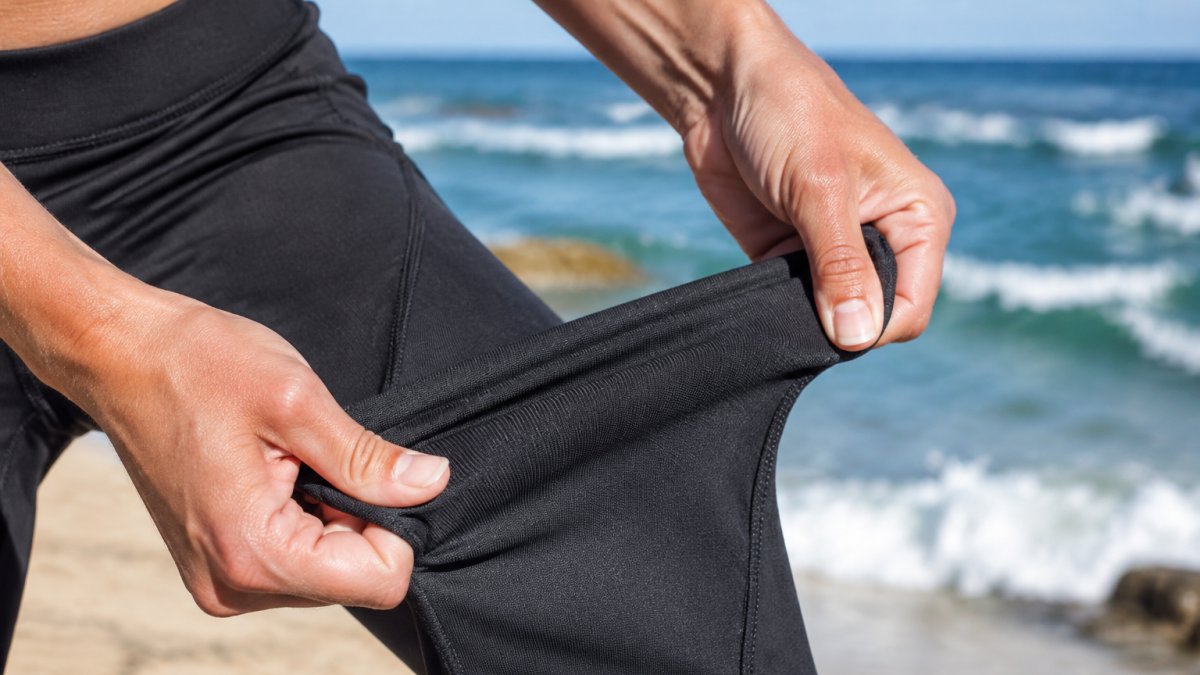
The benefits of recycled ocean plastic in activewear include keeping plastic out of circulation and giving recovered material a second life.
Many athletes assume recycled means weaker, but durability depends on fabric construction and fiber quality.
For water athletes, the appeal runs deeper. Gear that keeps plastic out of oceans and landfills aligns with the reason many of us are on the water in the first place.
How to Verify Recycled-Fiber Claims Before You Buy
Verifying a recycled-fiber claim means separating what a label can prove from what it merely asserts. Any company can print "eco" or "made with recycled materials" on a hangtag. A certification is harder to fake, but even a certification has boundaries, and knowing those boundaries is what keeps you from paying a premium for a claim that does not hold up.
Start with these checks:
- Ask which certification the fabric carries, and get the certificate number, not just a logo
- Confirm the certification body name appears on the tag or spec sheet
- Check whether the claim covers the fabric itself or only the packaging or trim
- Request the fiber content and certification scope in writing before you buy
- Ask whether the recycled content is pre-consumer (factory scrap) or post-consumer (bottles, ocean-bound plastic)
What GRS and RCS Actually Verify
The Global Recycled Standard, known as GRS, verifies recycled content plus social, environmental, and chemical criteria across the supply chain. The Recycled Claim Standard, or RCS, verifies recycled content alone. Both are administered under the Textile Exchange standards framework.
GRS is the stronger signal because it covers more ground: recycled content percentage, chain-of-custody tracking from the recycling stage through the final product, and restricted chemical use. RCS is narrower but still meaningful because it requires chain-of-custody documentation for the recycled content claim.
What Certifications Cannot Tell You
A GRS or RCS certificate confirms recycled content and chain of custody.
A common pattern is a brand leading with a recycled-content certification while staying quiet about a low spandex percentage or a loose knit.
Watch out: a logo on a hangtag is not proof. Ask for the certificate number and the certified scope, and if the brand cannot supply them, assume the recycled claim is marketing rather than verified content.
Reading the Fiber Content Line as a Cross-Check
The fiber content line is your independent check on any recycled claim. If the tag says 75% recycled polyester and 25% spandex, the recycled share should match what the certification covers.
Look for a fiber content line that lists recycled polyester or recycled nylon first, a meaningful elastane or spandex percentage, and no vague "performance blend" language without numbers. If the recycled percentage is not stated as a number, the claim is not specific enough to verify.
Spotting Quality Stitching, Seams and Fabric Weight
Quality seams and fabric weight separate leggings that survive a season from leggings that survive years. Stitching is where most cheap leggings fail first, usually at the inner thigh and seat.
Fabric weight and density tell you how much substance the cloth has. A denser knit resists pilling and holds opacity better. Feel the fabric between your fingers and hold it to the light.
Flatlock Seams vs. Overlocked Seams
Flatlock seams lie flat against the skin, which reduces chafing under a life vest or paddle harness. Overlocked seams are bulkier and can rub on long efforts.
The Laki Leggings use flatlock seams, which lie flat against the skin.
Opacity, Squat-Proof Coverage and Moisture-Wicking Performance
Squat-proof coverage is a function of fabric density and stretch, not thickness alone. A fabric can feel thin and still pass the bend-and-squat test if the knit is dense enough. Opacity fails when the knit is loose or the spandex share is low.
Moisture-wicking and breathability keep you dry and reduce odor. Quick-dry fabric moves sweat away from skin so it evaporates fast. For paddlers, that matters during and after a session.
Test opacity before race day:
- Bend at the waist in front of a mirror under bright light
- Squat and check the seat and inner thigh
- Look for sheerness at the knee when bent
At-Home Durability Tests You Can Run Before Race Day
At-home durability tests catch weak fabric before it fails mid-race. None of these require equipment, and all of them take minutes.
Run this checklist on any new pair:
- Stretch the fabric across the knee and release it, then check for sag
- Rub the inner thigh fabric together to check for pilling
- Hold the fabric to a lamp to check opacity
- Tug gently at seams and stitching to check seam strength
- Wash once and recheck stretch recovery
If a pair fails two or more of these, return it. A legging that pills or sags in week one will not survive a season of training.
How to Care for Recycled Polyester Leggings So They Last
Caring for recycled polyester leggings means protecting two things at once: the stretch fiber that provides recovery, and the fabric surface that resists pilling and abrasion. Heat and friction are the enemies. Hot water and high dryer settings break down elastane and speed up pilling, and rough laundry loads abrade the knit surface faster than normal wear.
Wash cold, inside out, with mild detergent. Skip fabric softener, which coats the fibers and reduces moisture-wicking. Line dry when you can, and air dry in shade to protect the fabric.
A Care Routine Built Around Lifespan
A few habits extend lifespan more than any single product:
- Wash after every saltwater or heavy-sweat session to protect the fibers from salt and residue
- Turn leggings inside out before washing to reduce surface abrasion
- Avoid velcro, zippers, and hooks in the same load, which snag and pill the knit
- Use a mesh wash bag to reduce friction and catch shed fibers
- Air dry in shade rather than tumble drying, since heat degrades elastane
- Rotate two pairs to reduce wash frequency and spread abrasion across garments
A common pattern is that leggings fail at the inner thigh and seat first, and those are exactly the areas that take the most abrasion in the wash and in wear. Reducing friction in the laundry is the cheapest way to slow that failure.
Microfiber Shedding and What You Can Do
Microfiber shedding is a real trade-off with synthetic fabric, and it is worth naming honestly. Every wash of a recycled polyester garment releases some microfibers, and those fibers can reach waterways. A NOAA marine debris overview explains how microfibers reach waterways.
You cannot eliminate shedding, but you can reduce it. Wash full loads rather than small ones, use a wash bag designed to capture fibers, wash cold, and avoid long, aggressive cycles.
Repair and End-of-Life Options
Extending lifespan is the most effective environmental choice, because the durability benefit of a recycled garment only compounds if you keep wearing it. Repair small seam failures early rather than replacing the pair.
Watch out: fabric softener and dryer sheets feel harmless but they coat the fibers, reduce moisture-wicking, and can trap odor. Skip both, and your leggings will wick and recover better for longer.
Choosing Your Pair of Durable Recycled Fabric Leggings
Choosing the right pair comes down to the label, the seams, and the certification. Check fiber content and spandex percentage first. Then confirm seam construction and opacity. Then verify the recycled claim.
Here is the quick summary we use:
| What to Check | Why It Matters | What to Look For |
|---|---|---|
| Fiber content | Strength and drying speed | Recycled polyester or nylon listed first |
| Spandex percentage | Stretch recovery after wear | Meaningful elastane share, not minimal |
| Seam type | Chafing and seam strength | Flatlock seams |
| Fabric density | Opacity and pilling | Dense knit, passes light test |
| Certification | Verifies recycled claim | GRS or RCS |
| Care routine | Lifespan and stretch | Cold wash, line dry |
The women's Laki Leggings are made from 75% recycled polyester and 25% spandex, with flatlock seams, UPF 50 sun protection woven in, and discreet calf pockets for gels. You can shop the women's Laki Leggings to see the full spec.
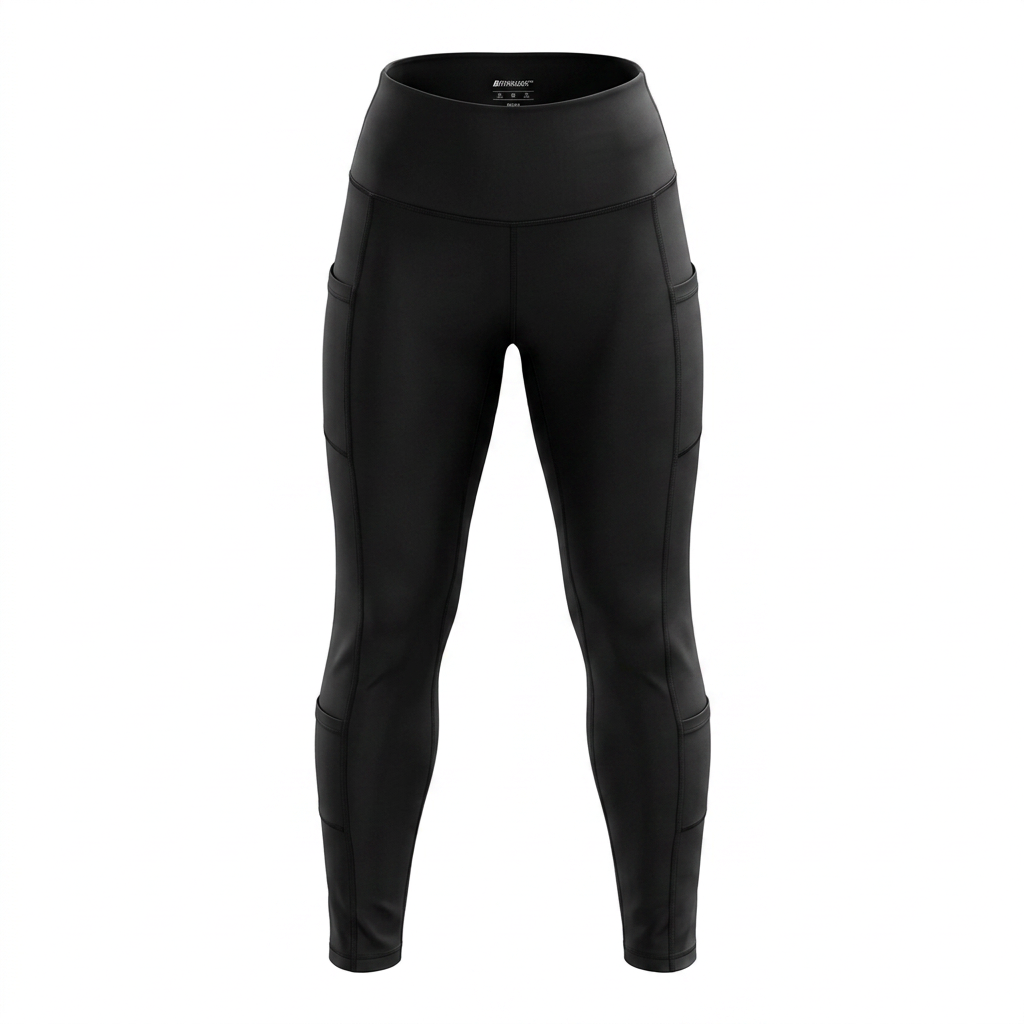
Durable gear should not be a guess. At Silverback Hawaii, we build apparel made from recycled plastic, designed by paddlers for paddlers, with sun protection and flatlock seams that hold up on the water.
Frequently Asked Questions
How can you tell if recycled fabric leggings are durable?
Check the fiber content first: a blend around 75% recycled polyester with 25% spandex gives four-way stretch and good recovery. Look for flatlock seams instead of raised overlocked seams, since flat seams sit flush against skin and resist chafing under a PFD. Hold the fabric up to light to test opacity, and stretch a section to see whether it snaps back. A visible GRS or RCS certification also signals the recycled content claim is verified rather than marketing language.
What are the benefits of recycled ocean plastic in activewear?
Recycled ocean plastic keeps waste out of waterways and landfills while producing performance fabric that behaves much like virgin polyester. It is designed to wick moisture and dry quickly. For paddlers, the practical benefit is gear that handles saltwater sessions without losing shape. Silverback Hawaii's Laki Leggings are made from a 75% recycled polyester, 25% spandex blend.
How should you care for recycled polyester leggings to extend their lifespan?
Wash in cold water on a gentle cycle and skip the fabric softener, which coats fibers and reduces moisture-wicking. Turn leggings inside out and use a mesh bag to limit abrasion. Air dry whenever possible; high heat breaks down spandex elasticity over time. Avoid washing after every wear if the leggings only saw light use, and rinse saltwater promptly after paddling to slow fiber degradation.
Do recycled fabric leggings perform as well as virgin polyester?
Recycled polyester performance depends on fabric weight, seam construction and spandex quality rather than on whether the polyester was recycled. The variables that actually shorten a legging's life are thin fabric, poor stitching and heat damage in the dryer, not the recycled content itself.
