

Last Updated: November 8, 2026
Quick Summary
You can improve paddling on a split timeline: technique gains often show up within the first two weeks, while endurance builds over weeks 3 to 12 of consistent work. Most paddlers see clear progress with two to three sessions per week plus recovery, and gains continue beyond week 12 at a slower pace.
- A fit swimmer with a strong aerobic base sees paddle gains faster than someone new to cardio.
- Two 30-minute paddles beat one 90-minute grind when building early endurance.
- Measure progress every two weeks with a stroke count, timed paddle, hold test, or fatigue rating.
- Fix a bent, low elbow by reaching higher and pulling through with a strong back.
- Pain lingering past a few days is a signal to rest and get checked.
Table of Contents
- What Determines How Long It Takes to Improve Paddling
- A Realistic Improvement Timeline for Paddling
- Baseline Tests to Measure Paddling Progress
- Surf Paddling Technique: The Fastest Gains
- Surf Paddling Exercises to Build Strength and Endurance
- Surf Paddle Training at Home: A Weekly Plan
- How Long Does It Take to Improve Paddling for Beginners?
- Shoulder Health, Recovery, and When to Seek Help
- Frequently Asked Questions
What Determines How Long It Takes to Improve Paddling
Most surfers hit a wall around the 30-minute mark, arms burning, breath short, and no idea why. The answer to how long it takes to improve paddling depends on three things: your starting fitness, how often you get in the water, and how well you recover between sessions. Many paddlers train hard but still feel stuck. The fix usually isn't more effort. It's smarter work.
Paddling endurance is the ability to keep a steady stroke over long distances without losing form. It builds through repeated time in the water, not through one heroic session.
Starting Fitness, Surf Frequency, and Recovery
A fit swimmer with a strong aerobic base will see paddle gains faster than someone new to cardio. Frequency matters just as much. Two to three surf sessions a week beats one long weekend push. Recovery is the piece most people skip. Shoulder muscles and back muscles need rest to rebuild.
- Starting fitness: a base of swimming or upper-body strength speeds early gains
- Surf frequency: 2-3 sessions per week is a solid target
- Recovery: sleep, hydration, and rest days protect joint health
A Realistic Improvement Timeline for Paddling
Progress timelines vary, but technique gains often arrive before endurance gains. That split matters. Technique fixes can show up in days, while fitness adaptations take weeks of consistent work. Knowing which one you're chasing keeps you from quitting too early.
The timeline below is a general set of checkpoints so you can tell whether you are on track or need to adjust. It is not a guarantee.
Weeks 1-2: Technique and Awareness
The first two weeks are about stroke efficiency and body position, not volume. Focus on the catch, the pull, and keeping your spine long. You may feel sore in new places because you are using your back muscles instead of just your arms.
- What improves: stroke efficiency, posture, breathing rhythm
- What to expect: shorter paddle outs may feel smoother, but fatigue still arrives fast
- Checkpoint: you can describe what a high-elbow catch feels like and repeat it for most of a session
Weeks 3-4: Baseline and Early Endurance
This is where you establish your baseline tests and start adding small amounts of volume. Keep sessions short but frequent. Two 30-minute paddles beat one 90-minute grind.
- What improves: paddle endurance for short bursts, recovery between sets
- What to expect: the first 10 minutes of a paddle out feel easier; the last 10 still hurt
- Checkpoint: your timed paddle distance improves slightly, or your stroke count for the same distance drops
Weeks 5-8: Building Paddle Endurance
Now you add volume. Longer paddling time, more paddle distance, and steady intervals build muscular endurance. This is the phase where most paddlers either progress or stall, depending on consistency.
- What improves: sustained paddle endurance, wave-catching ability, back endurance
- What to expect: paddle outs feel easier, you catch more waves per session, and you recover faster between waves
- Checkpoint: you can paddle for 30 minutes with fewer rest breaks than in week 1
Weeks 9-12: Strength, Speed, and Recovery
This phase blends endurance with strength and recovery work. Add band pull-aparts, lat pulldowns, and plank holds to protect shoulder health and back muscles. Keep one full rest day between hard sessions.
- What improves: paddle speed, power per stroke, shoulder health, posture under fatigue
- What to expect: you reach the lineup faster and feel less wrecked after a long session
- Checkpoint: your timed paddle distance improves again, and your end-of-session fatigue rating drops
Beyond Week 12: Ongoing Gains
After 12 weeks, gains come from consistency and variation. Rotate between endurance paddles, technique focus sessions, and strength work. Continued training generally brings further gains in paddle speed and wave-catching ability, though the pace typically slows.
| Phase | Focus | Typical Duration | What Improves | Checkpoint |
|---|---|---|---|---|
| Weeks 1-2 | Technique and awareness | 2 weeks | Stroke efficiency, posture | Can repeat a high-elbow catch |
| Weeks 3-4 | Baseline and early endurance | 2 weeks | Short-burst endurance, recovery | Timed paddle or stroke count improves |
| Weeks 5-8 | Endurance building | 4 weeks | Paddle endurance, wave catching | 30-minute paddle with fewer breaks |
| Weeks 9-12 | Strength, speed, recovery | 4 weeks | Paddle speed, shoulder health | Timed paddle improves again |
| Beyond 12 | Consistency and variation | Ongoing | Paddle speed, wave catching | Fatigue rating drops |
Watch out: if you skip the baseline tests, you will not know whether the timeline is working for you. Measure every two weeks and adjust volume if you are not hitting the checkpoints.
Typical duration of each paddling improvement phase
Baseline Tests to Measure Paddling Progress
You can't improve what you don't measure. A baseline test is a repeatable check that shows whether your paddling is actually getting better. Use the same test every two weeks and write down the results.
- Stroke count: count strokes across a set distance
- Timed paddle: time a fixed paddle distance
- Hold test: time a long hold in a paddling posture
- Energy check: rate your fatigue at the end of a session
Surf Paddling Technique: The Fastest Gains
If you want faster results, fix your surf paddling technique before adding fitness work. Better stroke efficiency means less wasted energy and more paddle speed. Small changes pay off fast.
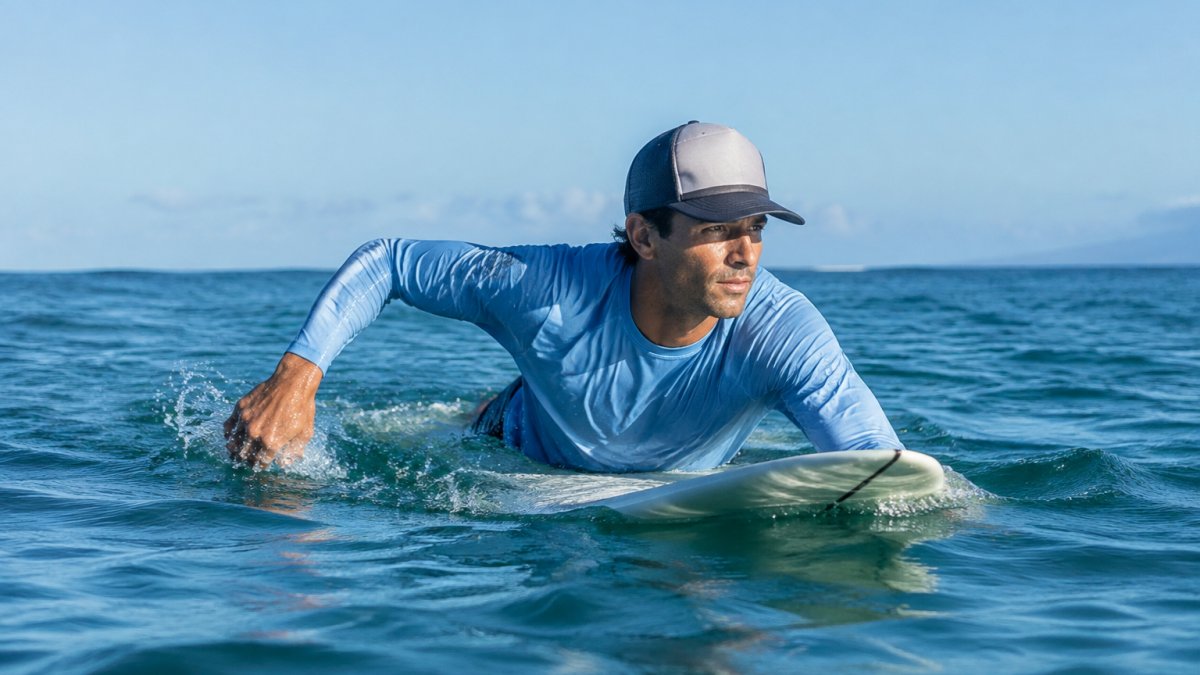
The biggest mistake is pulling with a bent, low elbow. Reach higher, catch the water early, and pull through with a strong back. Keep your spine long and your posture tall to save energy. If you want to practice these gains at real breaks, explore paddling spots in Hawaii that suit your level.
Surf Paddling Exercises to Build Strength and Endurance
Surf paddling exercises build the exact muscles you use on the water. Focus on shoulder muscles, back muscles, and upper-body strength. Add these to your week:
- Band pull-aparts for shoulder health
- Lat pulldowns for pulling power
- Plank holds for posture and spine support
- Superman raises for back muscles
- Swimming intervals for conditioning
Surf Paddle Training at Home: A Weekly Plan
You can build paddle fitness without a gym. A simple weekly plan keeps training frequency steady and protects recovery. Here's a schedule we recommend:
- Monday: 20-minute swim or band work
- Wednesday: 30-minute strength circuit
- Friday: 15-minute posture and core work
- Weekend: one or two surf sessions
Training solo is good. Training with a crew is better. If you want accountability, look into local teams and clubs to keep your consistency high.
How Long Does It Take to Improve Paddling for Beginners?
Beginners often see gains with steady practice, though timing varies. The first gains come from technique, not fitness. New paddlers who focus on stroke efficiency and time in the water improve faster than those who only chase strength.
The beginner timeline depends on three things: how often you get in the water, whether you add any dry-land work, and how well you recover. A beginner who paddles twice a week and does one short strength session will usually progress faster than one who trains hard but rarely gets wet.
Weeks 1-2: Learn the Stroke
Spend the first two weeks learning the catch, the pull, and body position. Keep sessions short. Ten to fifteen minutes of focused paddling is enough. The goal is not distance. The goal is repeating a good stroke.
- What to expect: arms and back feel tired quickly, balance feels unstable
- What to do: practice on flat water or small surf, focus on one technique cue per session
- Checkpoint: you can paddle for 10 minutes without losing form
Weeks 3-4: Add Short Paddle Outs
Start adding short paddle outs at your local break. Keep them short and frequent. Two 20-minute sessions beat one long session. This is where beginners either build a base or burn out.
- What to expect: paddle outs feel easier, you catch a few more waves
- What to do: add one dry-land session with band pull-aparts and plank holds
- Checkpoint: you can paddle out and back without stopping to rest
Weeks 5-8: Build Consistency
Now you build consistency. Aim for two to three surf sessions a week and one short strength session. Keep the strength work simple: band pull-aparts, lat pulldowns, plank holds, and superman raises.
- What to expect: paddle endurance improves, wave catching comes sooner, recovery between sessions is faster
- What to do: add a timed paddle test every two weeks to track progress
- Checkpoint: your timed paddle distance improves, or your stroke count for the same distance drops
What Slows Beginners Down
A common mistake is training hard but rarely getting wet. Surf-specific practice matters. Aim for regular surf sessions and short dry-land workouts between them. Another mistake is ignoring shoulder or back pain. Beginners often push through soreness that should be rest.
Watch out: if pain lingers past a few days, or fatigue never clears, rest and get checked. Pushing through joint pain can turn a two-week rest into a two-month setback.
A Simple Beginner Weekly Plan
- Monday: 15-minute swim or band work
- Wednesday: 20-minute strength circuit (band pull-aparts, lat pulldowns, plank holds, superman raises)
- Friday: 10-minute posture and core work
- Weekend: one or two surf sessions
Steady consistency is the key to beginner gains. The key is consistency, not intensity. If you want accountability, look into local teams and clubs to keep your frequency steady.
Shoulder Health, Recovery, and When to Seek Help
Shoulder health decides how long you can keep improving. Pain that lingers past a few days, or fatigue that never clears, is a signal to rest and get checked. Don't push through joint pain.
Recovery is part of training. Sleep, hydration, and rest days let muscle growth and joint health keep pace with your effort. Our Hawaiian Hydro Hoodies are designed for paddlers, offering sun protection and comfort for long sessions.
Watch out: ignoring a nagging shoulder can turn a two-week rest into a two-month setback.
Improving your paddling comes down to consistency, smart technique, and protecting your body. Silverback Hawaii makes gear designed by paddlers for paddlers, using recycled plastic materials, sun-protective fabrics, and comfortable, chafe-free fits for long days on the water.
Frequently Asked Questions
How often should you practice surf paddling to improve?
Most paddlers see steady gains with two to three water sessions a week plus one or two dry-land sessions. Consistency matters more than volume: three short, focused paddles beat one long weekend session. If you are new to the sport, start with two sessions a week and add a third once soreness fades within a day. Track your paddle distance and time in the water so you can see whether frequency is actually translating into improved paddling.
What is a realistic timeline to improve paddling for surfing?
Progress depends on how often you paddle, but beginners and experienced surfers alike typically notice gradual gains over several weeks of consistent practice. Progress depends on starting fitness, surf frequency, technique quality, and recovery, so treat these as ranges rather than guarantees.
How do you know if your surf paddling technique is improving?
Watch for concrete signs: fewer strokes to reach the lineup, less shoulder fatigue after the same paddle distance, and a higher rate of wave catching per session. A simple baseline test, such as timing a set paddle distance or counting strokes across a fixed stretch, gives you a number to compare month to month. Video from the beach also shows whether your catch and recovery are getting cleaner.
Why do I get tired so quickly when paddling out?
Early fatigue usually comes from three things: poor stroke efficiency, low muscular endurance in the shoulders and back, and holding tension in the upper body. Drills that focus on the catch and recovery, plus dry-land work for the shoulder muscles and back muscles, help you conserve energy. Recovery matters too; if you are paddling hard every day without rest, fatigue builds and your paddle endurance stalls.
