

Table of Contents
- What You'll Need Before You Start
- Step 1: Understand What Causes Chafing While Paddling
- Step 2: Choose Apparel That Prevents Chafing While Paddling
- Step 3: How to Prevent Hand Blisters While Kayaking
- Step 4: Use Lubricants and Skin Barriers Effectively
- Step 5: Pick Comfortable Clothing for Beach Activities and Recovery
- Step 6: Adjust Your Setup for Different Kayak Types
- Common Mistakes to Avoid
- Frequently Asked Questions
Last Updated: October 2, 2026
What You'll Need Before You Start
Chafing is the breakdown of skin from repeated rubbing, and it gets worse with moisture, salt, and heat. If you want to know how to prevent chafing while paddling, the fix starts before you launch, not after the sting sets in.
- A rashguard or lightweight hooded sun shirt with flat seams
- Moisture-wicking base layer, never cotton
- Anti-friction balm or chafing cream
- Paddling gloves or tape for your hands
- A small towel and fresh, dry clothes for after
Get these right and most chafing never happens.
Step 1: Understand What Causes Chafing While Paddling
Chafing comes from three things working together: friction, moisture, and salt. Remove any one of them and the skin holds up far better.
Friction, Moisture, and Salt: The Triple Threat
Skin rubs against fabric, skin, or your seat with every stroke. Add sweat or water and the skin softens. Soft skin tears faster.
Pressure Points Unique to Paddling
Paddling creates hot spots other sports don't. Watch these areas:
- Underarms where the arm swings past the torso
- The seat and lower back from constant rotation
- Hands where the paddle shaft meets skin
- The neck and shoulders under a life vest
Step 2: Choose Apparel That Prevents Chafing While Paddling
The right clothing stops chafing before it starts. Fabric choice matters more than any cream you can buy.
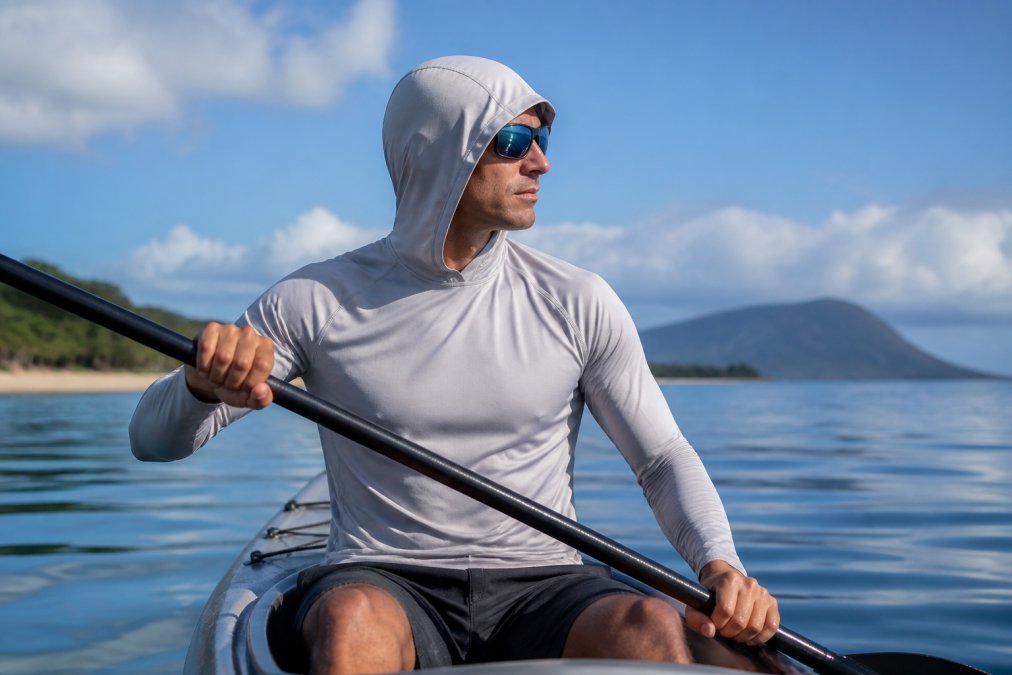
Material Matters: Why Synthetic Fabrics Win
Moisture-wicking synthetics move sweat away from skin and dry fast. Cotton soaks up water, gets heavy, and stays wet against your body. That is a chafing machine.
Seams, Fit, and Flatlock Construction
Seams are where chafing hides. Raised seams rub like a ridge against soft skin.
Step 3: How to Prevent Hand Blisters While Kayaking
Hand blisters come from a loose grip and a wet palm. Fix your grip and most blisters never form.
Grip Technique and Paddle Shaft Ergonomics
Hold the paddle shaft with relaxed fingers, not a death grip. A tight grip traps heat and pressure. Hand fatigue sets in fast, and tired hands slide.
Gloves, Tape, and Callus Management
Gloves add a barrier, but only if they fit. Loose gloves bunch and cause the very rubbing you are trying to stop.
- Wear gloves for long sessions
- Tape hot spots before they blister
- Keep hands dry with a quick wipe
- Build calluses slowly over weeks
Step 4: Use Lubricants and Skin Barriers Effectively
An anti-friction balm works by leaving a slippery film between skin and fabric so the two surfaces glide instead of grabbing. That is different from a moisturizer, which absorbs and disappears. If your product soaks in within minutes, it is not doing the job on the water.
Match the Barrier to the Condition
Not every product handles every scenario. The three main categories behave differently:
- Petroleum-based balms stay put through sweat and splash, but they can degrade some synthetic fabrics and wetsuit seams over time. Best for long, wet sessions on exposed skin.
- Silicone-based lubricants dry to a powdery, non-greasy finish and hold up under a PFD strap without staining. Best for underarms and anywhere fabric presses hard.
- Dimethicone and zinc-oxide creams create a physical barrier and are the better pick when skin is already pink and tender but not broken. They cushion rather than just lubricate.
Where and How Much to Apply
Apply to skin, not to fabric. Fabric application wastes product and can stain technical gear.
- Underarms: a fingertip-sized amount per side, feathered past the edge of where the arm swings.
- Seat and lower back: a broader film, since rotation spreads the load across a wider area than most people expect.
- Hands: skip balm on the palm, it makes the paddle shaft slick. Use tape instead.
- Neck and shoulders: a light film under the PFD strap line, not a heavy coat that will migrate into your eyes.
Reapplication Windows
Most balms break down after roughly two to three hours of continuous sweat and immersion. Salt residue accelerates that. Plan to reapply at any rest stop longer than a few minutes, and wipe the area dry first, applying over a wet, salty film just traps grit against the skin.
Men's Hawaiian Hydro Hoodie-Ekolu Pua →
When Balm Is the Wrong Tool
Balm is prevention, not treatment. Once skin is raw, open, or weeping, a barrier product can seal in bacteria and moisture and make things worse. Switch to a healing ointment, keep the area clean and dry, and let it close before you return to a lubricant.
The Salt Factor Most Guides Skip
Salt does not just dry skin, it leaves crystalline residue that acts as an abrasive under whatever you apply. Rinsing the hot spot with fresh water before reapplying removes that grit. On a multi-day trip, a quick fresh-water rinse at camp does more for the next morning's comfort than any single product.
Step 5: Pick Comfortable Clothing for Beach Activities and Recovery
Comfortable clothing for beach activities does double duty: it protects during the paddle and helps your skin recover after.
Step 6: Adjust Your Setup for Different Kayak Types
Your hull design dictates your posture, and posture dictates where skin rubs. Most chafing guides treat all boats the same. They are not. The seat-to-hip angle, the amount of leg bracing, and how much of your body contacts the boat change completely between designs.
Sit-on-Top Kayaks: Contact Area Is the Enemy
On a sit-on-top, your legs rest largely unbraced and your seat contact is broad and flat. That means more skin-to-surface area and more sun exposure.
- Seat: a molded plastic seat pan transmits every rotation directly to your sit bones. Add a closed-cell foam pad or an inflatable seat cushion to spread the load.
- Legs: without thigh braces, your legs slide and the backs of your thighs rub the deck. A textured deck pad or a thin foam strip under each thigh cuts that motion.
- Lower back: the upright, unsupported posture loads the lumbar region against the seat back. A seat with a taller backrest reduces the shear.
Sit-Inside Kayaks: Pressure Points From a Tight Cockpit
A sit-in hull forces a more reclined hip angle and locks your legs into contact with the hull and thigh braces. Chafing here is pressure-driven, not motion-driven.
- Hips: the cockpit rim and seat sides press into the hip bones. Trim or pad the seat edges so they do not dig.
- Knees and thighs: thigh braces are the single biggest chafing source in this hull type. Pad the underside of the brace and check that your knee angle is not forcing constant pressure.
- Feet: a poorly fitted foot brace makes you brace harder, which drives your hips back into the seat. Adjust the pegs so your legs are nearly straight but not locked.
Surfskis and Outrigger Canoes: Rotation Loads the Seat
These hulls reward high-torso rotation, which means your seat and lower back take repeated shear with every stroke.
- A low-friction seat cover, silicone-treated or smooth nylon, lets your shorts slide instead of your skin.
- Padded shorts with a flat, seamless seat panel outperform loose board shorts, which bunch and grab.
- Check that your foot brace position lets you rotate from the hips rather than twisting through the lower back.
Stand-Up Paddleboards: Stance and Leash Rub
On a SUP, the chafing is lower-body and often overlooked.
- Ankles and calves: a fixed stance holds constant pressure on the ankle and calf. Shift your stance periodically and use a rail saver or a leash with a padded cuff.
- Feet: bare feet on a textured deck pad can blister the sole. Paddling booties with a smooth sole reduce that.
- Shins: if you kneel to paddle, a kneeling pad is not optional on long sessions.
The Adjustment That Beats Every Product
Before you buy anything, sit in your boat on dry land and note every point where your body touches hard. Those are your hot spots. Padding, posture, and a small shift in seat position solve more chafing than any single product on the market.
Common Mistakes to Avoid
Most chafing is self-inflicted. Avoid these and you skip the worst of it.
- Wearing cotton, which stays wet and rubs
- Skipping balm because "it's a short paddle"
- Ignoring a hot spot until it becomes a raw patch
- Using gear with raised seams under the arms
- Letting salt and sweat dry on skin after you finish
Frequently Asked Questions
Will chafing go away by itself?
Minor chafing often improves within a few days if you stop the friction and keep the area clean and dry. But if you keep paddling without changing your apparel, lubricant, or technique, it will return and can worsen into raw, cracked skin. For faster healing, rinse off salt water, apply a gentle moisturizer or barrier cream, and wear loose, breathable clothing between sessions. See a doctor if you notice signs of infection like pus, spreading redness, or fever.
Are there specific fabrics that help prevent chafing while paddling?
Synthetic fabrics like recycled polyester and spandex blends work best because they wick moisture, dry quickly, and have a smooth surface that reduces friction. Look for flatlock seams, four-way stretch, and a snug but not tight fit. Avoid cotton, which holds water and salt and creates abrasive folds against your skin. A lightweight hooded sun shirt with UPF 50 protection, like those made from recycled polyester and spandex, keeps you covered while letting your skin breathe.
Should I use anti-chafe balms or powders while paddling?
Both can help, but they work differently. Anti-chafe balms create a slick barrier that reduces friction and stays put through sweat and salt water, making them ideal for long paddles. Powders absorb moisture and work well in dry conditions, but they can clump when wet. For paddling, apply a balm to high-friction zones like underarms, inner thighs, and where your PFD rubs. Reapply at any mid-paddle break. Test new products on a short paddle first to check for skin reactions.
How can I prevent hand blisters while holding a paddle?
Start with a relaxed grip. Squeezing too hard is the main cause of blisters, so let your lower hand guide the shaft rather than strangle it. Adjust your paddle shaft diameter and grip texture to match your hand size. Wear paddling gloves or tape hot spots before they blister. Build calluses gradually with shorter sessions. After paddling, moisturize your hands and let any blisters heal before your next long run. If you blister often, check your paddle ergonomics and technique with a coach.
Chafing can cut a long paddle short and keep you off the water for days. Silverback Hawaii makes gear that helps you avoid it, with flatlock seams, moisture-wicking recycled fabric, and UPF 50 protection built for real ocean conditions. Our Hydro Hoodies are designed by paddlers for paddlers, so you can stay comfortable and keep your focus on the stroke. Get started with Silverback Hawaii and paddle longer without the burn.