

Table of Contents
- Why UPF 50 Long Sleeve Hoodies Beat Sunscreen on the Water
- The Benefits of UPF 50 Clothing for Paddlers and Beach Days
- Fabric Features That Matter: UPF 50+ Technology, Moisture-Wicking, and Quick-Dry Materials
- Best Sun Protection Shirts for Water Sports: What to Look For
- How to Wash UPF 50 Shirts Without Losing Protection
- Recycled Ocean Plastic vs. Synthetic Fabrics: Durability and Environmental Impact
- Layering for Extreme Heat and Testing Methodology
- Conclusion
- Frequently Asked Questions
Last Updated: September 21, 2026
Why UPF 50 Long Sleeve Hoodies Beat Sunscreen on the Water
Sunscreen fails on the water. It washes off, sweats off, and needs reapplication every two hours, which is exactly when you're mid-stroke on a downwind run. A UPF 50 long sleeve hoodie solves that problem once and stays solved.
This guide from Silverback Hawaii covers what actually matters when you purchase a UPF 50 long sleeve hoodie for paddling, racing, and beach days: how the ratings work, which fabrics hold up, and how to wash them without destroying the protection you paid for.
UPF 50 long sleeve hoodies are garments rated to block at least 98% of ultraviolet radiation, and unlike sunscreen they don't degrade with sweat or require reapplication mid-session.
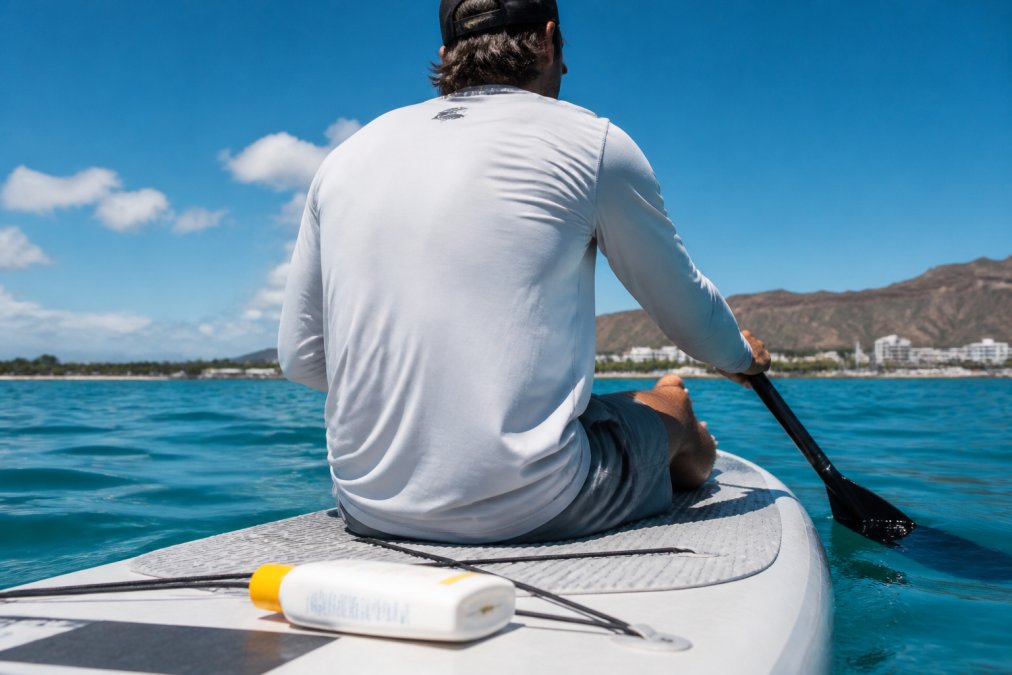
The Benefits of UPF 50 Clothing for Paddlers and Beach Days
The core benefit is simple: coverage that never needs to be reapplied. For anyone logging hours on open water, that changes the entire math of sun safety.
- Consistent protection across the whole session, wet or dry
- No greasy hands on a paddle shaft or board
- Less skin to monitor for sunburn prevention after a long day
- Cooler body temperature when the fabric is breathable and quick-dry
- Extra coverage on hoodie styles, with the hood shielding neck and ears
For sun-sensitive paddlers, this matters more than convenience. Long-sleeve coverage removes the guesswork.
UPF vs. SPF: What the Ratings Actually Mean
UPF (Ultraviolet Protection Factor) measures how much UV radiation a fabric blocks. SPF (Sun Protection Factor) measures how long sunscreen delays sunburn on exposed skin.
They are not interchangeable. UPF is a fabric rating tested on the material itself. SPF is a product rating tested on skin. A UPF 50 hoodie blocks roughly 98% of UV radiation, while an SPF 50 sunscreen lets about 2% through when applied correctly, and considerably more when it isn't.
Skin Cancer Foundation Validation and Dermatologist Guidance
Dermatologists consistently recommend sun-protective clothing as a first line of defense because it removes human error from the equation. The Skin Cancer Foundation's sun protection guidance recommends UPF-rated apparel as part of a complete sun safety routine, alongside shade and sunscreen for exposed areas.
Fabric Features That Matter: UPF 50+ Technology, Moisture-Wicking, and Quick-Dry Materials
Fabric density and construction decide protection, not marketing copy. Tightly woven or knit synthetic fibers block more UV radiation than loose, stretchy weaves, which is why a cheap white cotton tee offers far less protection than a purpose-built performance fabric.
Look for these features when you shop:
- Moisture-wicking fabric that moves sweat away from skin
- Quick-dry construction for repeated immersion
- Breathable fabric weight suited to humid, high-heat conditions
- Durable construction at seams and underarm panels
- Anti-microbial and odor-resistant finishes for multi-day use
Anti-Microbial and Odor-Resistant Finishes for Multi-Day Use
A hoodie worn for a full day on the water, rinsed, and worn again the next morning needs more than sun protection. Anti-microbial finishes slow the bacteria that cause odor, which matters on multi-day trips and race weekends where laundry isn't an option.
Best Sun Protection Shirts for Water Sports: What to Look For
The best sun protection shirts and hoodies for water sports combine a UPF 50+ rating, flatlock seams, and a cut that stays put when you're wet. Hooded versions add extra coverage for the neck, ears, and scalp that a crew neck leaves exposed. But the details that separate a shirt you'll wear for years from one that chafes by noon come down to fabric construction, seam placement, and how the garment handles repeated immersion.
Feature |
What to Look For |
Why It Matters |
|---|---|---|
UPF rating |
UPF 50+ (blocks ~98% of UV) |
Lower ratings let more UV through; 50+ is the highest tier |
Fabric type |
Tightly knit polyester or nylon |
Dense weave blocks more UV than loose cotton or spandex blends |
Seam type |
Flatlock or bonded |
Prevents chafing under a PFD or harness |
Fabric weight |
130-180 GSM lightweight knit |
Stays cool in extreme heat without going sheer when wet |
Fit |
Athletic, non-binding |
Moves with your stroke; too loose bunches under a vest |
Finish |
Anti-microbial, odor-resistant |
Handles multi-day use and race weekends |
Color |
Light or high-visibility |
Light reflects heat; high-vis aids rescue visibility |
Fabric Construction: What Actually Blocks UV
UPF protection comes from two mechanisms: fabric density and fiber treatment. A tightly woven or knit synthetic, typically polyester or nylon, physically blocks UV radiation at the fiber level. Some fabrics also receive a chemical UV absorber during manufacturing, but these finishes degrade with washing and wear.
Hooded Styles and Men's vs. Women's Fit
Long sleeve hoodies add neck and head coverage for people who burn easily or spend full days exposed, and they eliminate the gap between a shirt collar and a hat brim, a common burn zone on downwind runs. The hood also covers the ears and scalp, areas that take direct sun during long paddling sessions, while the long sleeves still cover the arms and shoulders that take the most direct sun during paddling.
For paddlers, prioritize:
- Shoulder mobility, raglan sleeves or gusseted underarms prevent binding on forward strokes
- Hem length, a longer hem stays tucked under a PFD and protects the lower back
- Thumbholes or extended cuffs, cover the back of the hands, a high-exposure area
How to Wash UPF 50 Shirts Without Losing Protection
Wash UPF 50 shirts in cold water on a gentle cycle and skip the fabric softener. Heat and chemical softeners break down the fibers and finishes that provide UV-blocking performance.
A simple routine:
- Rinse in fresh water after every saltwater or chlorinated session
- Machine wash cold on gentle with mild detergent
- Skip fabric softener and dryer sheets entirely
- Hang dry or tumble on low heat
- Avoid bleach and harsh stain removers
Recycled Ocean Plastic vs. Synthetic Fabrics: Durability and Environmental Impact
Recycled ocean plastic fabrics perform like conventional synthetics while keeping waste out of the water. The durability question is fair, though, and the honest answer is that recycled polyester and nylon are chemically the same as their virgin counterparts once processed.
Layering for Extreme Heat and Testing Methodology
Layering for extreme heat means fewer, smarter layers, not more. In high humidity, a single UPF 50 long sleeve hoodie over a moisture-wicking base is usually enough, and adding a second layer traps heat you don't want.
How to Layer Without Overheating
The goal is to create a microclimate that moves sweat away from skin while blocking UV. A common pattern among paddlers and hikers in hot climates:
- Base layer: A lightweight, moisture-wicking UPF 50 long sleeve or hooded long sleeve worn directly against skin. This is your primary UV barrier.
- Mid layer (optional): A loose, breathable overshirt only for wind or spray. Choose a lighter color to reflect heat rather than absorb it.
- Outer layer (conditions-dependent): A PFD or hydration pack sits over the shirt; avoid additional fabric layers unless wind or rain demands them.
How UPF Ratings Are Actually Tested
Understanding testing methodology helps you evaluate whether a rating is meaningful. UPF is measured using a spectrophotometer, which shines UV light through a fabric sample and measures how much passes through. The result is a ratio: a UPF 50 rating means the fabric allows 1/50th of UV radiation to pass, or about 2%.
Testing standards distinguish between:
- As-new testing, the fabric is tested in pristine condition
- After-care testing, the fabric is tested after washing, exposure to chlorinated water, and simulated wear
Conclusion
Finding gear that survives saltwater, sun, and repeated washing takes more than reading a hangtag. Silverback Hawaii builds island-style apparel, including long sleeve hoodies, from recycled plastic materials, with flatlock seams that prevent chafing, quick-dry performance fabric, and high-visibility designs for safety on the water.
Frequently Asked Questions
What does UPF 50 mean in clothing?
UPF 50 means the fabric blocks about 98% of ultraviolet radiation. The rating is measured on the fabric itself, not the skin, so coverage stays consistent across the whole garment. A UPF 50 long sleeve shirt protects your arms, shoulders, and torso without reapplying anything. Look for a UPF 50+ label and check that the rating comes from the fabric construction, not a topical treatment that washes out.
Do UPF 50 shirts lose their protection after washing?
Fabric-built UPF protection does not wash out the way a topical finish can. To keep it intact, machine wash cold, skip fabric softener and bleach, and air dry when possible. Avoid scrubbing the fabric against rough surfaces, which can thin the weave. Following these steps, a quality UPF 50 shirt keeps its rating through many saltwater sessions and wash cycles.
Are sustainable materials as effective as synthetic fabrics for sun protection?
Recycled polyester made from ocean plastic performs like virgin polyester for UV blocking. Fabric density, weave tightness, and color drive UPF rating more than the fiber source. A tightly woven recycled fabric with a UPF 50+ rating blocks the same harmful UV rays as conventional synthetic fabric, while keeping plastic out of oceans and landfills.
How do I choose the right UPF 50 long sleeve shirt for water sports?
Prioritize four things: a verified UPF 50+ rating, flatlock seams that prevent chafing under a PFD, quick-dry moisture-wicking fabric, and a fit that allows full paddle rotation. High-visibility colors help safety on open water. For long-distance racing, a lightweight performance crew or hooded style with anti-microbial treatment handles multi-hour sun exposure better than a basic cotton tee.