

Last Updated: November 15, 2026
Quick Summary
Look for UPF 50 sun shirts made from recycled polyester with a named certification such as GRS or RCS, not just a marketing claim. Choose lightweight fabric for hot-weather paddling, stretch and quick-drying performance for swimming, and cold washing without fabric softener to keep the protection intact.
- UPF 50 blocks roughly 98% of UV rays, according to the article's rating definition.
- Verify recycled-content claims by checking for a named standard, a stated feedstock, and supply chain traceability.
- Solid-color models suit paddlers who need a plain, high-visibility layer on the water.
- Rinse after saltwater or chlorine, wash cold, and skip the dryer or use low heat.
- Replace a sun shirt when it looks thinned, stretched out, or keeps an odor after washing.
Table of Contents
- What UPF 50 Means and How Much Coverage a Sun Shirt Provides
- Lightweight Sun Protective Clothing for Paddling and Beach Days
- Sun Protection Shirts for Swimming and Water Sports
- Recycled Ocean Plastic Activewear: What the Fabric Is Made Of
- Silverback Hawaii UPF 50 Options Compared by Price and Use
- How UPF Protection Holds Up Through Washing and Saltwater
- Choosing the Right Sun Shirt and Placing Your First Order
- Frequently Asked Questions
What UPF 50 Means and How Much Coverage a Sun Shirt Provides
Silverback Hawaii builds its sun-protective apparel around one rating: UPF 50. Ultraviolet Protection Factor is a fabric rating that measures how much UV radiation a textile lets through to the skin. A UPF 50 rating means the fabric blocks roughly 98% of UV rays.
The rating matters most for the part of the body a shirt covers. The hooded design used across Silverback Hawaii's listings includes thumb holes, which add coverage for the backs of the hands.
Coverage is only part of the picture, though. A shirt that blocks UV but traps heat will get left in the bag. That is why the fabric construction matters as much as the rating itself.
Lightweight Sun Protective Clothing for Paddling and Beach Days
Paddlers spend long stretches in direct sun, often with water reflecting light back up at them, so lightweight coverage is a practical consideration on the water.
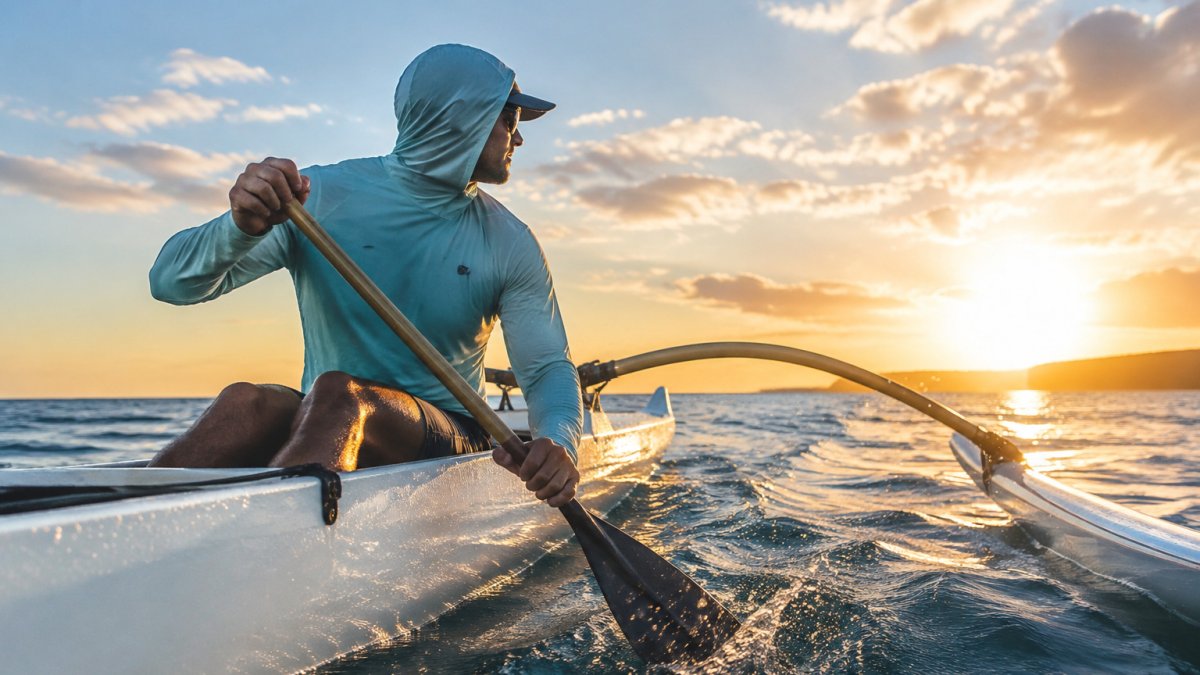
The Men's Hawaiian Hydro Hoodie in the Lotus Rec fabric is made from 85% recycled polyester and 15% spandex, and it carries UPF 50 protection, thumb holes, and a button-closure hood. It is priced at $50.00.
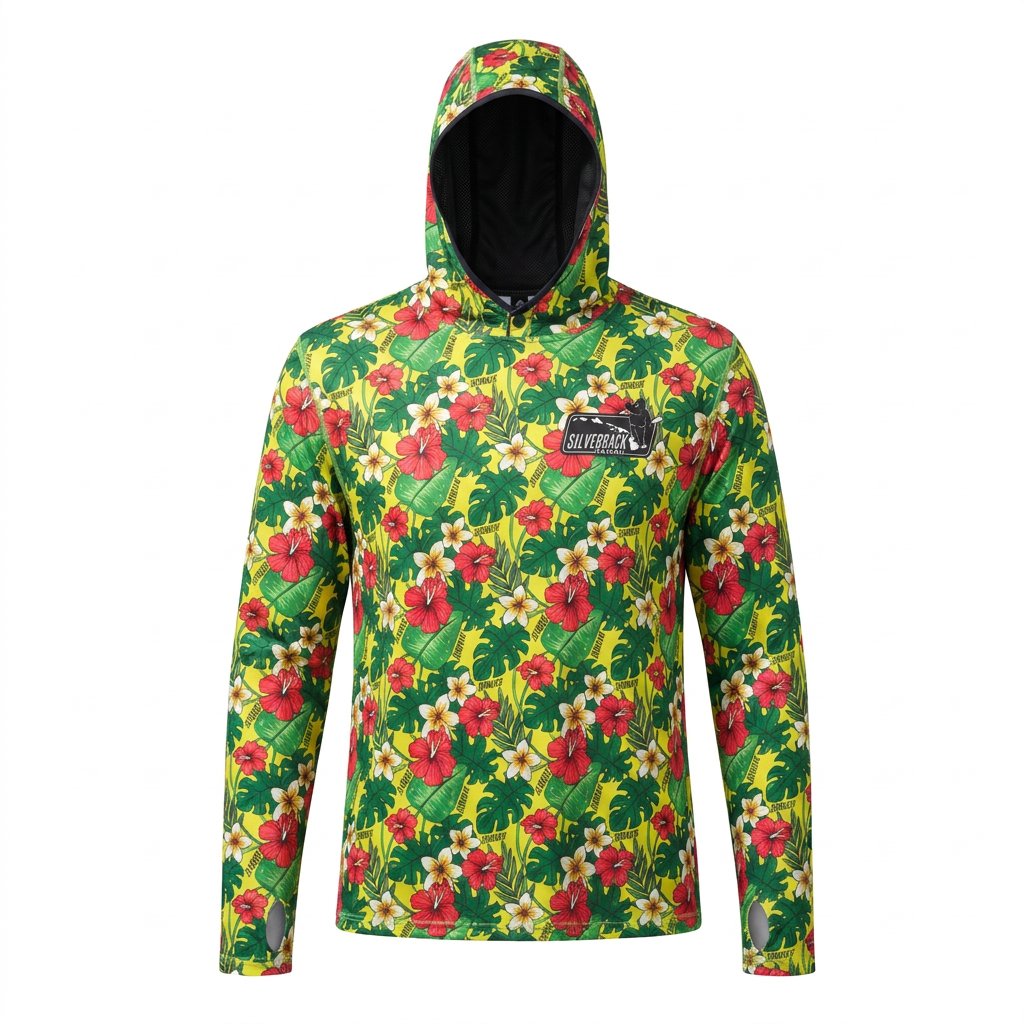
For a more structured fit, the Men's Solid Color Hawaiian HydroHoodie uses an ultra lightweight fabric in a high-visibility colorway chosen for on-water safety. It costs $70.00. The choice between the two comes down to whether a paddler wants a printed design or a plain, high-visibility layer.
Sun Protection Shirts for Swimming and Water Sports
The Women's Solid Color Hawaiian Hydro Hoodie, at $60.00, is built in a new ultra lightweight fabric with four-way stretch and fast-wicking performance, and it includes UPF 50 sun protection.
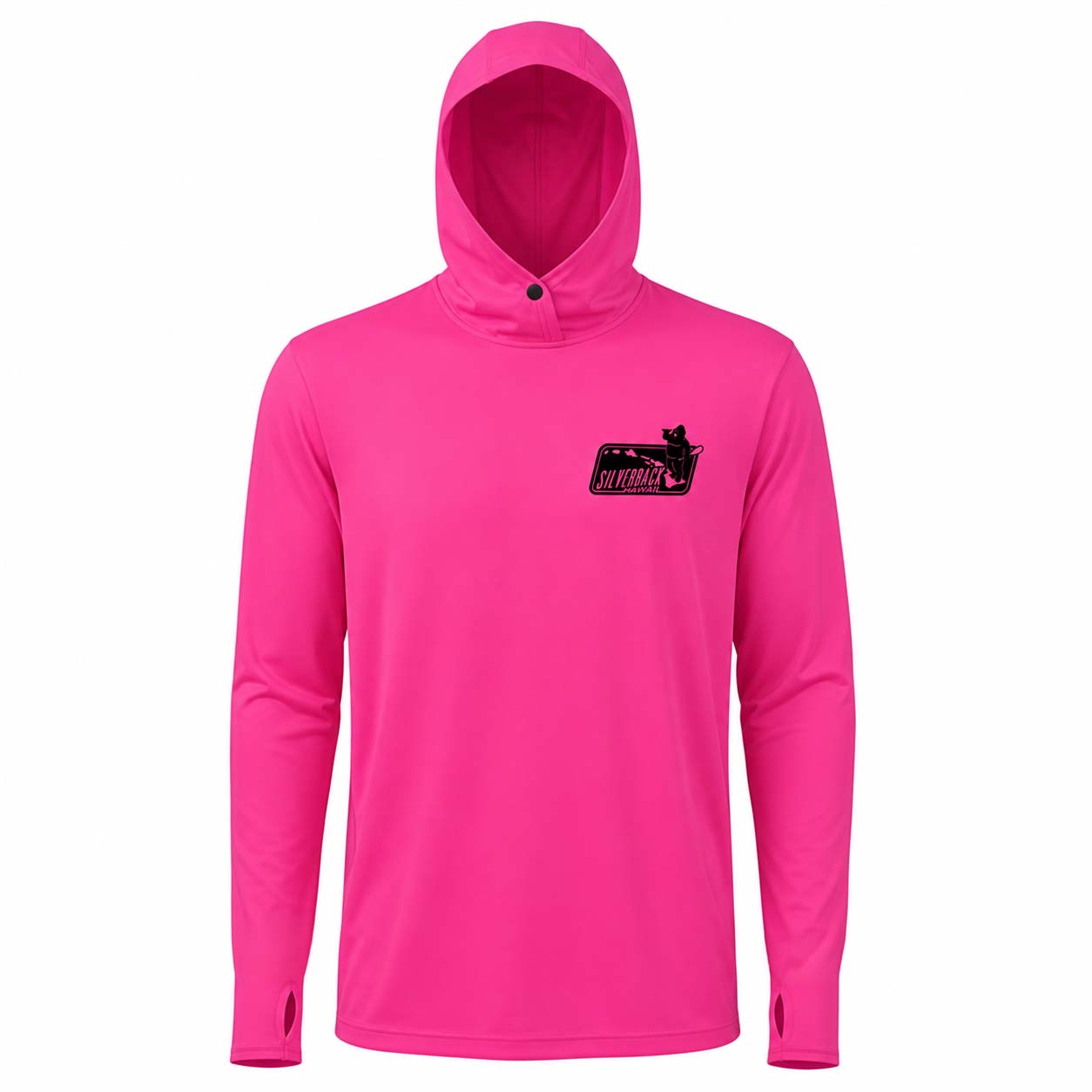
The Men's Solid Color version, at $70.00, uses the same fabric approach for men's sizing.
Recycled Ocean Plastic Activewear: What the Fabric Is Made Of
"Recycled" on a hangtag can mean many things, and the phrase "ocean plastic" is not a regulated term in the United States. That matters when you are comparing sun shirts, because two garments can both say "recycled polyester" while using very different feedstock, traceability, and third-party verification. The practical move is to stop reading the marketing line and start reading the spec sheet.
What the fiber actually is
Recycled polyester, often written rPET or RPET, is polyester resin made from post-consumer or post-industrial plastic rather than virgin petroleum feedstock. Common feedstocks include beverage bottles, textile offcuts, and in some cases recovered ocean-bound plastic collected from coastal areas before it reaches the water. The feedstock matters because bottle-based rPET is a relatively mature, well-traceable stream, while "ocean-bound" claims vary widely in how the material is collected, cleaned, and documented.
Silverback Hawaii's listings state that its fabric is made from recycled polyester and that each yard contains roughly 13 recycled bottles. The fiber composition differs by product:
- Big Kahuna and Palm Tree hoodies: 78% recycled polyester, 22% spandex
- Lotus Rec and Tribal Tattoo ultra lightweight hoodies: 84% to 85% recycled polyester, 15% to 16% spandex
Higher spandex content generally means more stretch and recovery; a higher recycled polyester share means a larger portion of the garment by weight comes from recycled feedstock. Neither is automatically "better", they trade off against each other.
How to verify a recycled-content claim
A percentage on a product page is a claim, not proof. Three things separate a verifiable claim from a vague one:
- A named standard. Look for a recycled-content certification such as the Global Recycled Standard (GRS) or the Recycled Claim Standard (RCS), both of which require third-party auditing of the recycled content and, in the GRS case, additional environmental and social criteria.
- A stated feedstock and source. "Recycled polyester" is not enough. Ask whether the input was post-consumer bottles, pre-consumer textile waste, or ocean-bound collection, and whether the supplier is named.
- Traceability through the supply chain. A credible claim can be followed from fiber to yarn to fabric to finished garment. If the only statement is a marketing sentence with no supplier, standard, or audit behind it, treat it as unverified.
The trade-offs nobody puts on the label
Recycled polyester is not automatically lower-impact than virgin polyester across every metric. It typically avoids the petroleum feedstock and can reduce energy use and emissions relative to virgin resin, but it still sheds microfibers in the wash, and it is still a plastic fiber. Spandex, the stretch component in every hoodie in this lineup, is generally not recycled and is difficult to separate at end of life, which is why high-stretch blends are harder to recycle than high-polyester ones.
That is the honest sustainability picture: recycled content is a real improvement on feedstock, not a claim of a circular garment. Buyers who want the strongest environmental case should favor higher recycled-polyester percentages, look for a named certification, and plan to keep the shirt in use for years rather than treating it as disposable.
Watch out: "ocean plastic" and "ocean-bound plastic" are used loosely in apparel marketing and are not interchangeable, ask which one a brand means and where the material was collected before you pay a premium for it.
Silverback Hawaii UPF 50 Options Compared by Price and Use
Here is how the current range of Silverback Hawaii sun hoodies compares on price and intended use.
| Product | Price | Fabric | Best For |
|---|---|---|---|
| Men's Hawaiian Hydro Hoodie, Lotus Rec | $50.00 | 85% recycled polyester, 15% spandex | Hot-weather paddling, lightest weight |
| Women's Solid Color Hydro Hoodie | $60.00 | 84% recycled polyester, 16% spandex | Clean design, high-visibility on water |
| Men's Solid Color Hydro Hoodie | $70.00 | 84% recycled polyester, 16% spandex | Men's solid-color paddling layer |
| Men's Tribal Tattoo Hydro Hoodie | $85.00 | 84% recycled polyester, 16% spandex | Ultra lightweight printed hoodie |
| Women's Tribal Tattoo Hoodie | $40.00 | 78% recycled polyester, 22% spandex | Women's printed sun hoodie |
| Women's Big Kahuna Hoodie | $25.00 | 78% recycled polyester, 22% spandex | Budget-friendly women's option |
| Men's Big Kahuna Hoodie | $25.00 | 78% recycled polyester, 22% spandex | Budget-friendly men's option |
Price
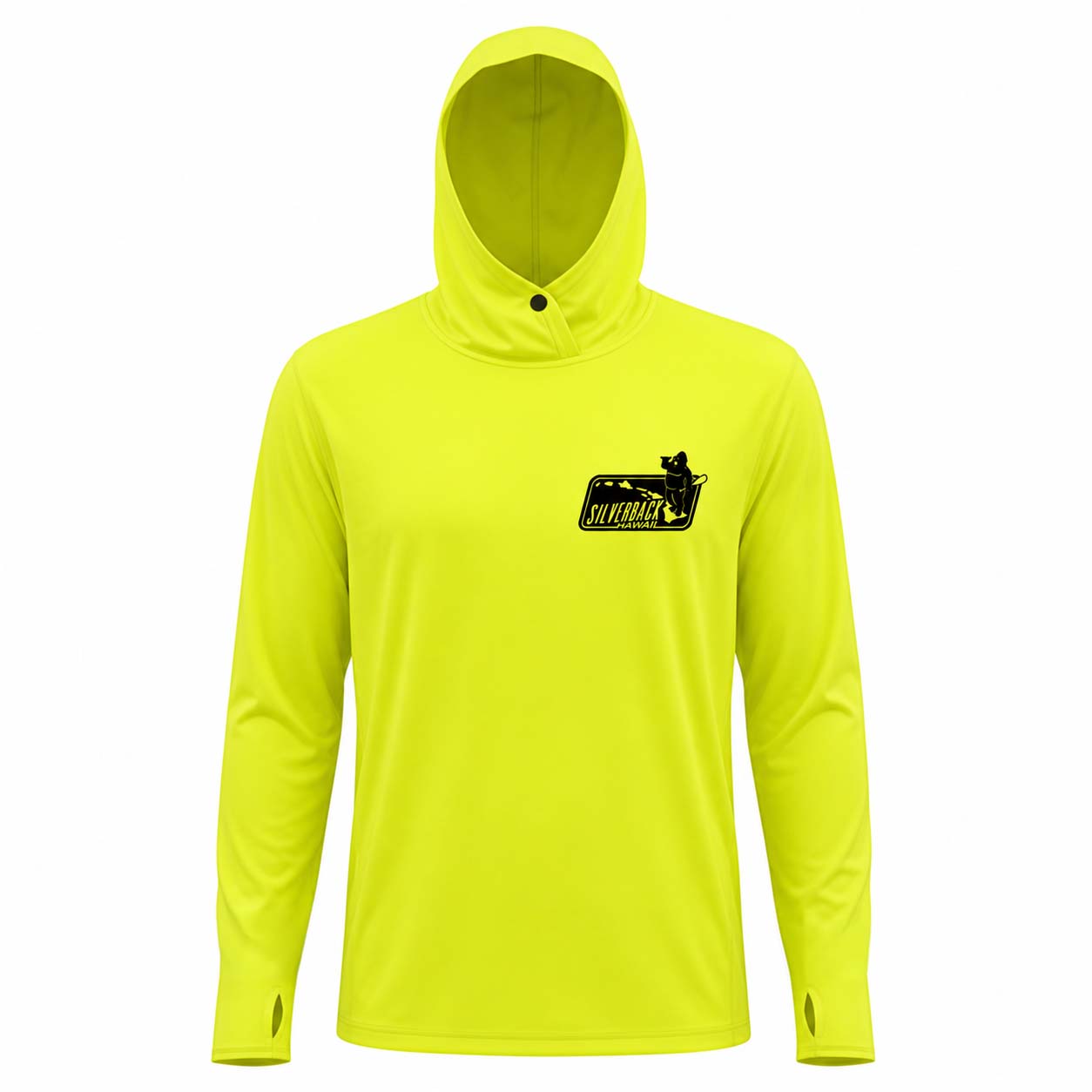
Price is only one filter. Choose the fabric first if your main concern is weight, and choose the print or solid color second based on your visibility needs.
Best for: paddlers who want the lightest hoodie in the range and are comfortable with a printed design.
Skip if: you need a plain, high-visibility layer. A solid-color model suits you better.
How UPF Protection Holds Up Through Washing and Saltwater
A UPF 50 rating describes a fabric in the condition it was tested, not a permanent property of the garment. Understanding why the rating can drift is the difference between a shirt that protects you for several seasons and one that quietly stops doing its job.
Why UPF changes with wear
UV protection in a knit fabric comes from three things: the fiber itself, the tightness of the weave or knit, and any added treatment. Each can degrade:
- Stretching. When a knit is stretched, across the shoulders, at the elbows, over a pack strap, the spaces between yarns open up and more UV passes through. A fabric tested at rest can drop in protection when worn tight or stretched over a body in motion.
- Wetness. Water in the fabric can reduce scattering of UV and, in some constructions, lower the effective UPF. A shirt that tests well dry may protect less when soaked, which matters for paddlers and swimmers.
- Wear and abrasion. Friction thins the fabric, and repeated flexing loosens the knit. Visible thinning, pilling, or a stretched-out weave are signs the protection has likely dropped.
- Washing and drying. Detergent residue, fabric softener coatings, and high-heat drying can all affect fiber integrity and, in treated fabrics, the finish itself.
- UV exposure over time. Sunlight degrades many fibers, so a shirt left baking on a car dashboard or worn hard for several seasons will not perform like a new one.
This is why a tested rating and an unsupported claim are not the same thing. A brand that publishes third-party test data, typically following a standard such as AATCC 183 or ASTM D6603, gives you a number you can compare. A brand that simply prints "UPF 50" with no test reference is making a claim you cannot verify.
A care routine that preserves both protection and lifespan
- Rinse after every saltwater or chlorinated session. Fresh water removes salt crystals and chlorine residue that can abrade fibers and degrade spandex. A quick rinse in a sink is enough.
- Wash cold on a gentle cycle. Hot water and agitation accelerate fiber breakdown and spandex fatigue. Use a mild detergent and skip fabric softener, which can coat fibers and reduce wicking.
- Skip the dryer, or use low heat. High heat is the fastest way to shorten a stretch garment's life. Hang or lay flat to dry.
- Avoid rough surfaces and Velcro. Snagging and abrasion thin the knit, which is exactly where UV protection is lost first.
- Store out of direct sun. A shirt folded in a drawer lasts longer than one fading on a hook by a window.
When to repair and when to replace
Small repairs are worth doing. A pulled thread can be worked back in with a blunt needle; a minor seam separation can be stitched before it spreads. Repairing extends the garment's useful life, which is the most direct sustainability win available to any buyer.
Replace the shirt when you see any of the following:
- Visible thinning when held up to light, especially across the shoulders and upper back
- A stretched-out or sagging knit that no longer recovers
- Fading combined with a slick or stiff hand-feel
- Persistent odor that survives washing, which usually signals biofilm in the fibers
Inspect the garment each season, and if you spend long hours on the water, rotate two shirts rather than wearing one into the ground, it spreads the UV and abrasion load and roughly doubles the useful life of the pair.
Watch out: fabric softener and dryer sheets are the two most common causes of premature failure in stretch sun shirts, they coat the fibers, cut wicking performance, and speed spandex breakdown.
Choosing the Right Sun Shirt and Placing Your First Order
Start with how you will use the shirt. For hot, humid paddling, the lightest fabric is the priority. For swimming, stretch and quick-drying performance matter most. For everyday beach wear, a printed design or a solid color is mainly a style decision.
Then check sizing before ordering.
Once you have picked a fabric weight and a fit, place the order from the product page. The Lotus Rec men's hoodie is priced at $50.00, and the Women's Solid Color hoodie is priced at $60.00.
Frequently Asked Questions
Are UPF 50 shirts worth it?
For most people who spend long hours in direct sun, yes. A UPF 50 rating means the fabric lets through about 1/50th of UV radiation, which blocks roughly 98% of UV rays. Silverback Hawaii's Men's Hawaiian Hydro Hoodie - Big Kahuna Print, at $25.00, lists SPF 50 protection and flatlock seams for chafe-free wear.
Are recycled-material sun shirts suitable for swimming?
Silverback Hawaii's hoodies are made from 78% to 85% recycled polyester blended with spandex, which keeps them quick-drying and stretchy. The brand's listings describe moisture-wicking construction. Check the care instructions for any garment you plan to use daily in chlorinated pools, since pool chemicals can wear down any synthetic fabric over time.
How do you care for a UPF 50 sun shirt?
Rinse the shirt in fresh water after saltwater use, wash it in cool water with a mild detergent, and air dry it out of direct sun. Avoid fabric softener, which can coat the fibers and reduce breathability. Heat from dryers can weaken the elastic in spandex blends over time.
Do UPF 50 shirts protect you when they get wet?
Many UPF rating tests are run on dry fabric, and wet fabric can let through more UV.
