

Table of Contents
- What UPF Clothing Is and How It Blocks UV Radiation
- How Long Does UPF Clothing Last?
- Signs Your Sun Protective Clothing Is Worn Out
- How to Wash UPF Clothing Without Killing the Rating
- Environmental Factors That Wear Down UPF Protection
- Repair or Replace? A Decision Framework
- Frequently Asked Questions
Last Updated: September 28, 2026
What UPF Clothing Is and How It Blocks UV Radiation
Does UPF clothing lose protection over time? Yes, but far more slowly than most people assume, and the loss is usually tied to physical wear rather than a ticking clock. Ultraviolet Protection Factor, or UPF, measures how much UV radiation a fabric blocks before it reaches your skin. A UPF 50 rating means the fabric allows roughly 1/50th of UV rays through, blocking about 98% of both UVA and UVB rays (Sun Protective Clothing). This guide from Silverback Hawaii breaks down what actually degrades that rating, how to spot the warning signs, and when to repair versus replace.
Two mechanisms do the blocking, and they age differently.
Chemical Finish vs. Tightly Woven Fabric
Chemical finishes are topical treatments applied to fabric that absorb UV radiation. They work well initially but are the first thing to wash out, which is why treated garments often carry a note about protection lasting the life of the garment. Physical weave relies on fiber density, construction, and color to block UV rays. Tightly woven synthetic fibers like polyester and nylon create a denser barrier that UV radiation struggles to penetrate. According to the Skin Cancer Foundation's sun protection guidance, fabrics with a tighter weave and darker or more saturated colors generally deliver higher UPF values than loose, pale ones.
That distinction matters for lifespan. A chemical finish can fade with repeated wash cycles and sun exposure. A physical weave holds up far longer, but it can still degrade as fibers stretch and thin.
How Long Does UPF Clothing Last?
There is no printed expiration date on a UPF garment, and that is exactly why this question trips people up. The rating is a property of the fabric structure, not a coating with a countdown timer. In practice, a well-made UPF 50 hoodie used a few times a week in fresh water typically holds its rated protection for two to three years of regular use, while the same garment worn daily in chlorinated pools and direct sun can lose meaningful protection inside a single season. The variable is not time. It is cumulative stress on the weave.
Four mechanisms drive that stress, and they compound:
- Fiber fatigue from stretch: Spandex and elastane fibers relax and thin with repeated stretch cycles. Flex zones like shoulders, elbows, and knees lose density first because the weave opens every time you move.
- Abrasion: Sand, grit, PFD straps, and paddle shafts physically wear fibers down. Abrasion removes material rather than stretching it, so the fabric gets thinner without looking stretched.
- UV-driven fiber degradation: Continuous UV exposure weakens synthetic polymers over time, making fibers more brittle and prone to micro-cracking. This is slow, but it is cumulative and irreversible.
- Chemical attack: Chlorine, salt residue, and harsh detergent chemistry break down fiber surfaces and any topical UV-absorbent finish. This is the fastest-acting of the four.
A useful way to think about it: the garment lasts as long as the weave stays dense. A hoodie worn twice a week for paddling will outlast one worn daily in chlorinated pools and harsh sun, not because of age but because of how many stretch, abrasion, and chemical cycles it has absorbed.
Here is the part most guides get wrong: a garment can look perfectly fine and still have lost meaningful protection. Fading and thinning are the real signals, not age. If you are paddling long distances, treat your sun-protective fabric the way you treat a PFD. Inspect it, care for it, and replace it when it shows real wear.
Signs Your Sun Protective Clothing Is Worn Out
The clearest signs your sun protective clothing is worn out are visible thinning, stretched fabric that no longer snaps back, faded color, and pilling or holes. Any one of these signals that the weave has opened up and UV rays are getting through.
Check these spots first, since they wear fastest:
- Shoulders and upper back: Constant sun exposure and stretch
- Elbows and knees: Flex points where fibers fatigue
- Underarm and side seams: Friction from movement and PFD straps
- Hood and collar: Pulled and stretched repeatedly
Home Testing Methods You Can Try
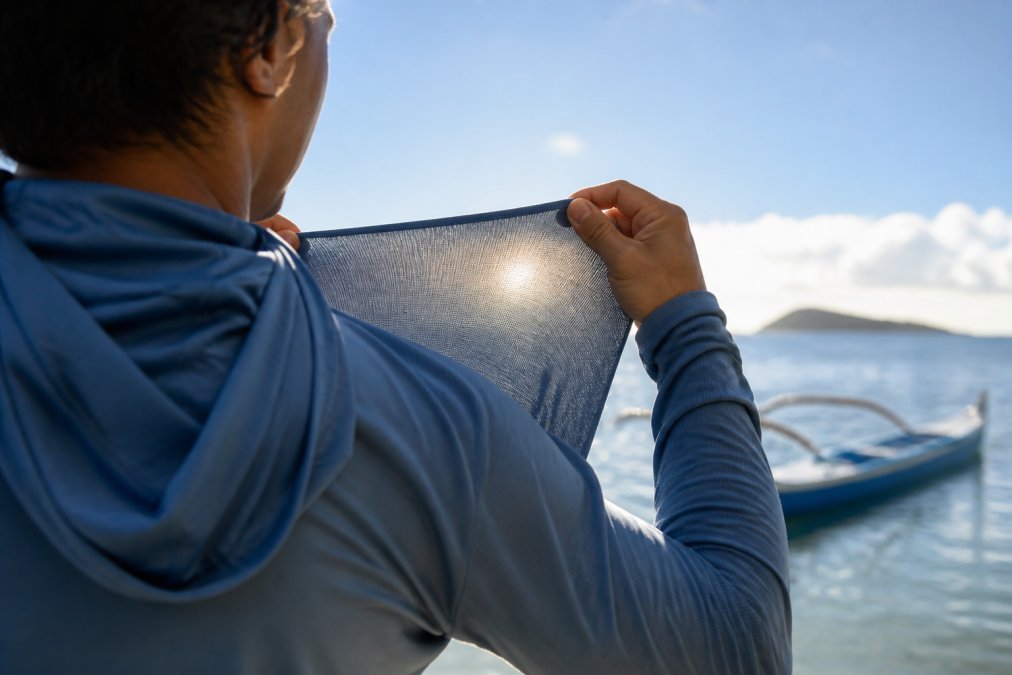
You can get a rough read on fabric integrity without a lab. Hold the garment up to a bright light or the sun and look for how much light passes through. A dense, protective fabric blocks most of it. A worn one glows.
The stretch test is just as telling. Pull the fabric gently across a worn area and see whether the weave opens up. If light pours through the stretched section, that's your answer. Note that these methods only flag obvious degradation, they don't measure a UPF number. When in doubt on a garment you rely on for long water sessions, replace it.
Women's Solid Color Hawaiian Hydro →
How to Wash UPF Clothing Without Killing the Rating
The safe way to wash UPF clothing is cold water, gentle cycle, mild detergent, and air drying. Heat and harsh chemistry are what accelerate fabric degradation, not water itself. Follow the care label, and when it conflicts with general advice, trust the label.
A simple routine that protects the rating:
- Machine wash cold on a gentle or hand-wash cycle
- Use a mild, free-and-clear detergent, no bleach or fabric softener
- Skip the dryer and hang or lay flat to air dry
- Avoid wringing or twisting, which stresses the weave
- Wash less often than everyday clothing when possible
Which Detergents and Dryers to Avoid
Most care guides stop at "use mild detergent" and leave it there. The chemistry matters more than the marketing label, especially for garments that rely on a topical UV-absorbent finish rather than a purely physical weave.
Detergent ingredients that attack UPF protection:
- Optical brighteners: These fluorescent compounds are designed to deposit on fabric and make whites look brighter. On a UPF garment, they leave a residue that can interfere with how a chemical UV-absorbent finish interacts with light, and they build up with every wash.
- Enzymes (protease, lipase, amylase): Effective on food and body-oil stains in everyday laundry, but they are designed to break down organic matter, and some can attack the fiber surfaces and finish chemistry of technical fabrics over repeated cycles.
- Chlorine bleach: The single most destructive common laundry additive for synthetic fibers and UV finishes. It oxidizes polymers and strips topical treatments. There is no safe dilution for a UPF garment.
- Fabric softener: Coats fibers with a waxy film that clogs the weave, reduces moisture-wicking performance, and can physically block the tight construction that gives the fabric its UV barrier.
A free-and-clear liquid detergent without brighteners, enzymes, or dyes is the safest default.
Dryer heat thresholds:
Environmental Factors That Wear Down UPF Protection
Sun exposure is the obvious one, but it isn't the only environmental stress. Saltwater leaves mineral residue that can stiffen fibers and dull the weave over time if not rinsed. Chlorine from pools is harsher still, breaking down synthetic fibers faster than fresh or salt water. Sand and grit work into the fabric and abrade it with every movement. Even repeated stretching during a paddle stroke, session after session, gradually fatigues the weave in high-flex zones.
Repair or Replace? A Decision Framework
| What You Find | Likely Cause | Action |
|---|---|---|
| Minor pilling on seams | Friction from PFD straps | Repair or keep, monitor |
| Faded color, intact weave | Sun exposure | Keep, recheck monthly |
| Sheer when held to light | Fiber thinning | Replace |
| Stretched, see-through flex zones | Stretch and wear | Replace |
| Small hole or tear | Snag or abrasion | Repair if weave is dense elsewhere |
| Overall thinning across garment | Age and repeated washing | Replace |
The real difference between a garment worth repairing and one worth replacing comes down to how much of the fabric still blocks light. One small snag on a dense hoodie is a patch. A hoodie that's gone soft, faded, and sheer across the shoulders is done.
Frequently Asked Questions
Does UPF clothing lose protection over time?
Yes, but how fast depends on the fabric and how you treat it. Tightly woven UPF clothing made from synthetic fibers like polyester or nylon holds its rating for years. Chemical-treated UPF clothing can lose protection faster because the UV-absorbent finish washes out. The biggest accelerators of degradation are stretched fabric, chlorine, and harsh detergents. A UPF 50 garment in good condition still blocks about 98% of UV radiation, but once fibers thin or stretch, protection drops.
How long does UPF clothing last?
Well-made UPF 50 sun-protective fabric can hold its rating for years, especially those made from physical weave fabrics like polyester or nylon. If you paddle or swim several times a week in saltwater, regular inspection is key. Check for fading, thinning, and stretched fabric before each season.
How can you tell if sun-protective clothing is worn out?
Hold the fabric up to a bright light. If light passes through easily, UV radiation is getting through too. Other signs your sun protective clothing is worn out include visible thinning at the shoulders and elbows, color fading, a stretched or baggy fit, and pilling. Fabric that has lost its shape no longer holds the tight fiber density that blocks UVA rays and UVB rays, even if the UPF label is still attached.
Does washing UPF clothing reduce its rating?
Washing itself does not ruin UPF protection. What ruins it is hot water, chlorine bleach, fabric softener, and high-heat drying. Wash UPF clothing in cold water with a mild detergent, skip the softener, and hang it to dry. This preserves both the chemical finish and the fiber density. Garments made from tightly woven synthetic fibers like recycled polyester hold up especially well to repeated wash cycles when cared for this way.