

Last Updated: November 24, 2026
Quick Summary
UPF clothing generally holds up well to saltwater when it is rinsed and cared for after each session. Salt alone rarely harms the fabric; the real risk comes from salt, sunscreen and body oils that build up in the fibers when left to dry. Rinse soon after use, wash gently in cold water, and air dry away from heat.
- Rinse with fresh water soon after each session, before salt dries in the weave.
- Wash on a cold or lukewarm gentle cycle with mild detergent.
- Skip fabric softeners and bleach, which can coat fibers or weaken them.
- Air dry in the shade, since high heat speeds up wear on the fibers.
- Hold fabric up to light to check for thin spots and retire garments that look noticeably thin.
Table of Contents
- Does UPF Clothing Hold Up After Saltwater Exposure?
- What Saltwater and Sunscreen Residue Do to UPF Fabric
- How to Rinse and Wash UPF Clothing After Saltwater
- UPF Clothing Care Instructions by Fabric Type
- Does UPF Clothing Lose Effectiveness When Wet?
- How to Inspect Your Gear and Judge UPF Clothing Lifespan
- Keeping Your Paddling Gear Protecting You Through the Season
- Frequently Asked Questions
Saltwater is hard on UPF clothing, but it does not have to ruin it. Most paddlers who lose protection from their gear are not dealing with a faulty garment. They are dealing with salt crystals, sunscreen residue and a rough wash routine that wears down the fabric over time. This guide from Silverback Hawaii explains what happens to UPF fabric after a session on the water, how to rinse and wash it properly, and how to tell when a shirt has reached the end of its useful life.
Does UPF Clothing Hold Up After Saltwater Exposure?
UPF clothing generally holds up well to saltwater when it is rinsed and cared for after each session. The fabric itself is not usually harmed by salt alone. The real risk comes from what builds up on the garment and how it is treated between sessions.
Salt, sunscreen and body oils can all sit in the fibers if they are left to dry. Over many sessions, that buildup can make the fabric feel stiff and can make the garment harder to keep clean. Good habits make a big difference.
- Rinse with fresh water soon after each session
- Wash on a gentle cycle with mild detergent
- Air dry away from direct heat
- Inspect the fabric regularly for thinning or damage
What Saltwater and Sunscreen Residue Do to UPF Fabric
Saltwater leaves behind crystals that dry in the weave. Those crystals can scratch fibers as the fabric moves, especially around seams and high-friction areas like the shoulders and underarms.
Sunscreen and body oils cause a different problem. They can coat the fibers and trap salt against the fabric. Over time, this combination can dull the look of the garment and make it feel less comfortable.
Heat makes all of this worse. Drying a UPF shirt in a hot car or on a sunny dashboard can speed up wear on the fibers. Keep gear in the shade whenever possible.
How to Rinse and Wash UPF Clothing After Saltwater
The sooner you rinse, the easier the job. Salt that dries overnight is far harder to remove than salt rinsed off the same day.
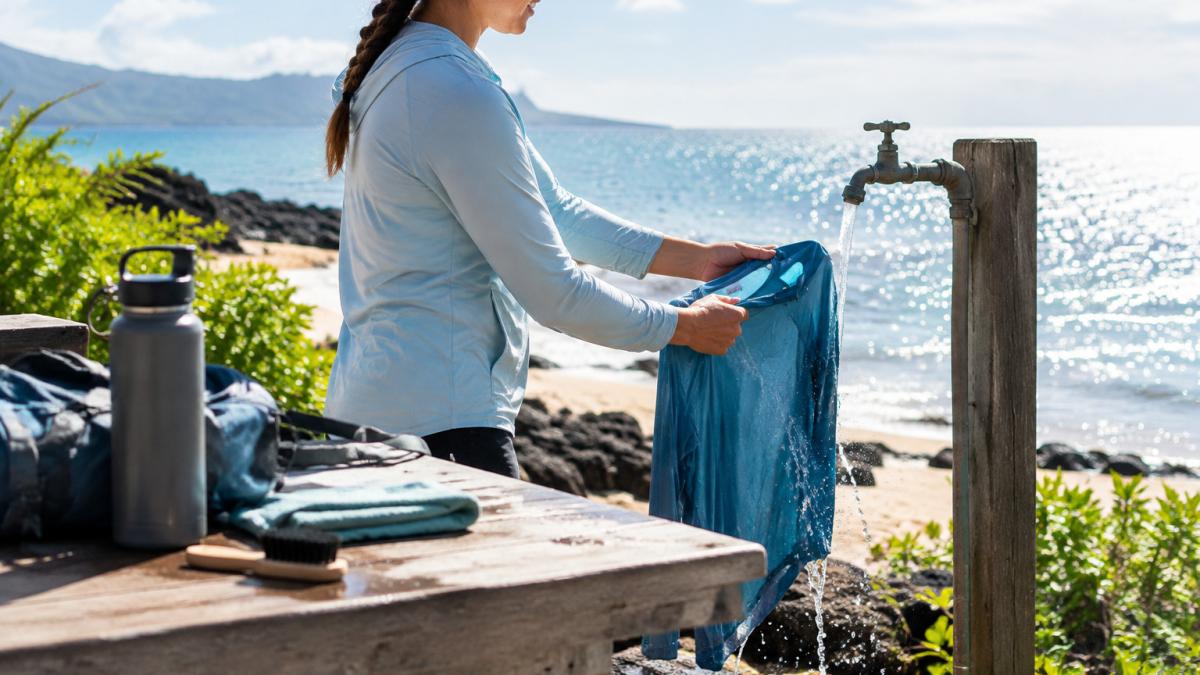
Rinsing Right After a Session
Rinse your gear with clean, fresh water as soon as you leave the water. For the full washing method, see complete wash routine. Focus on the seams, collar, underarms and any area that touched your PFD or paddle.
- Use a gentle stream of fresh water, not a high-pressure hose
- Turn the garment inside out to reach the salt on the inside
- Squeeze gently instead of wringing the fabric hard
- Hang the piece in the shade to drain
Washing and Drying Without Damage
Wash UPF clothing on a cold or lukewarm gentle cycle. Use a mild detergent and avoid fabric softeners, which can coat the fibers and reduce breathability.
- Wash inside out to protect the outer surface
- Skip bleach and harsh stain removers
- Air dry flat or on a hanger out of direct sun
- Never use a high-heat dryer, since heat can weaken the fabric over time
UPF Clothing Care Instructions by Fabric Type
Different fabrics react to salt, sunscreen and washing in different ways. The table below gives a quick reference, and the notes underneath explain the mechanism behind each recommendation so you can adapt the routine to gear that is not listed.
| Fabric Type | Salt Resistance | Recommended Wash | Drying Method |
|---|---|---|---|
| Polyester blend | High | Cold, gentle cycle | Air dry in shade |
| Nylon blend | Moderate to high | Cold, gentle cycle | Air dry, avoid heat |
| Polyester with spandex | High, but stretch can fade | Cold, gentle cycle | Lay flat to dry |
| Lightweight knit | Moderate | Hand wash or gentle cycle | Air dry flat |
| Coated or laminated fabric | Moderate | Wipe or hand wash, no agitation | Hang to drip dry |
Polyester is generally considered salt-tolerant. It absorbs little water, so salt crystals tend to sit on the surface, and a cold rinse usually lifts them before they can abrade the weave. The trade-off is that polyester holds oily sunscreen residue more stubbornly than nylon, so a mild detergent wash matters more than a long soak.
Nylon is strong and quick-drying but more sensitive to heat. High dryer temperatures can yellow nylon and weaken the fibers over repeated cycles, which is why air drying is the safer default. Nylon also stretches more than polyester when wet, so avoid hanging a soaked garment by the shoulders for long periods.
Elastane blends add stretch for paddling and swimming, but elastane is the first component to degrade. Salt, chlorine and heat all shorten its life, and the visible sign is a garment that no longer snaps back around cuffs, waistbands or the collar. Lay these pieces flat to dry so gravity does not pull the stretch out of shape.
Lightweight knits have more open space between yarns, so they can offer less margin for wear. Hand washing or a mesh bag on a gentle cycle can reduce the mechanical abrasion that opens up thin spots.
Coated and laminated fabrics, including some wind and rain shells with a UPF rating, should not be agitated aggressively. Scrubbing or high-pressure rinsing can damage the coating that contributes to both water resistance and UV blocking. Wipe or hand wash, then hang to drip dry.
Recycled polyester blends, like those used in some Silverback Hawaii pieces, follow the same basic care rules as virgin polyester. Cold water, mild detergent and air drying will keep them performing well for longer.
Watch out: fabric softener and dryer sheets can leave a residue that coats fibers and reduces breathability.
Does UPF Clothing Lose Effectiveness When Wet?
Wet fabric can change how well UPF clothing blocks sunlight, especially for lighter weaves.
The effect depends on the fabric, the weave and how much water it holds. A tightly woven garment usually keeps its protection better when wet than a loose knit does. Check how the fabric looks when held up to light, and replace gear that looks noticeably thin.
How to Inspect Your Gear and Judge UPF Clothing Lifespan
Most paddlers replace UPF gear either too early, because a stiff shirt feels worn out, or too late, because thinning is hard to see until it is advanced. A short inspection routine separates the two. Do it in good light once a month during the season and after any stretch of back-to-back sessions.
Separate Temporary Residue from Lasting Damage
The first question is whether a problem rinses out. Salt residue, dried sunscreen and body oils are temporary. They can make fabric feel stiff, crusty or slightly tacky, and they can dull the color, but they usually wash away with a cold rinse and a mild detergent wash. If the stiffness disappears after washing and air drying, the garment is fine.
Lasting damage looks different. It does not rinse out, and it tends to concentrate where the fabric flexes or rubs: shoulders under a PFD, underarms, the collar, cuffs and the seat of paddling shorts.
A Repeatable Inspection Checklist
Work through these checks in order and note anything that fails.
- Hold the fabric up to a bright light. Look for pinprick bright spots, thin patches or areas that are noticeably more see-through than the rest of the garment. Compare the shoulders and seat against the chest panel.
- Stretch the fabric gently across the weave at the shoulders, knees and seat. A healthy weave springs back. A weave that stays distorted or shows gaps between yarns is losing coverage.
- Check seams for loose threads, open stitching or pulled flatlock stitches. Seam failure is often the first sign of overall wear because seams take the most stress.
- Feel for pilling, fuzzing or a rough surface. Pilling on the face of the fabric can indicate fiber breakage from abrasion.
- Look for fading or color change, especially in high-sun areas. Fading alone does not prove lost UV protection, but it is a signal to inspect more closely.
- Check fit around cuffs, waistbands and the collar. Stretched-out elastane means the garment no longer stays in place, and gaps at the hem or sleeve let in sun.
When to Retire a Garment
Retire the piece when you find any of the following: visible thinning or bright spots held to light, seams that will not stay closed after repair, persistent stiffness that survives washing, or stretch that no longer recovers. A garment with any one of these is no longer giving you the coverage you are counting on.
If a garment passes every check, keep using it. There is no fixed number of saltwater sessions after which a well-made UPF piece must be replaced, because fabric, fit and care habits vary so much. The inspection, not the calendar, is the better guide.
Watch out: a garment that looks fine in normal light can still be thinning. Always do the held-to-light check, because that is where early wear shows up first.
Keeping Your Paddling Gear Protecting You Through the Season
A little routine goes a long way. Rinse after every session, wash gently, dry in the shade and inspect your gear regularly. These habits protect the fabric and keep your skin covered where it counts.
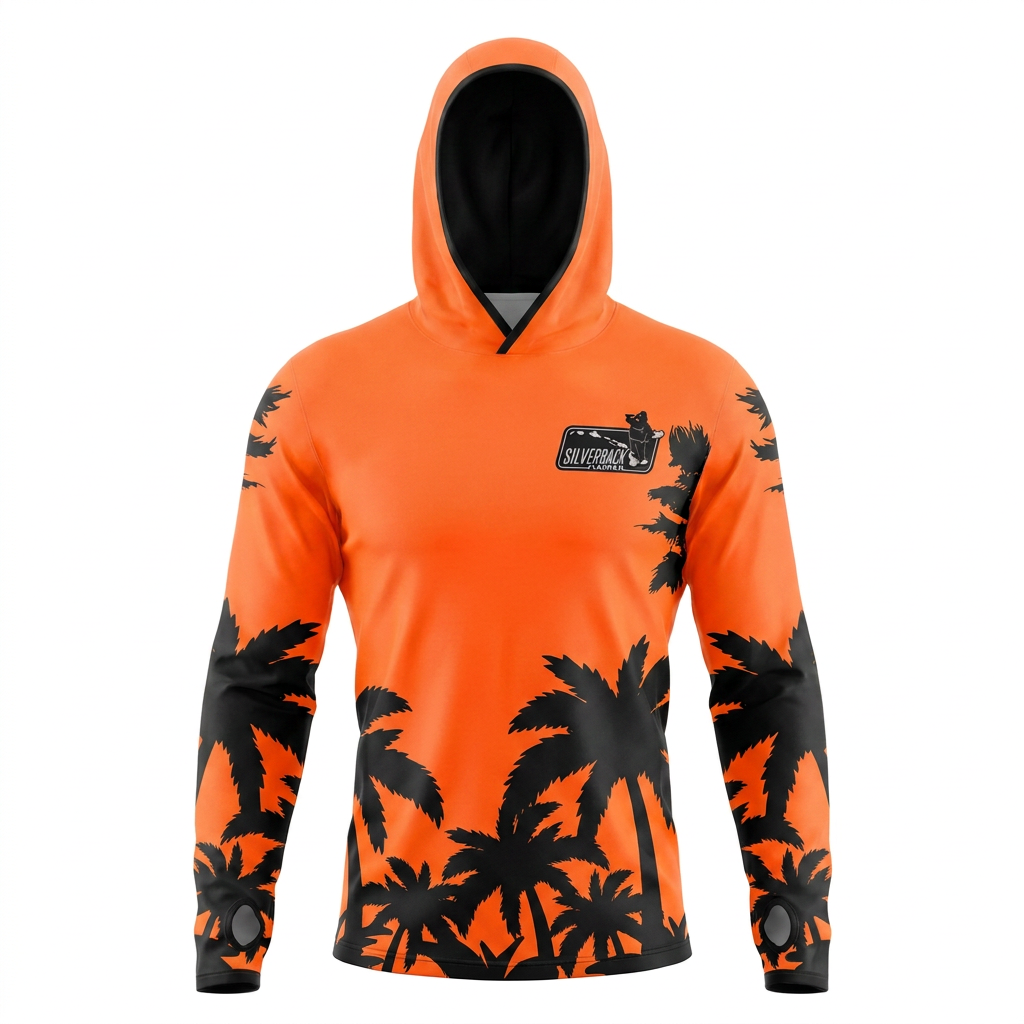
Silverback Hawaii designs its paddling apparel for long days on the water. Our Men's Hawaiian Hydro Hoodie in Lotus Rec fabric is a lightweight option for hot conditions, priced at $50.00, and our Women's Hawaiian Hydro Hoodie in Palm Tree Print is priced at $40.00.
Frequently Asked Questions
How long does UPF clothing last?
UPF clothing lasts as long as its fabric keeps its structure, and that depends on how often it is exposed to saltwater, sunscreen and sun, and how it is washed and dried. Rinsing after every ocean session, washing in cool water on a gentle cycle and air drying slow the wear that weakens fibers and seams. Inspect the garment regularly for thinning fabric, stretched weave, faded color or worn seams. When a garment shows these signs, its sun protection can no longer be assumed and it is time to replace it rather than keep relying on it.
Does UPF clothing lose effectiveness when wet?
Wet fabric can behave differently from dry fabric, so a garment that protects well when dry may allow more ultraviolet radiation through when soaked, depending on its weave, weight and color. The effect varies by garment, so the safest habit is to treat a wet shirt as a shirt you should still wear for sun protection, not as a reason to skip it. Dry the garment after use and rinse out salt so the fabric is not left in a stressed state between sessions.
Can saltwater damage UPF clothing?
Saltwater does not usually destroy UPF clothing in a single session, but salt residue left to dry in the fabric can stiffen fibers and accelerate wear over repeated exposures. Rinsing with fresh water after each session removes salt before it crystallizes. Sunscreen and body oil residue can also build up on fabric, so a gentle wash with a mild detergent helps keep the garment clean and in good condition over time.
How should you wash UPF clothing after saltwater exposure?
Rinse the garment in fresh water as soon as you can after saltwater use, then wash it in cool water on a gentle cycle with a mild detergent. Avoid bleach, fabric softener and high heat, which can weaken fibers and affect the garment. Air dry it out of direct sun or dry it on low heat if the care label allows. Repeating this routine after each saltwater session keeps salt and residue from building up in the weave.
