

Last Updated: November 17, 2026
Quick Summary
High waisted leggings for paddleboarding are full-length leggings with a waistband above the navel that stays put while you kneel, bend and paddle. Choose them for three things: full coverage, a secure fit, and fabric that handles water and sun. Test the waistband by squatting, kneeling, sitting and twisting before your first paddle.
- Pick a high waistband that stays flat and does not bind when dry.
- Run the five-step waistband fit check before buying and after your first few paddles.
- Choose four-way stretch fabric so the leggings follow your paddling stroke.
- UPF ratings weaken when fabric is wet, stretched or worn, so still use sunscreen.
- Match your leggings and layers to water temperature, air temperature and wind.
Table of Contents
- What Makes High Waisted Leggings Work for Paddleboarding
- Check the Waistband Before You Paddle
- How Fabric and Stretch Affect Movement on the Board
- Sun Protection, UPF Ratings and Their Limits
- How Leggings Perform When Wet and Under Repeated Immersion
- Choosing Paddle Board Clothing for Women by Weather and Water Temperature
- Pairing Your Leggings With a Paddle Board Swimsuit or Rash Guard
- Pick Your Pair of Silverback Hawaii Laki Leggings for Your Next Paddle
- Frequently Asked Questions
What Makes High Waisted Leggings Work for Paddleboarding
High waisted leggings for paddleboarding are full-length leggings with a waistband that sits above the navel and stays put through bending, kneeling and paddling. Their value comes from three things: coverage, a secure fit, and fabric that handles water and sun. Get those right and the leggings stop being something you think about on the water.
Silverback Hawaii designs its Laki Leggings around exactly these demands. The women's version uses a soft high waist, four-way stretch, flatlock seams and moisture-wicking, quick-dry fabric.
Most leggings are built for the gym or the street, but high waisted leggings for paddleboarding face harder demands. You kneel, twist, sit down to adjust your board and reach forward into a stroke, often for hours. A waistband that works fine on a walk can roll down or ride up the moment you drop to your knees.
Here is what to look for:
- A high waistband that holds position without binding
- Full-length coverage that protects your legs from sun and board rash
- Stretch that follows your movement in every direction
- Fabric that dries quickly and doesn't weigh you down when wet
Check the Waistband Before You Paddle
The waistband is the first place a legging fails on the water, so treat it as a fit test rather than an afterthought. A high waistband that sits above the navel gives you a stable anchor point, but height alone does not guarantee security. What matters is how the band is constructed, how wide it is, and whether it stays flat when you fold at the hips to kneel or reach into a stroke.
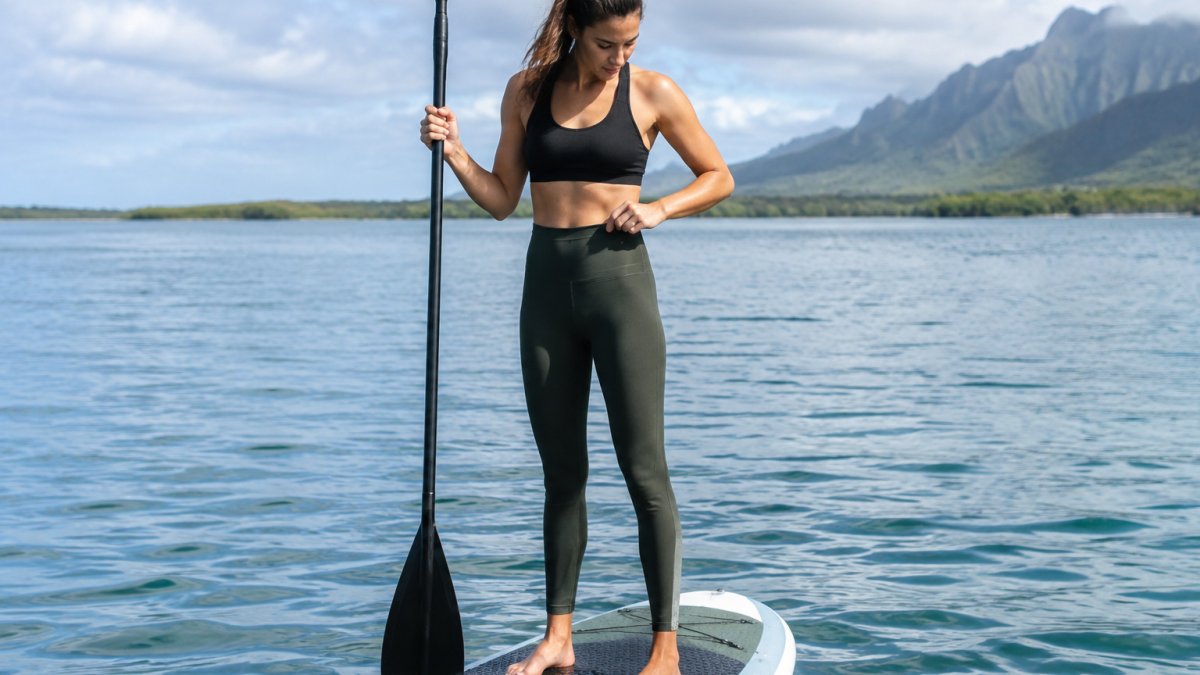
Look for a waistband that sits flat and stays put without binding, with stretch that recovers after you bend. Flatlock seams lie flat against the skin, which helps reduce chafing.
Run this fit check before you buy and again before your first paddle:
- Pull the leggings on and smooth the waistband flat at your natural waist, above the navel.
- Stand with feet hip-width apart and squat deeply. Watch whether the back of the band gaps away from your lower back or rolls downward.
- Kneel on one knee as if on a board, then reach forward into a paddle stroke. The band should stay flat against your stomach and lower back without pinching.
- Sit down on the floor and stand back up. Check for digging at the front and gapping at the back.
- Twist your torso side to side. The waistband should rotate with you, not stay fixed while the fabric pulls.
A band that passes all five checks when dry is a good starting point, but water changes the equation. Wet fabric gains weight, and a band that felt snug in the store can loosen after repeated sessions. Recheck the fit after your first few paddles, and if the band starts to roll, try a higher-rise version or a style with a wider band before assuming the size is wrong.
Watch out: a waistband that feels comfortably snug while standing can become restrictive when you sit or kneel, so always test in the positions you actually paddle in rather than judging fit from a mirror.
The article's waistband fit checks, summarised so you can run them quickly.
| Check | What to watch for | Recheck when |
|---|---|---|
| Squat deeply | Back of band gaps away or rolls down | Before first paddle |
| Kneel and reach | Band stays flat, no pinching | After first few paddles |
| Sit and stand | Digging at front, gapping at back | Before buying |
| Twist torso | Band rotates with you | Before buying |
| Wet fabric | Band may loosen after repeated sessions | After first few paddles |
How Fabric and Stretch Affect Movement on the Board
Stretch matters most where your body bends. Four-way stretch fabric moves side to side and up and down, which lets the leggings follow a paddling stroke without pulling. The Laki Leggings are built from a 75% recycled polyester and 25% spandex blend designed for all-day stretch.
Fabric weight also affects comfort. Heavier fabric can feel restrictive and hold water. Lighter, quick-drying fabric tends to feel better during long paddles, and it dries faster when you are back on shore.
Freedom of movement is not only about stretch. Seams and fit matter too. Flatlock seams lie flat against the skin, which helps reduce chafing during long sessions. Check the inner thighs and behind the knees, the areas most likely to rub on a board.
Sun Protection, UPF Ratings and Their Limits
Full-length leggings give you sun coverage on legs that shorts leave exposed. The Laki Leggings carry UPF 50 sun protection woven into the fabric.
UPF ratings describe how much ultraviolet radiation a fabric blocks when it is new and dry. They are not a permanent guarantee. Wet fabric, stretched fabric and worn fabric can all offer less protection than the label suggests. Washing and repeated sun exposure can also reduce performance over time.
Treat UPF as one layer of protection, not the only one. Pair leggings with sunscreen on any exposed skin, and reapply after swimming or sweating. The American Academy of Dermatology (https://www.aad.org) recommends broad-spectrum sunscreen with an SPF of 30 or higher for regular outdoor use. American Academy of Dermatology sun protection guidance
How Leggings Perform When Wet and Under Repeated Immersion
Water changes how leggings feel and fit. Some fabrics absorb water and grow heavy, while others shed it and dry quickly. Quick-drying, moisture-wicking synthetics generally hold up better during repeated immersion than heavy cotton blends.
Expect some change in fit after a day of falls and rinses. Rinsing in fresh water after each session helps fabric last. Salt and sand can wear fabric down over time, so rinse thoroughly and air dry out of direct sun.
Choosing Paddle Board Clothing for Women by Weather and Water Temperature
Pick leggings by the conditions you will actually paddle in, not by style alone. Water temperature, air temperature, wind, and sun exposure all change what a full-length legging needs to do, and the same pair can feel right on a warm, calm morning and wrong on a windy afternoon.
Use water temperature as your first filter. In warm water and strong sun, a lightweight full-length legging with UPF protection gives you leg coverage without overheating, and it dries quickly between splashes. In cooler water or steady wind, a legging alone may not keep you warm once you are wet, because thin quick-drying fabric insulates very little. In those conditions, add a rash guard or long-sleeve top for the torso and arms, and consider a neoprene layer or a thicker legging only if you expect repeated immersion in cold water.
Air temperature and wind matter as much as water temperature. A warm-water day with a cold headwind can chill you quickly when you are wet, so bring a light wind layer you can pull on over your leggings and top. Conversely, a hot, still day with intense sun makes coverage more valuable than warmth, and full-length leggings plus a long-sleeve rash guard can be cooler than bare skin because they block direct sun.
A simple layering framework:
- Warm water, warm air, high sun: lightweight full-length leggings with UPF protection, a rash guard or swim top, and sunscreen on exposed skin.
- Warm water, cool air or wind: the same leggings plus a long-sleeve rash guard and a packable wind layer for breaks.
- Cool water, cool air: quick-drying leggings as a base, a long-sleeve top, and a neoprene or thermal layer if you will be in the water repeatedly.
- Cold water: leggings alone are not enough; plan on a wetsuit or neoprene bottoms and reserve thin leggings for warm-weather sessions.
Match your top layer to the water and air temperature, and let your leggings handle leg coverage, sun protection, and board rash. Check the forecast and water temperature before you launch, and carry a layer you can add or remove as conditions change.
Watch out: a legging that feels comfortable on land can become cold and clingy after repeated immersion in cool water, so test your full layering system on a short paddle before committing to a long session.
Pairing Your Leggings With a Paddle Board Swimsuit or Rash Guard
Leggings work best as part of a layered setup. A rash guard protects your torso and arms, while the leggings cover your legs and help prevent board rash. Some paddlers prefer a swim top or a swimsuit under the leggings for a more secure fit around the waist.
Make sure the layers do not fight each other. A thick swim top under a high waisted legging can bunch at the waistband and create pressure points. Test the full outfit by kneeling and reaching before you commit to a long paddle.
Swim leggings and paddle board clothing for women come in many combinations. Choose pieces that share similar fabric and fit so they move together rather than against each other.
Pick Your Pair of Silverback Hawaii Laki Leggings for Your Next Paddle
If you want high waisted coverage with UPF 50 protection, four-way stretch and a secure waistband, the Laki Leggings are a strong option to start with. Compare the women's and men's versions, check the fit with the kneel-and-reach test, and match the leggings to your local water temperature and sun exposure.
Silverback Hawaii designs its paddling apparel for paddlers, ocean lovers and aquatic athletes, with recycled plastic fabric and island-style designs. Explore the women's Laki Leggings or the men's Laki Leggings, and see the full UPF 50 long sleeve shirts buyer's guide for a layer that pairs well with them.
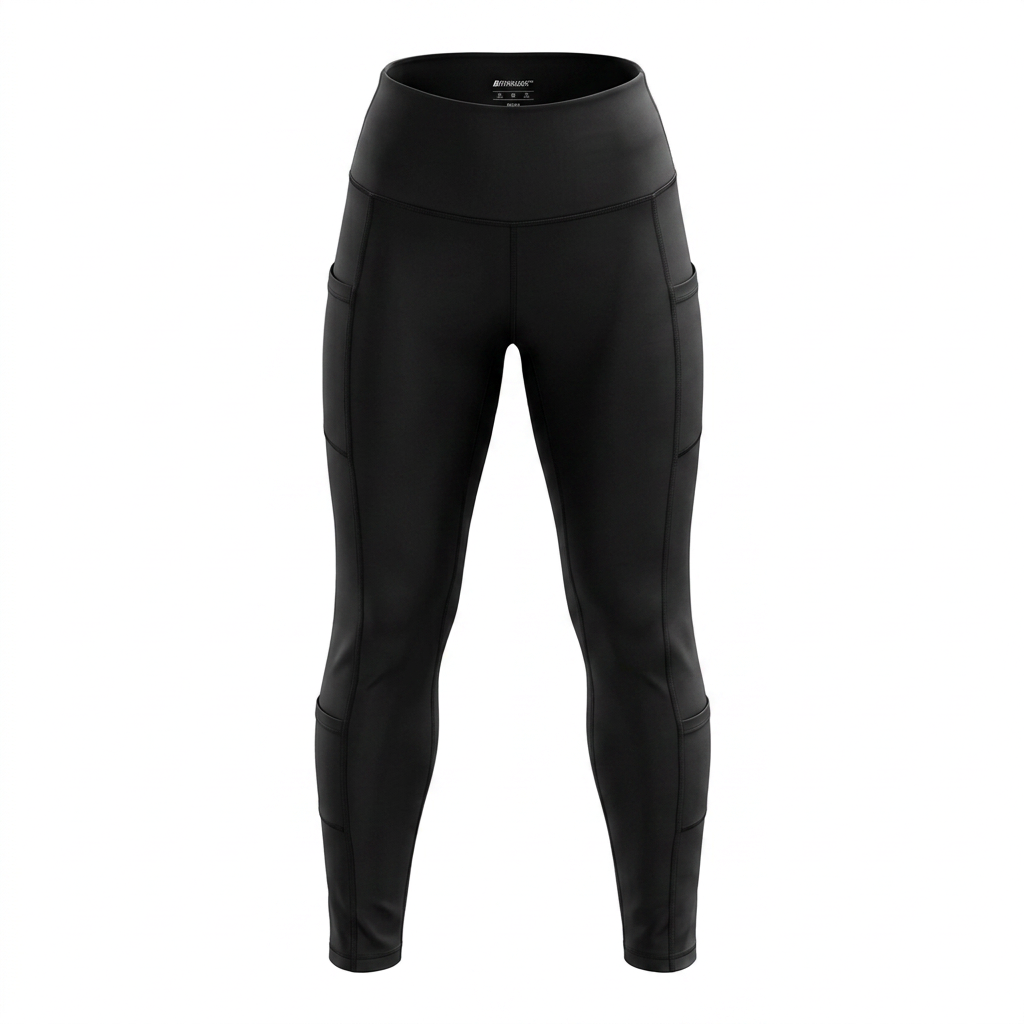
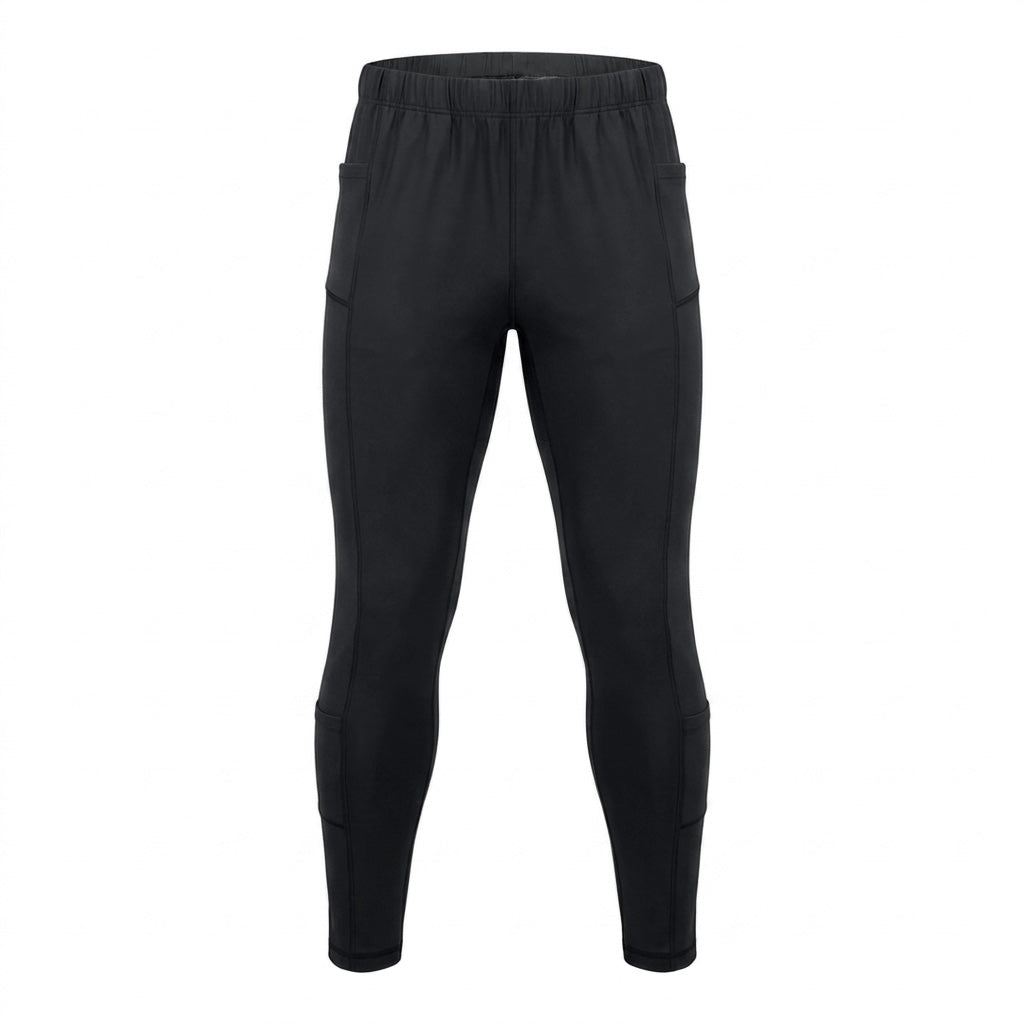
Best for: Paddlers who want full-length sun coverage and a waistband that stays put during kneeling and reaching. Skip if: You need heavy warmth for cold water, since these are built for warm-weather island paddling.
Frequently Asked Questions
Are high-waisted leggings good for paddleboarding?
Yes, when the waistband stays in place. A high waist covers more of the lower back and reduces rubbing while you kneel, turn and paddle. Look for a soft, non-binding band that does not roll down when you bend forward. Test the fit by squatting and reaching forward on dry land before you head out. Leggings with a contoured waist and four-way stretch tend to hold their position better than loose, thin waistbands during long sessions on the water.
What fabric is best for paddleboarding leggings?
Look for a blend of recycled polyester and spandex, such as the 75% recycled polyester and 25% spandex used in Silverback Hawaii's Laki Leggings. Polyester dries faster than cotton and resists stretching out when wet, while spandex provides the four-way stretch needed for paddling motion. Moisture-wicking, quick-dry fabric also keeps weight low when wet. Avoid cotton, which holds water, sags and takes a long time to dry after a session.
Are swim leggings better than regular workout leggings for paddleboarding?
Swim leggings and water-ready workout leggings are usually a better choice than standard gym leggings. Standard gym leggings may absorb water, become heavy and lose shape after repeated immersion. Look for quick-drying fabric with flatlock seams, which help reduce chafing when you kneel and paddle for long stretches. Check the product listing for stated sun protection, since UPF ratings are not common across all workout leggings.
How should paddleboarding leggings fit?
Paddleboarding leggings should feel snug without binding. The waistband should sit at or above the natural waist and stay in place when you squat, kneel and reach forward. Test the fit by kneeling on the floor and bending at the hips. If the waistband rolls, slides or digs in, try a different size. Full-length coverage should reach past the ankle without pulling tight at the knee, so you have room to kneel comfortably on the board.
