

Last Updated: November 5, 2026
Quick Summary
Compression gear is worth it for long-distance paddling mainly as a comfort and sun-protection tool, not a speed secret. The strongest case is recovery and swelling, while performance claims borrowed from running research remain uncertain on the water. Buy for the recovery window and coverage, not for speed.
- Most compression research comes from running and cycling, not paddling, so treat findings as clues.
- Compression socks are the easiest entry point and the one most paddlers should try first.
- A tight compression top can restrict torso rotation and bunch under a PFD.
- Test one garment at a time in training and never debut new compression gear on race day.
- Rinse gear in fresh water after every saltwater session because dried salt crystals act like sandpaper.
Table of Contents
- What Compression Gear for Paddling Actually Does
- Compression Clothing for Endurance Sports: What the Evidence Supports
- Compression Socks for Long-Distance Paddling
- Upper-Body and Torso Compression: The Paddling Gap
- Compression Gear Downsides Paddlers Should Know
- Paddling-Specific Comparison: Socks, Sleeves, Tights, and Tops
- Matching Compression Gear to Your Paddling and Trip Length
- Shop Paddler-Built Layers at Silverback Hawaii
- Frequently Asked Questions
What Compression Gear for Paddling Actually Does
Compression gear is worth it for long-distance paddling mainly as a comfort and sun-protection tool, not a speed secret. Racers often ask whether tighter clothing makes the boat faster.
Compression clothing is apparel engineered to fit tightly against the body, applying graduated pressure that is firmest at the extremities and looser toward the torso. That pressure is the whole premise behind compression socks, sleeves, tights, and tops.
Graduated Compression, Fit, and the Muscle-Fatigue Question
Graduated compression describes a garment that squeezes hardest at the ankle or wrist and eases off as it climbs.
In practice, fit matters more than the label. A sock that bunches at the heel or a tight top that digs under a personal flotation device (PFD) creates the problems the pressure was supposed to solve.
Some paddlers report their legs feel fresher after a long session in compression tights. Whether it is the pressure, the placebo, or simply better sun coverage is hard to untangle.
Where the Research Is Strong and Where It Is Thin
Most compression research comes from running, cycling, and recovery studies, not paddling. That matters.
So the running evidence gives clues, not answers. Finding the right balance between support and freedom of movement remains the most reliable way to identify comfortable paddling gear that sustains you through long days on the water.
What it supports poorly is the idea that pulling on sleeves will shave minutes off your race. Below, we walk through what the endurance research actually says, then narrow it to paddling.
Compression Clothing for Endurance Sports: What the Evidence Supports
Compression clothing for endurance sports has solid support for recovery and swelling, and much weaker support for live performance gains. That split is the single most useful thing to understand before you spend money, and it is also where most paddlers get misled, because the research base is almost entirely running and cycling.
Race Times, Time to Exhaustion, and Perceived Exertion
Across running and cycling trials, effects on race times and time to exhaustion are small and inconsistent. Some studies show a slight improvement in perceived exertion; others show nothing measurable. Compression is not a performance-enhancing tool the way a training block or a better paddle stroke is.
That matters because the mechanisms studied do not map cleanly onto a seated sport. Running research focuses on vertical impact, ground contact, and repeated eccentric loading of the legs.
Recovery, Soreness, and Leg Swelling After Long Sessions
Recovery is the strongest case, and it is also the most paddling-relevant. Some athletes find that compression tights or socks worn after exercise make the lower legs feel less heavy.
For paddlers, the post-session window is one place compression may be worth trying.
Post-session compression is not a substitute for sleep, food, and hydration. Some paddlers wear tights or socks for an hour or two after a long session and then take them off.
What This Means for a Paddler's Buying Decision
For the highest-probability return on compression, buy for the recovery window and for sun and chafe coverage during the paddle, not for speed. Socks and tights are a common starting point for testing compression. Tops and sleeves are a harder sell: the performance case is thin and fit problems under a PFD are real. Test one garment at a time in training, and judge it on comfort over hours, not on a stopwatch.
Compression Socks for Long-Distance Paddling
Compression socks for long-distance paddling are the easiest entry point, and the one most paddlers should try first.
What they may help with: calf support and a bit of coverage on the lower leg. What they do not do: fix a poor seating position or replace hydration and nutrition planning.
A common mistake is buying a sock sized for running and expecting it to suit a seated sport.
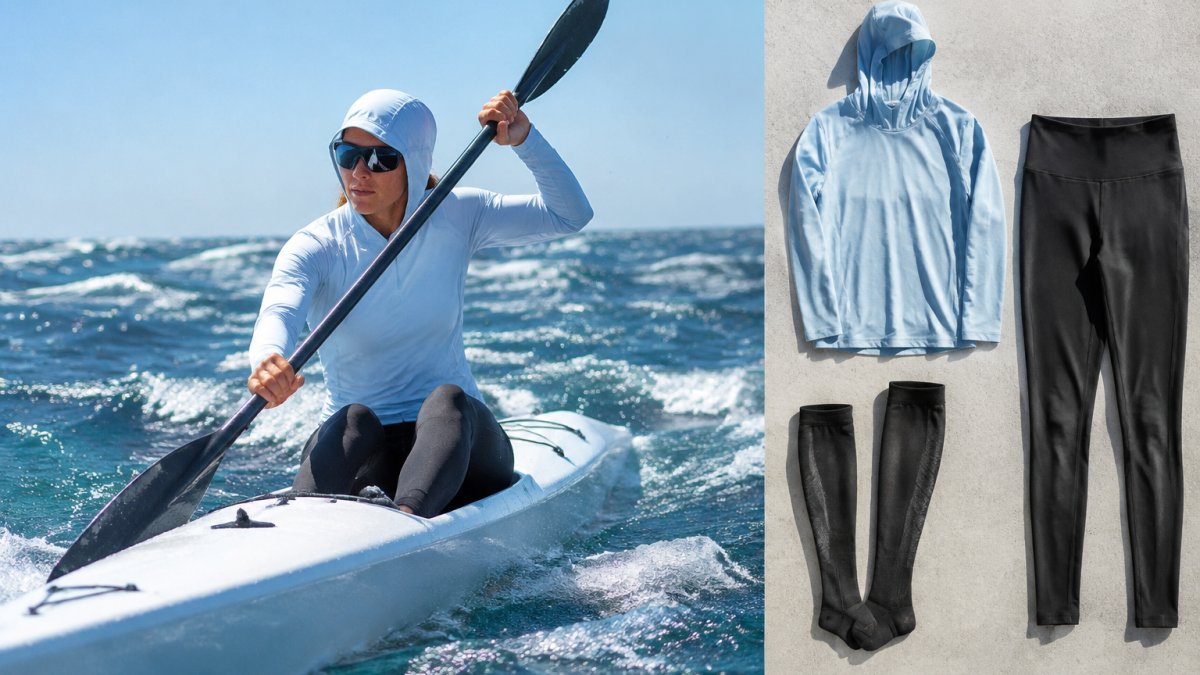
If you are weighing lower-body options, it helps to see what full-length coverage looks like in practice. Our women's Laki leggings pair a soft high waist with flatlock seams and full-length sun coverage.

Upper-Body and Torso Compression: The Paddling Gap
Torso compression is where paddling diverges most from running, and where the evidence gets thinnest. Almost all compression research focuses on the legs. Your stroke, though, is driven by the torso, shoulders, and back.
Women's Solid Color Hawaiian Hydro Hoodie, New Ultra Lightweight Fabric →
A tight compression top can restrict rotation in a paddle stroke. It can also bunch under a PFD. That is one reason many paddlers skip torso compression.
The better answer for the upper body is usually a lightweight, sun-protective layer rather than a compressive one. Our women's Solid Color Hawaiian Hydro Hoodie is designed as a lightweight layer with UPF 50 sun protection and a fast-wicking, four-way stretch fabric.

Compression Gear Downsides Paddlers Should Know
Compression gear downsides matter more in paddling than in most sports, because you are wet, hot, and moving in a seated position for hours. These are the problems worth planning around.
Restriction, Heat, and Wet-Use Problems
- Restriction: tight garments can limit hip and torso rotation, which is core to a powerful stroke.
- Heat: compression layers add warmth. In hot, humid conditions, that can tip you from comfortable to overheated.
- Wet use: saturated fabric gets heavy and can chafe where seams rub against skin or under a PFD.
Watch out: the most common failure is a seam that rubs under the PFD on a long, wet paddle. Flatlock seams and a proper test session catch this before it becomes a race-day problem.
If heat and sun exposure are your main concern, a proper sun layer often beats a compression layer. Our UPF 50 long sleeve shirt guide covers how to pick one that holds up to saltwater and washing.
Paddling-Specific Comparison: Socks, Sleeves, Tights, and Tops
Each compression garment type solves a different problem for paddlers, and the trade-offs look different on the water than they do in a running store. The table below compares them on the variables that actually matter in a boat: wet-fabric behavior, PFD interaction, stroke restriction, and sun coverage.
| Garment | Main Benefit | Best For | Paddling-Specific Drawback |
|---|---|---|---|
| Compression socks | Calf support, less swelling | Recovery, long seated sessions | Limited sun coverage; top band can dig when the knee is bent for hours |
| Compression sleeves | Targeted calf or arm support | Trying compression cheaply | Can slide or bunch; arm sleeves may rub under a PFD strap |
| Compression tights | Full-leg coverage, chafe control | Sun protection, recovery | Warmer; saturated fabric gets heavy; high waistbands can roll when seated |
| Compression tops | Torso support | Rarely suits paddling | Restricts stroke rotation; bunches under a PFD; slow to dry |
Wet-Fabric Behavior and Chafing
Compression fabrics hold shape when wet, but they still absorb some water, and a saturated tight layer against skin under a PFD is where chafing starts. Seam placement matters more than the compression rating: flatlock seams reduce friction, while raised seams rub against skin and the PFD edge. Saltwater makes this worse because dried salt crystals act like sandpaper. Rinse gear in fresh water after every saltwater session, and test any new garment on a wet training paddle, not a dry one.
Stroke Mechanics and Restriction
A compression top that feels fine standing in a shop can limit torso rotation once you are seated and reaching for a stroke. Put the top on under your PFD, sit in your boat or on a bench in paddling posture, and rotate through a full stroke on both sides. If the fabric pulls across the chest or binds at the shoulder, it will cost you reach over a long distance.
Sun, Heat, and Layering
Compression tights and sleeves add coverage, a real benefit in strong sun, but they also add warmth. In hot, humid conditions, a breathable sun layer often beats a compressive one because airflow matters more than squeeze. In cold water the calculus flips: tights add warmth some paddlers appreciate, and a compression top under a sun hoodie can be a sensible cold-morning combination.
Practical Verdict by Garment
For most paddlers, socks or tights deliver the most value because the recovery and swelling case is strongest and fit problems are easiest to manage. Sleeves are a cheap way to test whether compression suits you, but expect them to slide or bunch.
If you are comparing tights options, our men's Laki leggings offer full-length coverage with calf pockets and a higher waist built for seated movement.
Matching Compression Gear to Your Paddling and Trip Length
Match compression to the length and conditions of your paddle, not to a generic recommendation. A short recreational outing and an ultra-distance race call for different choices.
- Short recreational paddles: sun coverage matters more than compression; a lightweight hooded layer is usually enough.
- Training sessions of a few hours: test compression socks or tights here first.
- Long-distance and ultra-distance events: full-leg coverage plus post-session compression is the sensible combination.
The rule we would give any paddler: change one thing at a time, and only in training. Never debut a new compression garment on race day.
When you are building a kit, a lightweight paddling hoodie pairs well with compression layers underneath. Our men's Solid Color Hawaiian HydroHoodie is designed as that outer sun layer, with UPF 50 and a quick-drying four-way stretch fabric.

Shop Paddler-Built Layers at Silverback Hawaii
The real test of compression gear is whether it holds up in your conditions: salt, sun, hours in the seat, and a PFD pressing on the body.
Silverback Hawaii makes apparel designed by paddlers for paddlers, using recycled materials. Our gear includes UPF 50 sun protection and quick-drying, four-way stretch fabric.
Get started with Silverback Hawaii and build a paddling kit that handles the distance.
Frequently Asked Questions
Is compression gear worth wearing for long-distance paddling?
It depends on what you expect from it. Research on compression clothing for endurance sports shows small, inconsistent performance effects, and some studies report perceived benefits such as reduced soreness after long efforts. For paddling, the case is strongest for recovery and comfort rather than speed. Choose pieces that fit tightly without restricting your stroke, test them during training, and treat compression as one part of a layering system that also handles sun, spray, and chafing.
Are compression socks useful during a long paddle?
Compression socks for long-distance paddling are most useful for circulation and swelling, especially on long, hot days when your legs sit still in the boat for hours. Graduated compression may help reduce lower-leg swelling and post-session soreness, and many paddlers find them comfortable under sun-protective leggings. They will not fix a poor fit or replace training. Try them on a long training run first, check that the top band does not dig in, and size by calf measurement rather than shoe size.
What are the downsides of compression gear for paddling?
The main compression gear downsides are restriction, heat, and wet-use discomfort. Too-tight garments can limit hip and shoulder rotation, bunch behind the knee, or dig in under a PFD. Thick fabrics hold water and feel heavy, and seams that rub when dry can chafe when soaked. Heat and humidity make full-length compression harder to tolerate. Fit matters more than compression level: a tight-fitting, four-way stretch piece with flatlock seams usually works better on the water than a medical-grade garment.
How should compression gear fit for paddling?
It should feel snug and supportive without pinching, rolling, or limiting your stroke. Check three things before you buy: the garment stays in place through a full rotation, the seams sit flat under your PFD and seat, and the fabric stretches in every direction you move. Sizing charts based on calf, thigh, or chest measurements beat guessing from shirt size. Test new pieces on a long training paddle in the conditions you race in, and size up if you feel restriction in the hips or shoulders.
Does compression clothing reduce muscle fatigue during endurance exercise?
The evidence is mixed. Some studies report lower perceived exertion and less muscle soreness with compression clothing for endurance sports, while others find no meaningful change in power or time to exhaustion. The effects tend to be small and vary by individual, garment type, and fit. For paddlers, the practical takeaway is to judge compression by how your shoulders, back, and legs feel over a long session, not by claims of faster race times.
