

Last Updated: November 11, 2026
Quick Summary
Orso Activewear alternatives for paddling should be judged on UPF 50 fabric, flatlock seams, quick-drying recycled polyester and spandex, and a cut that layers under a PFD. Silverback Hawaii's Hydro Hoodies meet those demands, with the palm tree print at the lowest price in the range.
- A UPF 50 rating is built into the fabric weave and should survive repeated washing and saltwater sessions.
- Flatlock seams reduce chafing where the PFD strap crosses your shoulder and underarm.
- Thumb holes and a button-closure hood cover the backs of the hands and the neck.
- Size the hoodie for a thin sun layer, not over a thick base layer, to avoid bunching under a PFD.
- The palm tree print Hydro Hoodie is the lowest-priced option in the range.
Table of Contents
- What Paddlers Actually Need From Orso Activewear Alternatives
- How We Evaluated These Alternatives
- The Best Orso Activewear Alternatives for Paddling, Compared
- Choosing a Men's UPF Hoodie for Water Sports
- Sun-Protective Clothing for Kayaking: Coverage, UPF and Layering
- Rash Guard vs UPF Hoodie: Which Layer Belongs Under Your PFD
- Recycled Polyester Water Sports Clothing: What the Fabric Label Tells You
- Matching a Hydro Hoodie to Your Paddle and Your PFD
- Frequently Asked Questions
What Paddlers Actually Need From Orso Activewear Alternatives
If you are shopping for Orso Activewear alternatives, understand that paddling gear and gym gear are not the same product.
A paddling top has to survive four things at once: sun, water, friction, and a PFD strapped over the top. Most activewear is designed for one or two.
Below, we break down what actually matters, then compare the options worth your money in 2026.
Four Demands That Separate Paddling Gear From Gym Gear
Sun protection that does not wash out. A UPF rating is a property of the fabric weave and yarn, not a surface coating. A garment labeled UPF 50 blocks roughly 98% of UV radiation, according to the Skin Cancer Foundation's sun protective clothing guidance, and that protection should hold through repeated washing and saltwater sessions.
Moisture management under a PFD. Your torso is covered twice: by the shirt and by the flotation vest.
Chafe resistance at the seams. Flatlock seams and a smooth inner face reduce rubbing where the PFD strap crosses your shoulder and underarm.
A cut that moves with the stroke. Four-way stretch and a loose fit let you rotate through the torso without the hem riding up or the shoulder binding.
How We Evaluated These Alternatives
We scored each option on five criteria: sun protection rating, fabric composition, seam construction, wet-use drying behavior, and layering under a PFD. Fit, coverage, and price came next.
Our evaluation is based on published product specifications, fabric content, and construction details a paddler can check before buying.
| Criterion | What We Looked For | Why It Matters on the Water |
|---|---|---|
| UPF rating | UPF 50, built into the fabric | Sun coverage for long sessions |
| Fabric | Recycled polyester plus spandex | Stretch, quick drying, lower impact |
| Seams | Flatlock construction | Less chafing under a PFD |
| Drying | Fast-wicking, quick-dry finish | Comfort between sessions |
| Layering | Hood and thumb holes | Coverage without bulk |
The Best Orso Activewear Alternatives for Paddling, Compared
A UPF 50 hooded sun shirt built from recycled polyester and spandex, with flatlock seams and a button-closure hood, is one of the options Silverback Hawaii offers for paddlers.
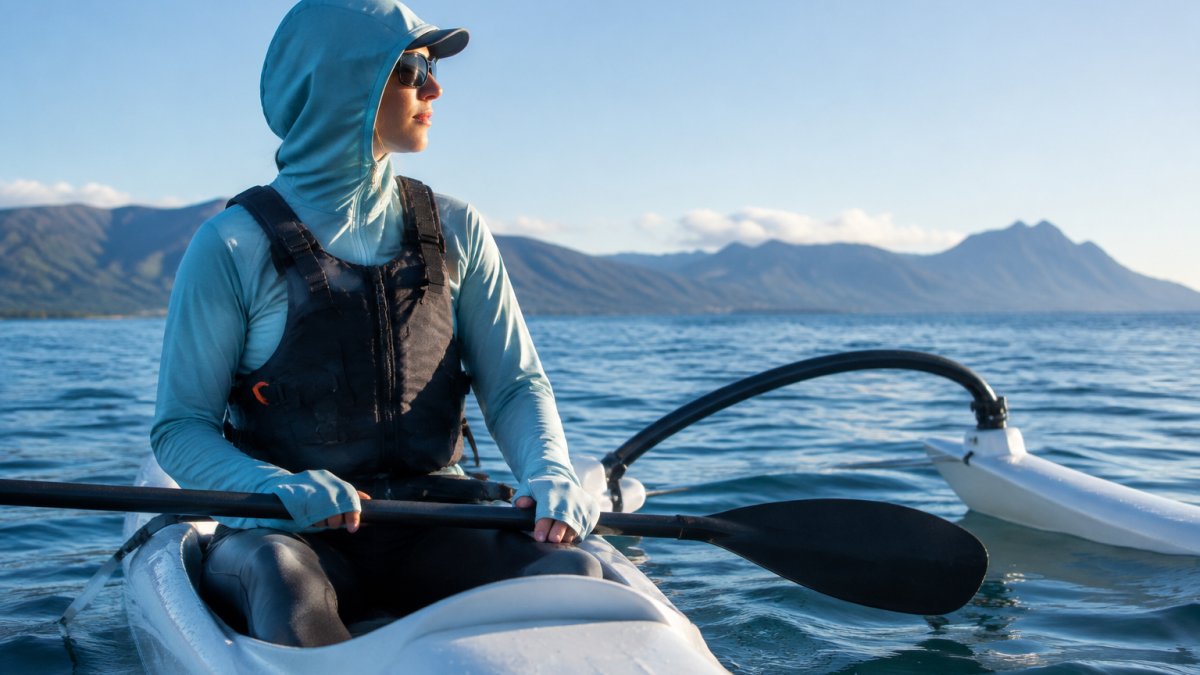
Here is how the lineup breaks down.
Solid Color Hydro Hoodies: The Lightest Option
The men's solid color Hydro Hoodie is built in an ultra lightweight fabric with minimal graphics and high-visibility colorways for on-water safety.
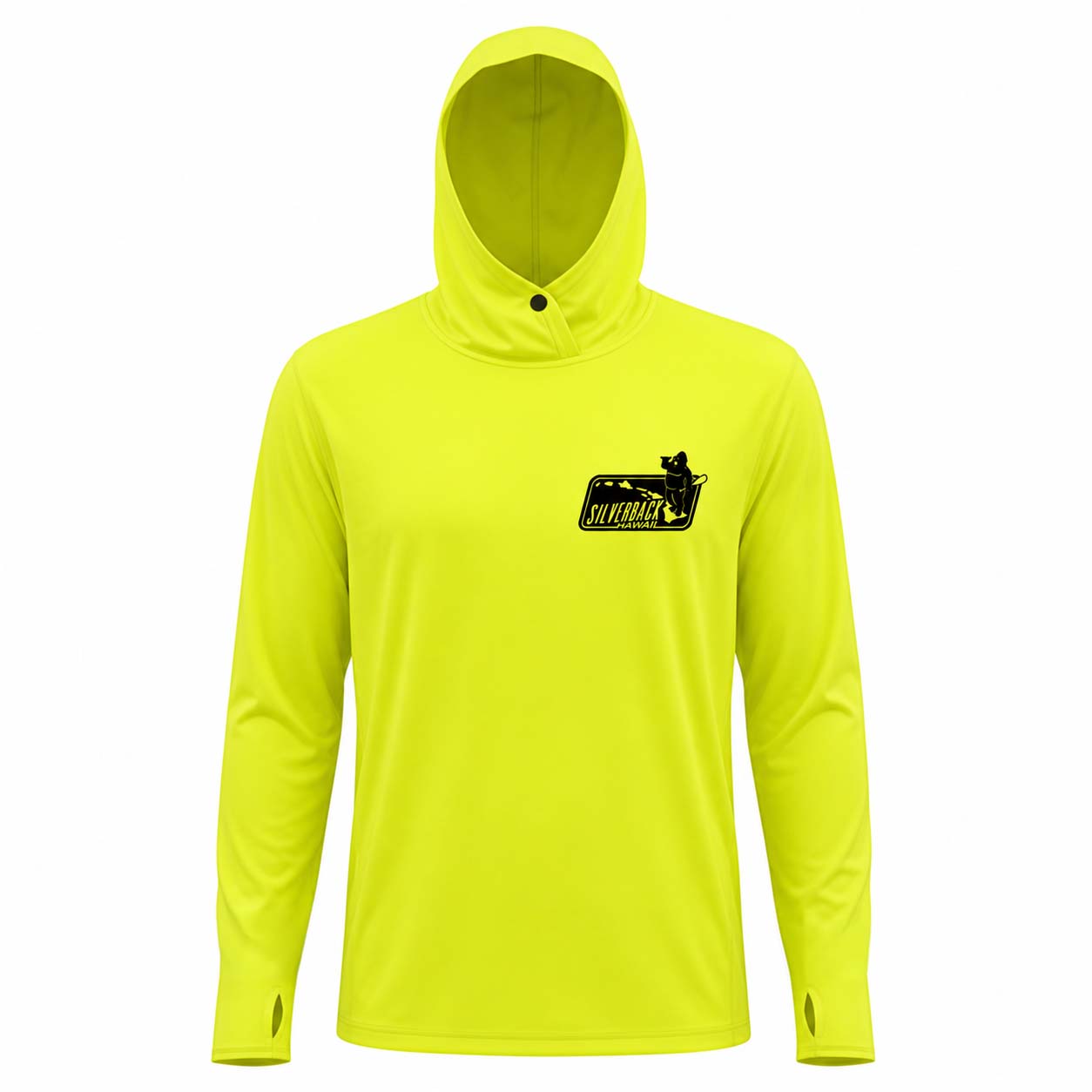
Both carry UPF 50 protection, fast-wicking and quick-drying performance, and four-way stretch in an 84% recycled polyester, 16% spandex fabric, designed and tested on Maui and made in the USA.
Best for: paddlers who want maximum breathability and a clean look. Skip if: you want a bold print or the extra features of the Tribal Tattoo build.
Palm Tree Print Hydro Hoodies: The Value Pick
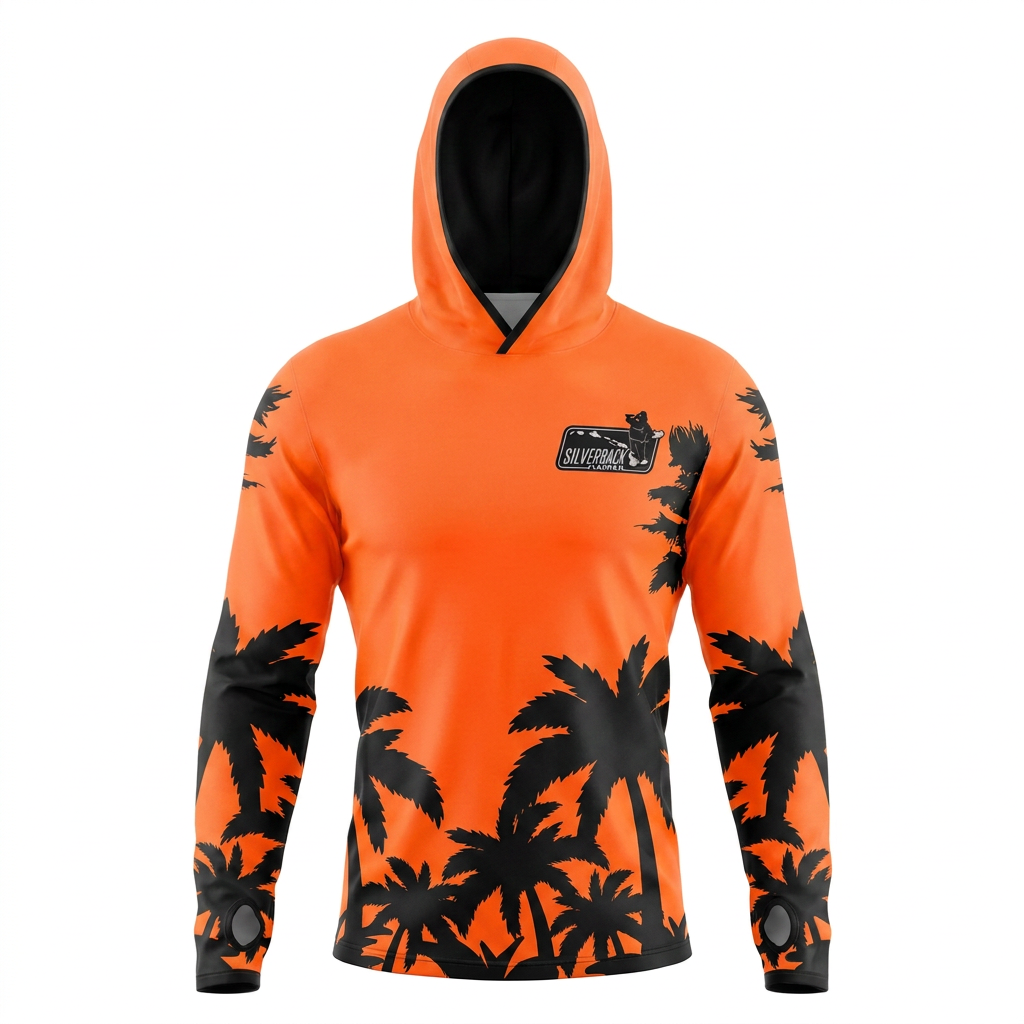
At $40.00, the men's palm tree print Hydro Hoodie is one of the lower-priced options in the range.
Flatlock stitching reduces chafing, thumb holes cover the backs of your hands, and the button-closure hood layers over a cap.
Best for: paddlers who want proven coverage at the lowest price in the range. Skip if: you need the absolute lightest fabric available.
Tribal Tattoo Hydro Hoodie: The Feature-Heavy Build
The Tribal Tattoo Hydro Hoodie at $85.00 includes thumb holes, a button-closure hood that works over caps and visors, and flatlock seams on the brand's lightest fabric yet.
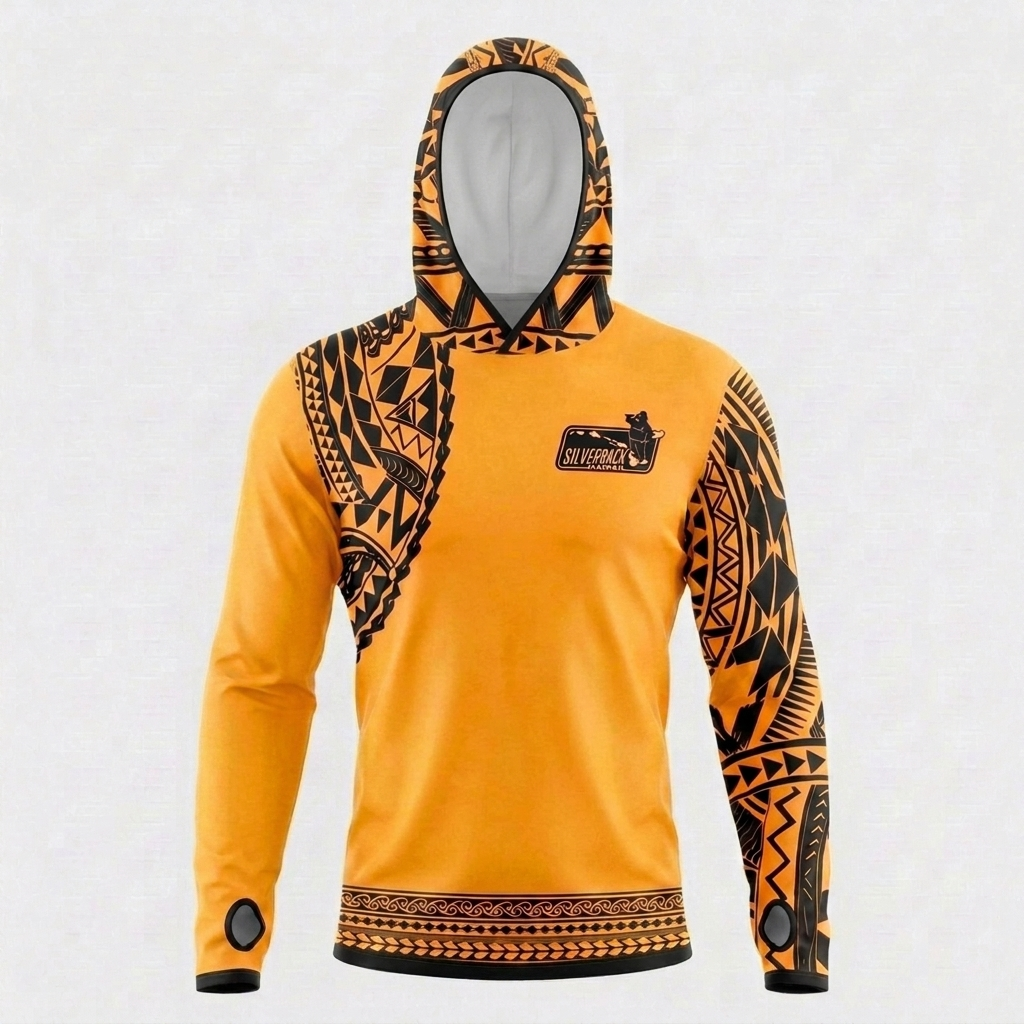
The Polynesian print includes a sleeve print on the left arm. Fabric is 84% recycled polyester and 16% spandex, with UPF 50 protection and four-way stretch.
Best for: paddlers who want every coverage feature in one garment. Skip if: you prefer a plain, minimal design.
Choosing a Men's UPF Hoodie for Water Sports
A men's UPF hoodie for water sports is one that fits loosely enough to layer under a PFD, covers the neck, and dries quickly. Check fabric content and seam type before color.
Three things decide whether a hoodie works on the water:
- Hood design. A button-closure hood stays put over a cap in wind. A loose hood flaps and blocks your peripheral vision.
- Thumb holes. These keep sleeves pulled over the backs of your hands, which is where sun exposure adds up over a long paddle.
- Seam placement. Flatlock seams sit flat against skin, which matters most where the PFD strap crosses your shoulder.
For a broader look at sun protection ratings and fabric choices, our UPF 50 long sleeve shirts buyer's guide covers the details in more depth.
Sun-Protective Clothing for Kayaking: Coverage, UPF and Layering
Sun-protective clothing for kayaking works best as a single thin layer that covers arms, shoulders, and neck, with a PFD over the top and nothing bulky underneath. The layer should be rated UPF 50, since that blocks roughly 98% of UV radiation reaching the fabric, according to the Skin Cancer Foundation's sun protective clothing guidance.
What UPF Ratings Actually Tell You
UPF is a property of the fabric weave and yarn, not a surface coating. A tight knit blocks more UV than a loose one, and darker or denser yarns block more than light, open weaves. A UPF 50 rating should hold through repeated washing and saltwater sessions.
When you compare alternatives, look for three things on the label:
- A stated UPF number, not just "sun protective." UPF 50 is the practical ceiling most brands claim; UPF 30 is the minimum that earns a sun-protection claim.
- Fabric composition, because recycled polyester and nylon knits hold UPF better than cotton or open-weave blends.
- Coverage claims tied to construction, hood, thumb holes, long sleeves, high collar, because a UPF 50 tank top leaves your arms and neck exposed regardless of the rating.
Mapping Coverage to Exposed Skin
Most sun damage on a paddle happens in predictable spots: the back of the neck, ears, backs of the hands, forearms, and tops of the thighs. A hooded long-sleeve top with thumb holes covers four of those five; thighs are a shorts or legging decision.
A structured way to compare alternatives is to check coverage against that list:
| Body Zone | Hooded Long-Sleeve with Thumb Holes | Long-Sleeve Crew | Short-Sleeve Rash Guard |
|---|---|---|---|
| Back of neck | Covered by hood | Exposed | Exposed |
| Ears | Partly covered by hood | Exposed | Exposed |
| Backs of hands | Covered by thumb holes | Exposed | Exposed |
| Forearms | Covered | Covered | Exposed |
| Torso | Covered | Covered | Covered |
That table is the comparison most roundups skip, and the reason a hoodie with thumb holes is the default recommendation for long sessions.
Layering Under a PFD Without Bulk
Layering order matters, but so does what each layer does to the fit of the PFD:
- Sun-protective hooded top against the skin. Thin, flat-seamed, and sized to your body, not to a bulky base layer.
- PFD over the top, adjusted snug. The vest should sit flat against the hoodie, with no fabric bunched at the collar or waist.
- Hat or visor under the hood, not over it. A cap brim under the hood keeps the hood from flapping and shades the face; a brim over the hood pushes the hood back and exposes the neck.
- Spare dry layer in the boat for the ride home. A lightweight hoodie or long-sleeve tee packs small and doubles as wind protection once you are off the water.
Watch out: a loose, unstructured hood flaps in wind and blocks peripheral vision, and a hoodie sized over a thick base layer will bunch under the PFD and create pressure points at the shoulder straps. A button-closure hood and body-skimming fit solve both.
Sunscreen vs. Coverage on the Water
Coverage beats sunscreen for long sessions. Reapplying lotion mid-paddle is impractical, spray washes off, and the spots people miss, neck, ears, hands, are exactly what a hooded top covers. Sunscreen still has a role on exposed skin (face, nose, thighs), but it should be the backup, not the primary strategy.
Rash Guard vs UPF Hoodie: Which Layer Belongs Under Your PFD
A rash guard vs UPF hoodie decision comes down to coverage, fit, and what happens to the fabric after it gets wet. A rash guard is a tight-fitting, short- or long-sleeve top that reduces rash and dries fast. A UPF hoodie adds a hood, thumb holes, and a looser cut for longer sun exposure. Under a PFD, those differences change how the garment behaves once you are splashed, rained on, or sweating through a long paddle.
How Each Fabric Behaves When Wet
Both garments are typically built from synthetic knits, polyester, nylon, or a blend with spandex, because those fibers absorb very little water compared with cotton, which can hold several times its dry weight and stay heavy for hours.
A rash guard's stretch knit clings to the skin when wet, staying put during a swim or remount and not ballooning in the water.
A UPF hoodie's looser weave and cut let more air move between fabric and skin, so it feels drier sooner after a splash.
Drying Time and Cling in Practice
Drying time depends on fabric weight, spandex amount, and airflow. A lightweight polyester-spandex hoodie in the 4-6 oz/yd² range typically feels dry within 15-30 minutes in sun and wind, while a heavier or higher-spandex piece stays damp longer.
Cling matters under a PFD because the vest presses fabric against your torso. A wet rash guard under a snug vest can create pressure points at the shoulder straps; a loose hoodie can bunch at the waist.
PFD Compatibility and Seam Placement
A PFD strap crosses the shoulder and underarm, exactly where chafe starts. Flatlock seams reduce rubbing on both rash guards and hoodies. A button-closure hood sits flatter under the vest collar than a loose hood, and thumb holes keep sleeves from riding up on the stroke. A rash guard has no hood to bunch, but tight sleeves can roll at the wrist if the cuff is not snug.
When to Choose Which
- Short session, warm water, high output: a rash guard is lighter, clings less when wet, and stays put during a swim.
- Multi-hour paddle, strong sun, cool wind: a UPF hoodie wins because the hood and hand coverage remove the two spots people most often miss with sunscreen, the back of the neck and the backs of the hands.
- Mixed conditions or a spare layer in the boat: a lightweight hoodie packs smaller and doubles as a wind layer; a rash guard is the better second skin if you plan to swim.
A common mistake is wearing a cotton shirt over a rash guard, cotton holds water, adds weight, and offers no reliable UPF rating. Another is sizing a hoodie to fit over a thick base layer, which will bunch under a PFD and negate the flat-seam advantage. Size for the thin sun layer you will actually paddle in.
Recycled Polyester Water Sports Clothing: What the Fabric Label Tells You
Recycled polyester water sports clothing is made by turning post-consumer plastic, including ocean-bound plastic and discarded fishing nets, into polyester yarn.
Read the label for two numbers: the recycled percentage and the spandex percentage. Higher spandex means more stretch and a closer fit; higher recycled polyester means more durability and faster drying.
The environmental case is real but should be stated plainly. Recycled content keeps plastic out of landfills and waterways, and it does not make a garment infinite or biodegradable.
Matching a Hydro Hoodie to Your Paddle and Your PFD
Match the hoodie to the boat, not the other way around.
PFD compatibility is the detail most buyers overlook.
If you paddle with a partner, the women's palm tree print hoodie gives you a matching option in the same fabric family.
Watch out: buying a hoodie sized to wear over a thick base layer will bunch under a PFD.
Paddling gear fails at the seams, the hood, and the drying time, not in the marketing photos.
Frequently Asked Questions
What should you look for in a men's UPF hoodie for water sports?
Start with the UPF rating and whether it is built into the fabric rather than applied as a coating. Check that the hood closes with a button so it stays put over a cap, that the seams are flatlock to reduce chafing under a PFD, and that the fabric is quick-drying with four-way stretch. Thumb holes matter for hand coverage on long downwind runs. Silverback Hawaii's hoodies list UPF 50 protection, flatlock seams, button closure hoods and thumb holes, in 84% recycled polyester and 16% spandex on the ultra lightweight versions.
What is the difference between a rash guard and a UPF hoodie?
A rash guard is a tight base layer, usually short or long sleeve, with no hood. A UPF hoodie adds a hood, longer sleeves with thumb holes and a looser cut that moves with a paddle stroke. In practice, a rash guard works as a first layer under a PFD on hot days, while a rash guard vs UPF hoodie decision usually comes down to sun exposure on the neck and ears. A hoodie covers more skin than a rash guard, which can matter on long paddles where reapplying sunscreen is impractical.
Is recycled polyester suitable for paddling apparel?
Yes, when it is blended with spandex for stretch. Silverback Hawaii uses 78% recycled polyester with 22% spandex on the Palm Tree hoodies and 84% recycled polyester with 16% spandex on the ultra lightweight versions. Polyester dries faster than cotton and resists taking on water weight, which is what you want when you are wet for hours. The trade-off is that it holds odor more than natural fibers, so rinse in fresh water after saltwater sessions and hang dry.
How do you choose sun-protective clothing for kayaking or paddleboarding?
Prioritize coverage over a number on a tag. A hood, thumb holes and a longer body hem cover the spots sunscreen misses: the back of the neck, the ears, the backs of the hands and the lower back when you rotate to stroke. Then check fit against your PFD, since a hoodie that bunches at the shoulders will chafe over a three-hour session. Silverback Hawaii's hoodies are cut with a looser fit on the men's Palm Tree version specifically so it moves with the stroke.
How should paddling apparel fit for active use?
Snug enough that the fabric does not flap or scoop water, loose enough that your shoulder rotation is unrestricted. Test it by reaching forward as if catching a stroke and rotating your torso; if the hem lifts past your waistband or the shoulder seam pulls, size up. The women's Palm Tree hoodie is cut to move with the paddle stroke, while the men's version is described as a loose fit. Wear your PFD over the hoodie when you try it on, not after.
