

Last Updated: November 12, 2026
Quick Summary
The best Patagonia alternatives for ocean sports are chosen by how well they survive salt, sun, and a paddle stroke, not by brand reputation. Look for permanent UPF 50, flatlock seams, four-way stretch, and quick-dry fabric, plus a spandex ratio high enough to recover shape after repeated salt and chlorine exposure.
- Saltwater dries into abrasive crystals inside seams, so rinse gear in fresh water after every session.
- UPF measures UV passing through fabric; SPF measures how long sunscreen protects skin before burning.
- A hood that cannot be secured will flap in wind and fill with water on a remount.
- Recycled polyester is as durable as virgin polyester when the yarn and construction are right.
- Size by chest and torso measurement rather than t-shirt size to prevent most first-order returns.
Table of Contents
- Why Ocean Sports Demand Different Gear Than General Outdoor Apparel
- Saltwater, Chlorine, and Sun: The Three Stressors That Break Down Ordinary Clothing
- What to Look for in a Patagonia Swim Shirt Replacement
- The Surf Sun Hoodie Advantage: Coverage Without the Burn
- Best Men's Rash Guard for Paddling: Fit, Seams, and Stroke Mechanics
- Recycled Fabric Water Sports Apparel: Does Sustainable Mean Durable?
- How Silverback Hawaii Compares on Price, Performance, and Repairability
- Match Your Gear to Your Sport: Paddling, Surfing, and Family Beach Days
- Ordering Your First Silverback Hawaii Hoodie
- Frequently Asked Questions
Why Ocean Sports Demand Different Gear Than General Outdoor Apparel
Most outdoor clothing is built for trails, not salt, which is why so many paddlers, surfers, and open-water swimmers end up disappointed with gear that looked perfect on the rack.
Ocean sports load fabric with three stressors at once: saltwater, chlorine, and direct sun. Salt crystals abrade fibers and stiffen seams. Chlorine degrades elasticity. UV radiation breaks down unprotected synthetics from the inside.
That is the core argument of this guide: the best Patagonia alternatives for ocean sports are chosen not by brand reputation but by how well they survive salt, sun, and a paddle stroke.
Saltwater, Chlorine, and Sun: The Three Stressors That Break Down Ordinary Clothing
Saltwater is the quiet killer. It dries into abrasive crystals inside seams and hems, and every session works them deeper into the thread.
Chlorine attacks stretch. Pool training and repeated wash cycles gradually relax spandex blends, so a rash guard that fit in spring can feel loose by fall.
Sun exposure is the third stressor, and the one most buyers underestimate.
Skin Cancer Foundation guidance on UV-protective clothing notes that fabric construction, color, and fit all affect how much UV reaches skin, which is why a loose, dark, tightly woven layer outperforms a thin white one.
What to Look for in a Patagonia Swim Shirt Replacement
The right replacement for a Patagonia swim shirt meets four criteria: a permanent UPF rating, flatlock seams, four-way stretch, and quick-dry fabric that does not hold water weight. Miss any one and you will feel it on a long paddle.
- UPF 50 built into the fabric, not applied as a coating. Yarn-level protection survives fiber thinning and fading; a surface treatment washes out.
- Flatlock or bonded seams at the shoulders and underarms. A raised seam under a PFD strap or board rail creates a pressure point that salt crystals make worse.
- Four-way stretch that moves with a full stroke. Two-way stretch recovers in one direction only, so a paddling rotation pulls the fabric across the back and shortens reach.
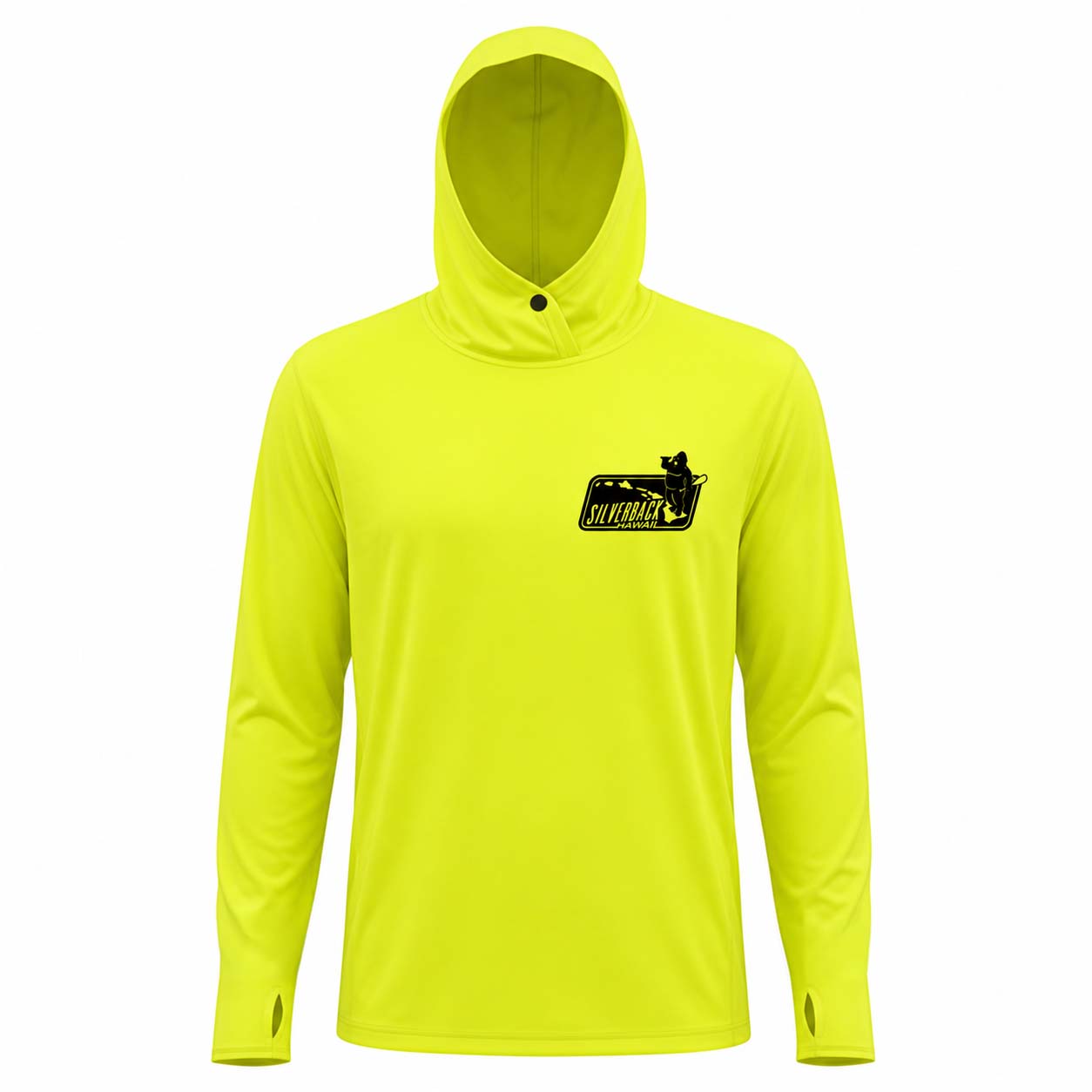
The men's solid color Hawaiian HydroHoodie is a useful benchmark: UPF 50, fast-wicking four-way stretch, and a build of 84% recycled polyester and 16% spandex.
UPF Rating vs. SPF: What the Labels Actually Mean
UPF measures how much UV radiation passes through fabric; SPF measures how long sunscreen protects skin before burning. They are not interchangeable, and a UPF 50 rating indicates the fabric blocks the vast majority of UV radiation when new and dry.
Wet, stretched fabric protects less. That is why fit matters as much as the rating, and why a snug rash guard can underperform a slightly looser hoodie in real conditions. For a deeper explanation, see our UPF 50 long sleeve shirt buyer's guide.
Saltwater, Chlorine, and Wash Durability: How the Criteria Hold Up Over a Season
Saltwater abrades seams and stiffens thread, so flatlock seams reduce exposed thread surface and a fresh-water rinse after every session is the cheapest durability habit you can build.
Repeated washing is the fourth stressor most buyers ignore. Synthetic ocean-sport apparel sheds microfibers in the wash, so rinsing rather than machine-washing frequently reduces both wear and shedding.
Watch out: a shirt that feels soft and light on the rack may be the one that sags first, because a low spandex ratio and a loose knit both trade recovery for hand feel.
The Surf Sun Hoodie Advantage: Coverage Without the Burn
A surf sun hoodie beats a standard rash guard for long sessions because it covers the neck, ears, and head, the places most surfers burn first.
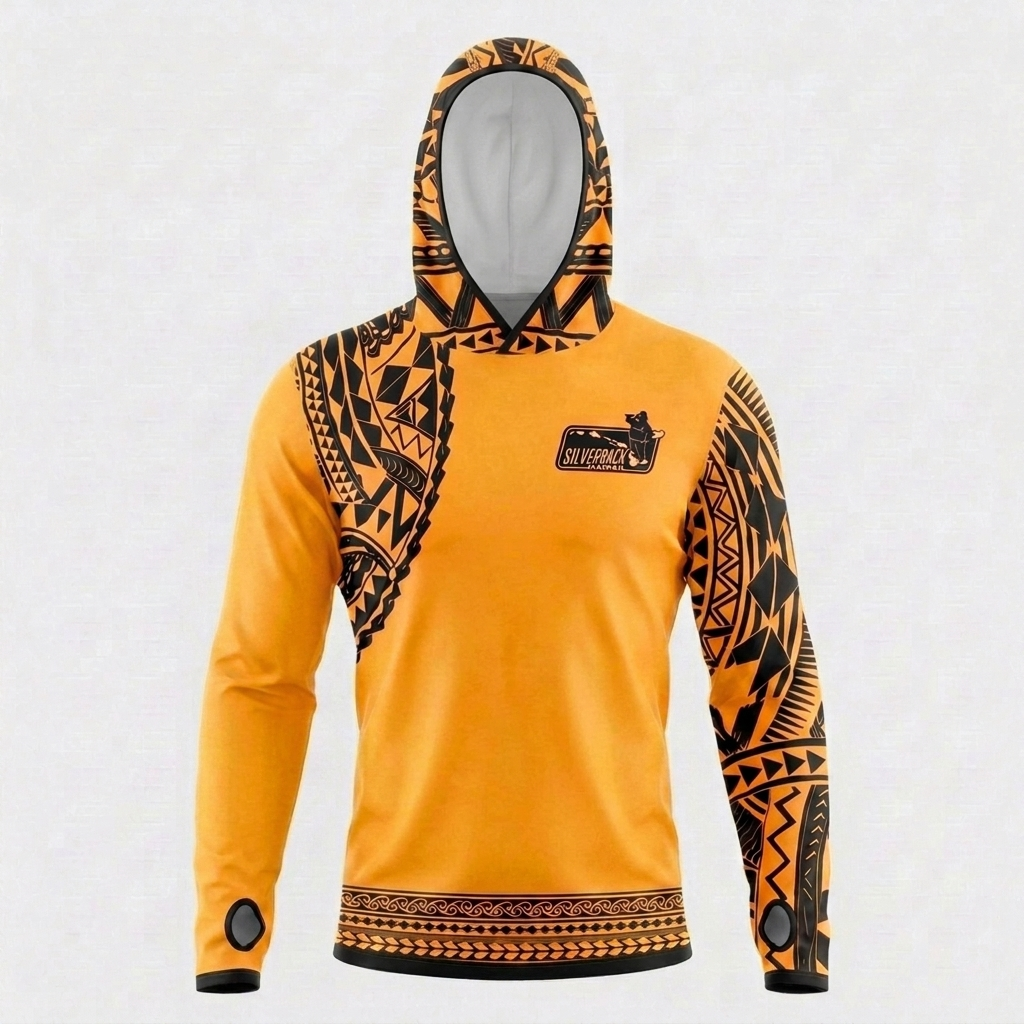
The tradeoff is heat. Our tribal tattoo men's Hydro Hoodie uses a dramatically lighter fabric with a button-closure hood that fits over caps and visors, plus flatlock seams to stop chafe under a PFD.
Watch out: a hood that cannot be secured will flap in wind and fill with water on a remount. Button closures and snug collars are not cosmetic details.
Best Men's Rash Guard for Paddling: Fit, Seams, and Stroke Mechanics
The best men's rash guard for paddling fits close without restriction, uses flatlock seams away from the shoulder blades, and stretches through the full rotation of a stroke.
Paddling punishes the wrong seam placement. The shoulder and lat area rotates thousands of times in a long downwind run, and a raised seam there will rub raw.
Sizing deserves honest attention.
American Canoe Association resources on paddling safety and gear consistently emphasizes layering and sun protection as core safety practices for paddlers, not optional comfort items.
Recycled Fabric Water Sports Apparel: Does Sustainable Mean Durable?
Recycled fabric water sports apparel is as durable as virgin polyester when the yarn and construction are right.
Durability lives in the knit and the seams, not the fiber origin.
There is a real environmental argument here too.
Our gear is built from recycled polyester blends, and the women's palm print hoodie is made from fabric that contains 13 recycled bottles per yard.
How Silverback Hawaii Compares on Price, Performance, and Repairability
Price is where most brand comparisons get vague, so here is ours in plain numbers. Every piece below is built for saltwater use, carries UPF 50, and comes from the same recycled-fabric program.
| Product | Price | Fabric | Best For |
|---|---|---|---|
| Women's Palm Tree Hydro Hoodie | $40.00 | 78% recycled polyester, 22% spandex | Women's daily sessions |
| Men's Ekolu Pua Hydro Hoodie | $50.00 | 85% recycled polyester, 15% spandex | Hot-weather paddling |
| Women's Solid Color Hydro Hoodie | $60.00 | 84% recycled polyester, 16% spandex | High-visibility open water |
| Men's Solid Color HydroHoodie | $70.00 | 84% recycled polyester, 16% spandex | Purist, minimal design |
| Men's Tribal Tattoo Hydro Hoodie | $85.00 | 84% recycled polyester, 16% spandex | Surf and downwind racing |
Price
Value for money comes down to cost per use.
Match Your Gear to Your Sport: Paddling, Surfing, and Family Beach Days
Different water sports stress gear differently, so the right pick depends on how you spend your time on the water. Here is the activity-by-activity breakdown that actually changes what you buy.
Paddling and Downwind Racing
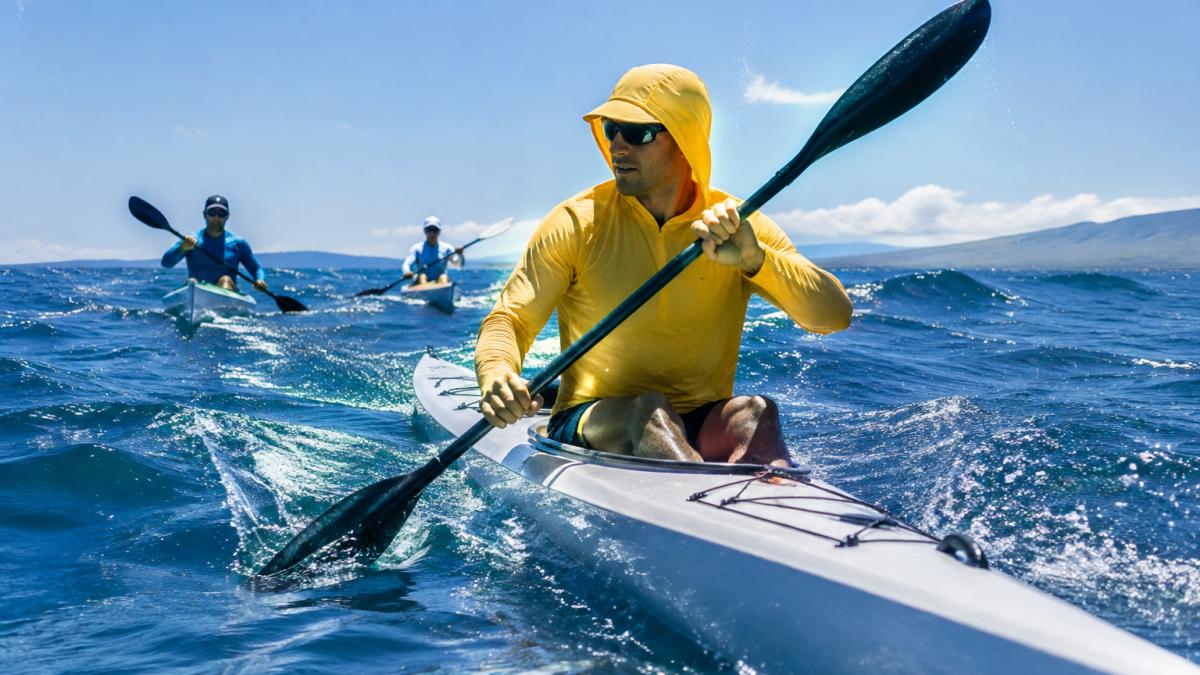
Paddling is a rotation sport. The shoulder and lat area turns thousands of times in a long downwind run, so flatlock seams away from the shoulder blades and four-way stretch matter more than coverage. Prioritize ultralight fabric that does not trap heat, a secure hood that will not flap in wind, and a close fit that will not bunch at the waist and catch water.
Surfing
Surfing is a coverage sport. The neck, ears, and head burn first, and a hood stays on through duck dives and wipeouts where a hat cannot. Thumb holes protect the wrists during long board sessions, and flatlock seams stop chafe where the board rail and leash contact the body.
Watch out: a hood that cannot be secured will flap in wind and fill with water on a remount. Button closures and snug collars are not cosmetic details.
Open-Water Swimming and Snorkeling
Swimming and snorkeling reward a close fit and minimal drag. A rash guard that bunches at the waist catches current and chills you on exit, so size by chest and torso rather than t-shirt size. For snorkeling, wrist and neck coverage reduce sun exposure during long surface intervals, and a high-visibility colorway keeps you visible to boat traffic. Quick-dry construction matters more here than insulation.
Sailing and Board Sports
Sailing and board sports mix wind with spray. A hood that stays put and a collar that seals against spray matter more than maximum stretch, and a slightly looser cut layers over a PFD without restricting reach. High-visibility colorways are a safety feature on deck, not a style choice.
Family Beach Days
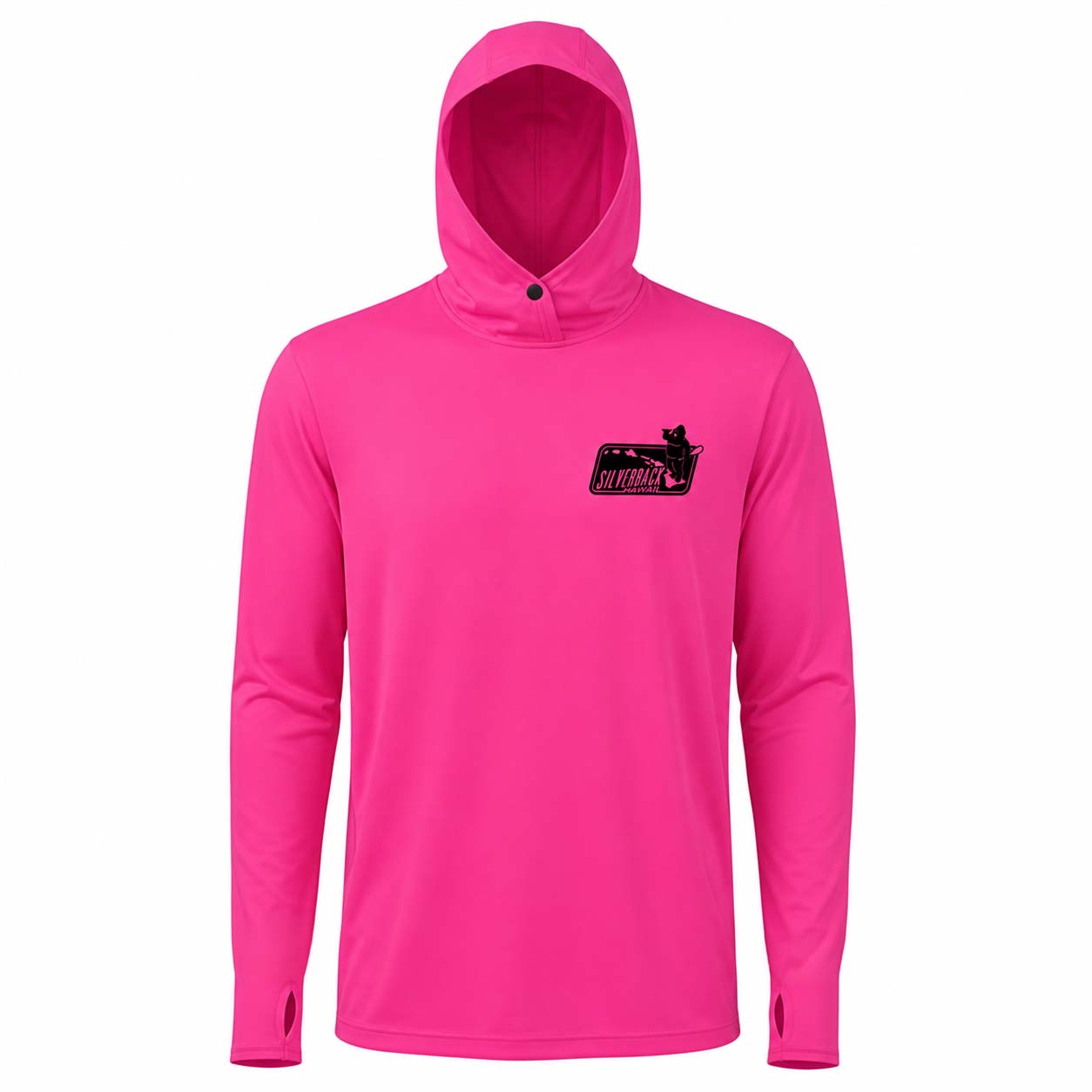
Family beach days prioritize easy layering, high-visibility colorways, and coverage that works for mixed ages and body types. The women's solid color Hydro Hoodie was built with exactly that in mind, and our sizing runs from women's and men's cuts through styles suited to modest swimwear needs, so a family can outfit everyone from one place.
A Quick Activity-to-Criteria Map
Use this to translate the activity into the criteria that matter most:
- Paddling: flatlock seams, four-way stretch, ultralight fabric, secure hood
- Surfing: hood coverage, thumb holes, flatlock seams, light fabric weight
- Open-water swimming and snorkeling: close fit, quick-dry, wrist and neck coverage, high-visibility color
The common thread is that fit is a performance feature, not a style preference. Measure your chest and torso, choose the cut that matches your most common session, and let the activity decide which two or three criteria you weight most heavily.
Ordering Your First Silverback Hawaii Hoodie
Start with one piece in the colorway and cut that matches your most common session, then size by chest and torso measurement rather than t-shirt size.
Our gear is designed and tested on Maui and made in the USA, and we are the official jersey provider for Kimokeo Hawaiian Outrigger Voyaging Society and Hawaii's Pu'ali Koa Kahiko. If you are weighing a first purchase, the women's palm tree hoodie is our most accessible entry point at $40.00, while the men's solid color hoodie at $70.00 is the cleanest everyday option.
Watch out: ordering a size up "for comfort" usually backfires in the water. Loose fabric catches current and chafes more, not less.
The gap between gear that survives the ocean and gear that quits after a season comes down to fabric engineering, not marketing.
Frequently Asked Questions
What should I look for in a sun hoodie for ocean sports?
Prioritize a UPF 50 rating, which Silverback Hawaii's Hydro Hoodies include as standard. Check for flatlock seams to prevent chafing under a PFD, four-way stretch for paddle stroke mobility, and quick-drying fabric. A button-closure hood that fits over a cap and thumb holes for hand coverage extend protection during long sessions. Silverback Hawaii's Hydro Hoodies combine all of these features in a recycled polyester-spandex blend.
Are recycled-material sun hoodies suitable for saltwater use?
Yes, when the fabric is engineered for it. Silverback Hawaii's recycled fabric water sports apparel uses 84% recycled polyester and 16% spandex, a blend made for water use. The key is the fabric construction, not just the recycled content. Rinse with fresh water after each session and hang dry to extend the life of any saltwater gear.
How does Silverback Hawaii compare to Patagonia for paddling?
Silverback Hawaii designs specifically for paddlers, with features like flatlock seams to prevent PFD chafing, thumb holes, and button-closure hoods that work over caps. Silverback's hoodies run $40 to $85, are made in the USA from recycled materials, and are designed and tested on Maui.
How do I choose between a surf shirt and a UPF hoodie?
A surf shirt covers the torso and arms, while a UPF hoodie adds head and neck protection, which matters for long paddle sessions where the sun hits from above and reflects off the water. Choose a hoodie for downwind runs, surfski paddling, and multi-hour sessions. Choose a shirt for short swims or when you need maximum cooling. Silverback Hawaii's hoodies include a button-closure hood that fits over caps and visors,
What makes a water sports hoodie comfortable for long sessions?
Four factors: flatlock seams that sit flat against the skin under a PFD, four-way stretch that moves with your stroke, quick-drying fabric that does not stay heavy when wet, and a hood that stays put without flapping. Silverback Hawaii's ultra lightweight fabric is built for hot conditions where every ounce matters, and the buttery-soft feel is designed for comfort. Test any hoodie on a short paddle before committing to a long race.
