

Last Updated: November 26, 2026
Quick Summary
The best kayaking sun protection comes from a wide-brim hat with a secure chin strap, breathable quick-drying fabric, and a UPF 50+ rating so your face, ears, and neck stay covered. A brim of about 3 inches all the way around is the practical sweet spot for paddling.
- A UPF 50 rating means roughly one-fiftieth of the sun's UV rays pass through the fabric.
- Polyester and nylon dry far quicker than cotton and hold their shape after soakings.
- Rinse your hat in fresh water after saltwater sessions, then air dry it in the shade.
- Skip the washing machine for structured hats and never tumble dry a structured front.
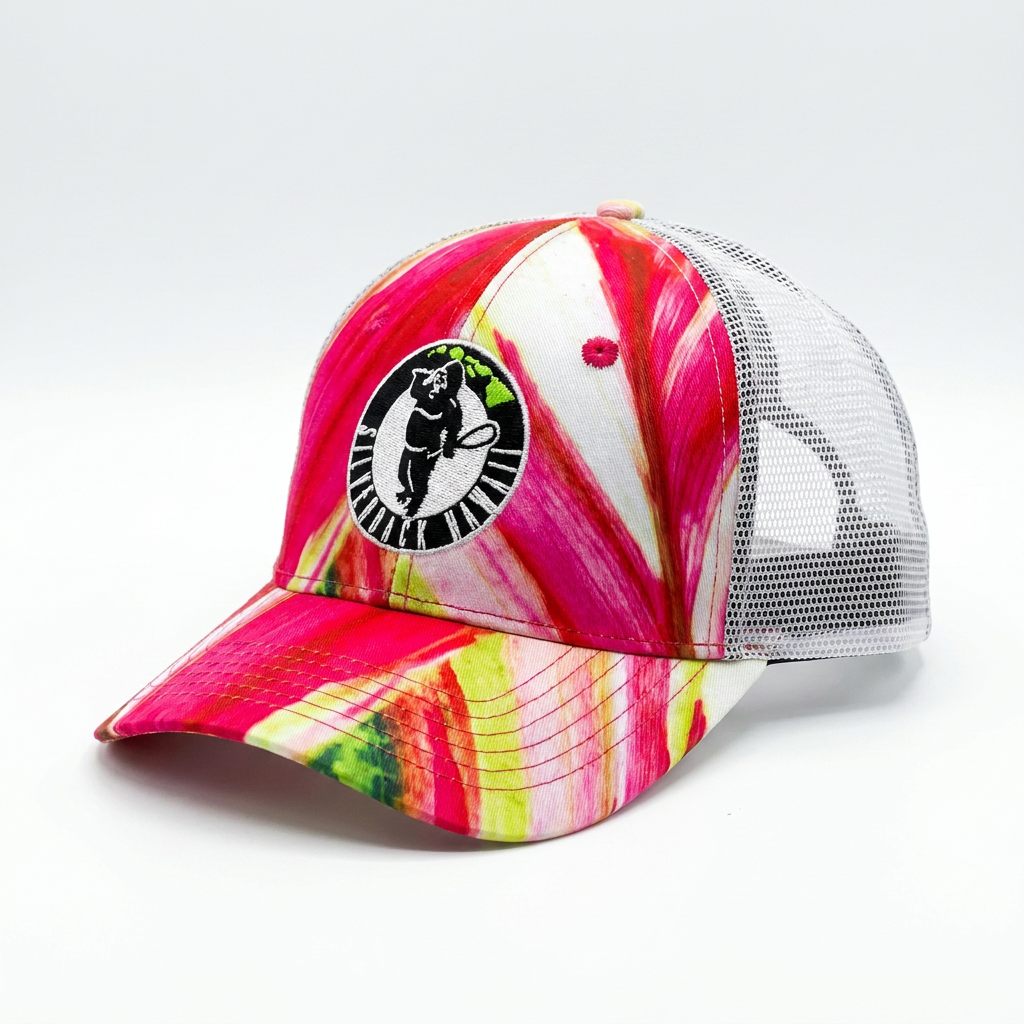
- The Hawaiian Print Trucker Hat comes in Blue Floral and Pink Ti Leaf prints.
Table of Contents
- What should you look for in a kayaking sun hat?
- UPF 50+ kayaking hats and what the rating means
- Wide-brim sun hats with chin straps for paddling
- Quick-drying hats for kayaking and saltwater sessions
- Recycled-material sun hats for paddling and ocean lovers
- Hawaiian print hats compared: coverage, fit, and price
- Caring for your hat after saltwater and sun exposure
- Pick your hat before your next paddle launch
- Frequently Asked Questions
What should you look for in a kayaking sun hat?
The best kayaking sun protection starts with a hat that combines a wide brim, a secure chin strap, breathable quick-drying fabric, and a UPF 50+ rating so your face, ears, and neck stay covered through hours on the water. Everything else is a detail you can trade off against fit and price.
A hat that is missing one key feature can easily end up floating behind a kayak. Sun protection gets all the attention, but retention matters just as much. A hat that blows off at mile three protects nobody.
Below, we break down the features that actually matter, compare the styles we make, and show you how to match a hat to your conditions. But first, here is what most buying guides get wrong: they treat brim width and strap security as separate topics. On the water, they are the same decision.
Brim width and face coverage
A brim of about 3 inches all the way around is the practical sweet spot for paddling. It shades your eyes and cheeks without blocking your downward view of the water, your deck, and your paddle stroke.
Wider brims cover more skin but catch more wind. Narrow brims stay put but leave your ears and neck exposed. For kayaking, a full-perimeter brim beats a front-only bill because the sun does not stay in front of you. It swings around all day.
Fit security on the water
A chin strap is non-negotiable. So is an adjustable closure that lets you tighten the hat over a ponytail or under a helmet liner. Mesh panels help with airflow, but they also reduce structure, so check that the crown holds its shape when wet.
Watch out: a hat with a strap but no rear adjuster will still lift in a headwind. The strap keeps it attached; the adjuster keeps it from shifting.
UPF 50+ kayaking hats and what the rating means
UPF 50+ kayaking hats are hats made from fabric rated for the highest UPF category. The rating describes the fabric, not the design, so coverage still depends on brim size and how much skin the hat shades.
UPF stands for Ultraviolet Protection Factor, a standard used for fabrics the same way SPF is used for sunscreen. A UPF 50 rating means roughly one-fiftieth of the sun's UV rays pass through the material. UPF 50+ is the top tier on the scale.
Two things degrade that protection over time: stretching and wetness. A hat pulled tight can let more UV through, and a soaked hat can lose some effectiveness. That is why a quick-drying hat matters for more than comfort. The Skin Cancer Foundation's sun protection guidance recommends clothing as a first line of defense, especially for long exposures on reflective water.
Wide-brim sun hats with chin straps for paddling
Wide-brim sun hats with chin straps are the strongest option for full-day exposure because they shade the face, ears, and neck at once while staying attached in wind and chop. The trade-off is bulk, and a wide brim can block your view if it flops.
Look for three things:
- A reinforced brim that holds its shape instead of folding down over your eyes
- A strap that sits behind the ears, not across the throat
- A moisture-wicking band so sweat does not run into your eyes mid-stroke
For surfski and downwind paddling, many athletes prefer a lower-profile cap with a curved bill. It sheds wind better and does not catch spray. If you worry about gear staying put, our guide on keeping sunglasses from falling off while paddling covers the same retention logic.
Quick-drying hats for kayaking and saltwater sessions
Quick-drying hats for kayaking are built from synthetic fabrics that shed water fast instead of soaking it up. Polyester and nylon dry far quicker than cotton, and they hold their shape after repeated soakings.
Cotton feels great on land and behaves badly on the water. It absorbs water, gets heavy, and stays damp for hours. A damp hat is a cold hat once the wind picks up, and a heavy hat shifts around on your head.
Mesh backs help here. They let air move through the crown and speed drying after a splash or a roll. Just confirm the mesh is not the only structure in the hat, or it will collapse when wet.
Recycled-material sun hats for paddling and ocean lovers
Recycled-material sun hats for paddling use fabric made from recovered plastic, which keeps waste out of landfills and waterways while delivering the same performance as virgin synthetics. For paddlers, the appeal is simple: your gear matches your values.
Our apparel is made from recycled plastic materials. If you want the full picture on why this matters, read our breakdown of the benefits of recycled ocean plastic.
Durability is the fair question. Check stitching at the brim and strap attachment points, since those take the most stress.
Hawaiian print hats compared: coverage, fit, and price
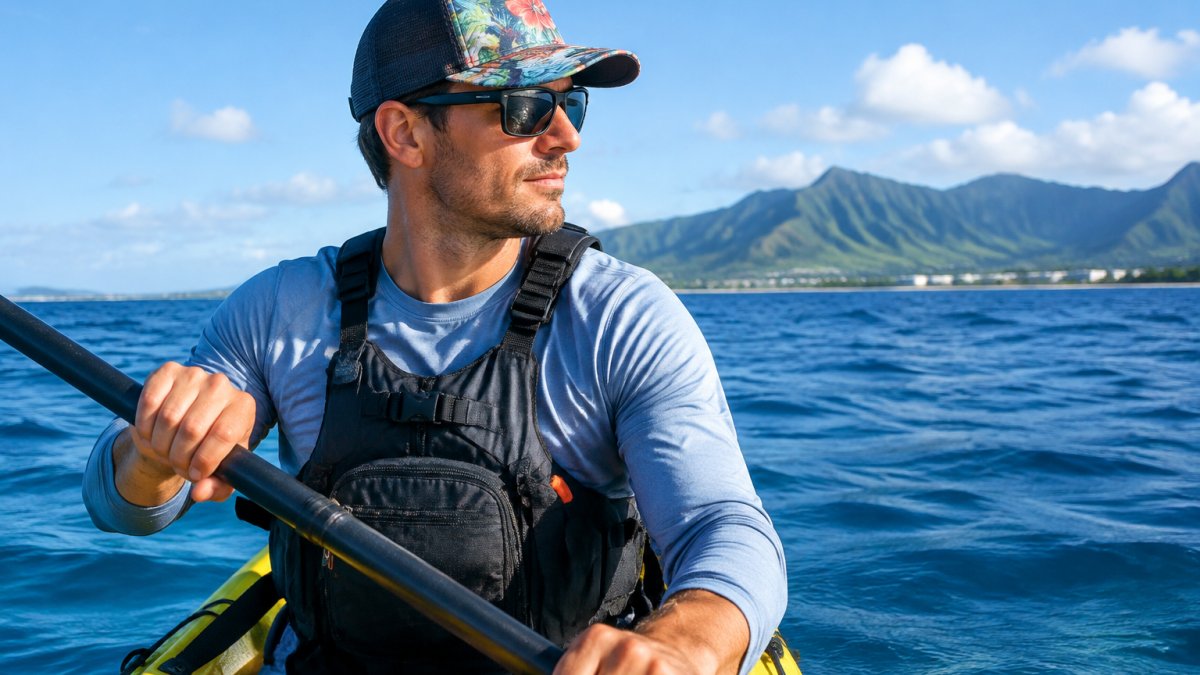
Hawaiian print hats bring island style to the launch, but they are not all built the same. Coverage, closure type, and price separate them fast. Here is how our four styles stack up on the features that matter most on the water: retention, drying speed, and sun protection.
| Hat | Price | Closure | Brim | UPF Rating | Drying Speed | Best For |
|---|---|---|---|---|---|---|
| Hawaiian Print Trucker Hat | $25.00 | Adjustable snapback | Curved, mid-width | UPF 50+ | Fast (polyester mesh) | Everyday island style with secure fit |
| Round Logo Stretch Fit | $28.00 | Stretch fitted, closed back | Mid-profile, Permacurv visor | UPF 50+ | Moderate (structured crown) | Secure fit without a strap |
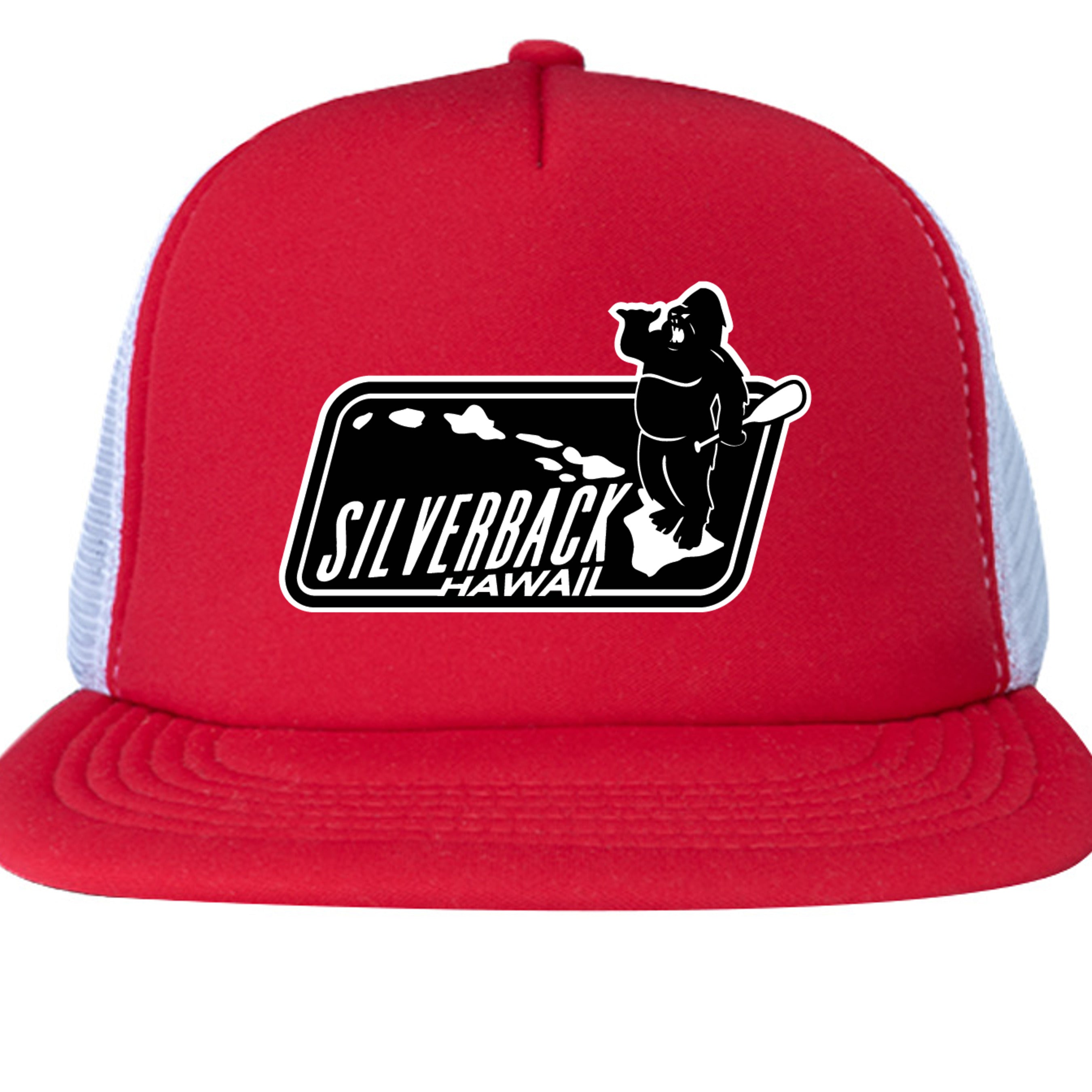
| Silverback Foam Trucker | $20.00 | Plastic snapback | Flat bill, high profile | UPF 50+ | Fast (foam and mesh) | Budget-friendly structure |
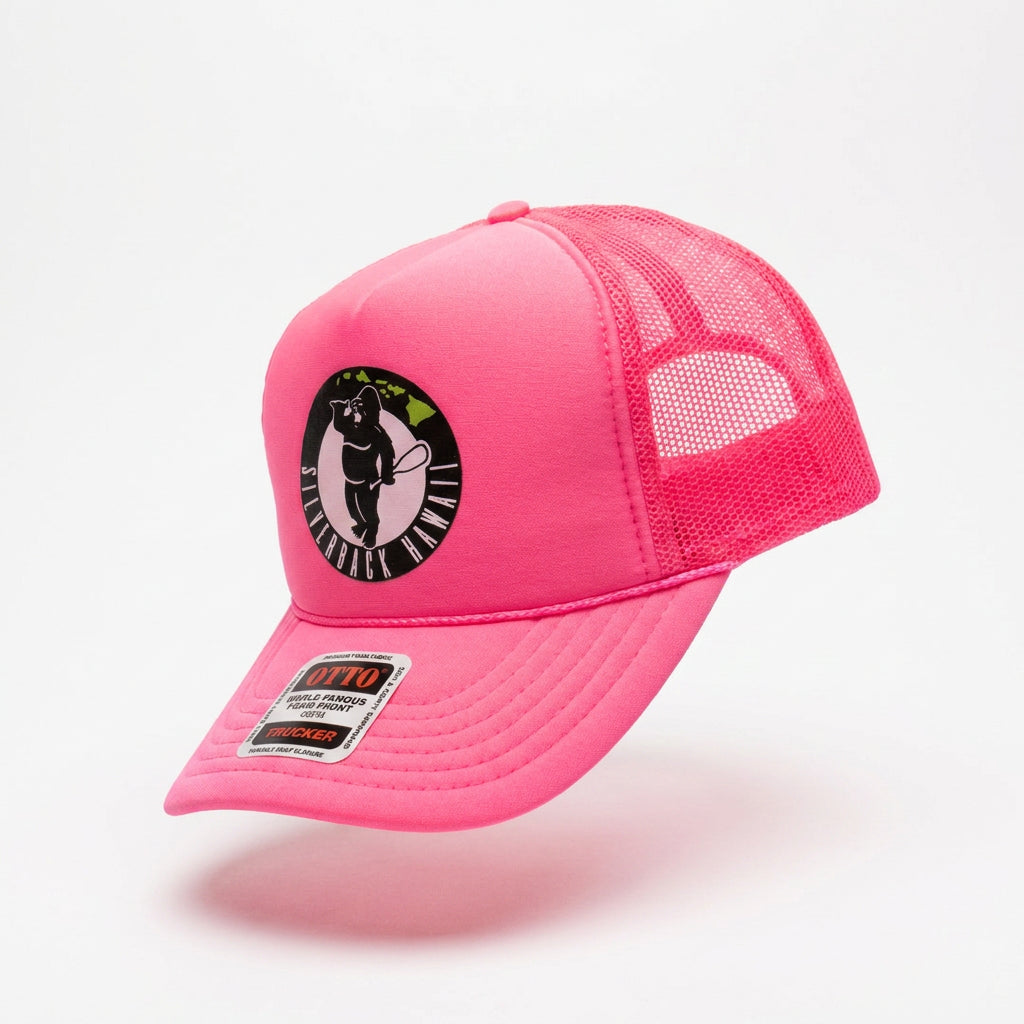
| Foam Trucker Hat | $20.00 | Adjustable snapback | Curved bill, high-visibility | UPF 50+ | Fast (foam and mesh) | Being seen on the water |
Price
The rating only covers the fabric, coverage depends on brim shape and how much skin the hat shades.
The Hawaiian Print Trucker Hat and both foam truckers use adjustable snapbacks. The Round Logo Stretch Fit uses a closed-back stretch fit with no adjustable closure.
Drying speed matters because a wet hat gets heavy and cold.
The Hawaiian Print Trucker Hat comes in Blue Floral and Pink Ti Leaf prints, with a curved bill, an adjustable snapback, and a mesh back for airflow. One size fits most.
The Round Logo Stretch Fit trades the snapback for a closed-back stretch fit, which suits paddlers who want the hat locked on without adjusting a strap. The two foam truckers sit at the lower price point. The Foam Trucker Hat comes in high-visibility colorways.
Caring for your hat after saltwater and sun exposure
Rinse your hat in fresh water after saltwater sessions, then air dry it in the shade. But the details matter more than the general rule.
Saltwater does two things: it leaves abrasive crystals that cut fibers when the hat flexes, and it attracts moisture from the air, so a "dry" hat can stay damp and grow mildew. A thorough rinse, inside and out, including the sweatband and strap, removes both problems. Freshwater paddlers can rinse less often, but any hat that gets soaked should still be dried completely before storage.
UV exposure is the silent killer. Even UPF 50+ fabrics degrade with repeated sun exposure; the rating is for new fabric, not a lifetime guarantee. Prints fade first because dyes absorb UV differently than the base fabric. To slow fading, dry your hat in the shade, not on a sunny deck. If you notice the print looking washed out or the fabric feeling thin, it is time to replace the hat, the UPF protection has likely dropped.
Skip the washing machine for structured hats. Hand wash with mild soap, reshape the crown while damp, and let it dry on a rack. Never tumble dry a hat with a structured front, since heat warps the shape. For mesh-backed truckers, pay attention to the mesh: it can stretch out if you wring it, so press water out gently instead.
Inspect stitching at the brim and strap attachment points after every few outings. These take the most stress, and a loose stitch can turn into a lost hat in wind. A drop of fabric glue or a quick stitch with heavy thread can extend the life of a favorite hat.
Our full guide on how to care for UPF clothing after saltwater exposure walks through the wash cycle, drying, and what to check for as gear ages.
Pick your hat before your next paddle launch
The hat you wear on the water is kayaking sun protection, safety gear, and comfort all at once. Get the brim, strap, and fabric right, and you stop thinking about your head and start thinking about your stroke.
At Silverback Hawaii, we design island-style gear for paddlers, ocean lovers, and aquatic athletes. Our apparel is made from recycled plastic materials and provides sun protection. We are the official jersey provider for the Kimokeo Hawaiian Outrigger Voyaging Society and Hawaii's Pu'ali Koa Kahiko.
If you want a deeper look at fabric ratings before you buy, read our guide on choosing UPF 50 clothing for sun protection. Then get your hat sorted before the next launch.
Pick a hat that stays on in wind, dries fast, and shades more than your eyes. Silverback Hawaii makes lightweight, sun-protective hats and apparel from recycled materials, designed by paddlers for the conditions you actually paddle in. Get started with Silverback Hawaii and gear up for your next paddle with a hat built for the water.
Frequently Asked Questions
Can a Hawaiian print hat be suitable for kayaking?
Yes, if the build matches the conditions. Look for a curved or wide bill that shades your eyes, a mesh back for airflow, and an adjustable or stretch closure that stays put when you paddle. A Hawaiian print hat works on the water when the fit is secure and the fabric handles spray. Prints add visibility, and a snug closure keeps the hat on during wind and chop.
What features should a kayaking hat have for sun protection?
Prioritize brim coverage, UPF-rated fabric, and a closure that locks the hat to your head. A curved bill shades your eyes and upper face, while a wider brim or neck flap covers ears and neck. Quick-drying materials and breathable mesh help in heat. Adjustable snapbacks or stretch-fitted backs prevent blow-offs.
How do you keep a hat from blowing off while kayaking?
Use a hat with an adjustable snapback or stretch-fitted closed back, and tighten it before launch. If you paddle in strong wind, test the fit with a head shake before you leave shore.
How should you care for a hat after kayaking?
Rinse the hat in fresh water after saltwater sessions, then air-dry it away from direct sun.
